In accordance with the provisions of section 40 of the act entitled "An act to increase the efficiency of the permanent military establishment of the United States," approved February 2, 1901 (31 Stat. 748, 758), which authorizes the President to "prescribe the kinds and quantities of the component articles of the Army ration, and to direct the issue of substitutive equivalent articles in place of any such components whenever, in his opinion, economy and a due regard to the health and comfort of the troops may so require," Executive Order No. 4580 of February 3, 1927, prescribing the Army ration, and Executive Order No. 5337 of April 23, 1930, amendatory thereof, are revoked, and the following is promulgated for the information and guidance of all concerned, to take effect April 1, 1933. The kinds and quantities of the component articles of the Army ration shall be as follows: 1.Garrison Ration (For all persons entitled to a ration except under specific conditions for which other rations are prescribed) Article Quantity Article Quantity Meat: Beverages: Bacon------------------------oz-- 2 Coffee, roasted or ioasted Beef, fresh--------------------oz-- 10 and ground. ----------oz-- 2 Chicken, fresh----------------oz-- 2 Cocoa ------------------oz-- .3 Pork, fresh-------------------oz-- 4 Tea ---------------------oz-- .05 Eggs, fresh ----------------------ea-- 1 Milk: Dry vegetables and cereals: Milk, evaporated --------oz-- 1 Beans -----------------------oz-- .5 Milk, fresh --------------oz-- 8 Rice -------------------------oz-- .6 Lard: Rolled oats ------------------oz-- 1.5 Lard --------------------oz-- .64 Fresh vegetables: Lard substitute ---------oz-- .64 Beans, string, canned --------oz-- 3 Butter ----------------------oz-- 2 Corn, canned ----------------oz-- 2 Flour, wheat ----------------oz-- 12 Onions -----------------------oz-- 2 Baking powder -------------oz-- .09 Peas, canned -----------------oz-- 2 Macaroni -------------------oz-- .25 Potatoes ---------------------oz-- 10 Cheese ---------------------oz-- .25 Tomatoes, canned -----------oz-- 2 Sugar -----------------------oz-- 5 Fruit: Cinnamon ------------------oz-- .014 Apples, canned --------------oz-- 1.5 Flavoring extract ------------oz-- .02 Jam or preserves. ------------oz-- .5 Pepper, black --------------oz-- .04 Peaches, canned -------------oz-- 1.2 Pickles, cucumber ----------oz-- .16 Pineapple, canned ------------oz-- 1.2 Salt -------------------------oz-- .5 Prunes -----------------------oz-- .3 Sirup -----------------------oz-- .5 Vinegar ---------------------oz-- .16 Note 1. In Alaska the beef component will be increased by 10 per cent, the bacon component by 33½ per cent, and the vegetable component by 20 per cent. Note 2. On Thanksgiving Day and on Christmas Day the meat component will be as follows: Turkey, drawn-------- 25 ounces Turkey, undrawn------- 28 ounces Note 3. When it is impracticable to bake soft bread, or if for any reason it is more economical to purchase than to bake it, soft bread will be a component in lieu of an equal quantity of flour. Note 4. In the Philippine Islands and at remote stations where it is impracticable to procure fresh milk, the milk allowance will be 6 ounces of evaporated milk. Note 5. The following additions and deductions will be made on the rations due: (a) For organizations averaging 25 men per day or less, add 10 per cent. (b) For organizations averaging 26 to 75 men per day, add 5 per cent. (c) For organizations averaging 76 to 150 men per day, make no change. (d) For organizations averaging more than 150 men per day, deduct 5 per cent, except at recruit depots, where no change will be made. (e) For individual men authorized by the commanding officer of the post, camp, or station to mess separately, add 10 per cent. (f) For enlisted men serving and messing on Army mine planters, add 50 per cent. (g)The amount of ration credit due an organization maintaining separate messes for detachments will be computed by applying the foregoing provisions for organizations to each mess so maintained. Note 6. In special cases where, due to local conditions, the unusually small size of the detachment, or the character of the work upon which the enlisted men are engaged, the additions authorized in note 5 above are insufficient for the proper subsistence of the men, the Secretary of War is authorized to make such additional increase as may be necessary, provided the total allowance thus authorized shall be less than the monetary allowance prescribed for subsistence for enlisted men when rations in kind are not furnished and Government messing facilities are provided. 2. Travel Ration (For troops traveling otherwise than by marching, and separated from cooking facilities) Article Quantity Article Quantity Bread, soft -------------oz-- 18 Tomatoes, canned ---------------oz-- 8 or Jam --------------oz-- 1.4 Bread, hard -------------oz-- 16 Coffee, roasted and ground -------oz-- 2 Beef, corned, or hash, corned Sugar ----------------------------oz-- 4 beef -----------------oz-- 12 Milk, evaporated, Beans, baked -----------oz-- 4 unsweetened -----------------oz-- 1 3. Reserve Ration (For use in campaign when the field ration is not available) Article Quantity Article Quantity Beef, corned-------------oz-- 7 Chocolate, vanilla sweetened-----------oz-- 3 Beans, with pork and plain Coffee, soluble ------------------------oz-- .6 sauce-----------------oz-- 8.5 Sugar, granulated ----------------------oz-- 2.4 Bread, hard -------------oz-- 6.6 4. Field Ration The field ration is that prescribed for use only in time of war or national emergency when the garrison ration is not used. It will be issued in kind and no ration savings will be allowed. Its components and substitutes will be prescribed by the War Department or the commander of the field forces and will correspond as nearly as practicable with the components of the garrison ration. 5. Troops Traveling on Transports Food for troops traveling on United States Army transports will be prepared from the articles of subsistence stores which compose the ration for troops in garrison, varied by the substitution of other articles of authorized subsistence stores, the total daily cost per man of the food consumed not to exceed 20 per cent more than the current cost of the garrison ration, except on Thanksgiving Day and Christmas Day, when 60 per cent increase over the same current cost is authorized. 6. Ration and Savings Accounts Credit will be given organizations on ration and savings accounts for the money value of the garrison or travel ration computed at the current prices of their component articles, and the finance officer will pay as savings to the organization commander any excess in value of these articles over the value of the subsistence stores purchased by the organization. The ration to be issued to troops on the march in time of peace will be prescribed by the commander, will not exceed the allowances prescribed for the garrison ration, and the ration-savings privilege will be suspended except that when so ordered by such commander the savings privilege on certain specified articles of the ration will be allowed. HERBERT HOOVER The White House, November 23, 1932.
Executive Order 5952 ⚖️⚠️ Zone 3: Lowest Ebb Constitutional Friction / Overreach (-0.19)
📜 Art. II §2: Commander-in-Chief / War Prerogative Tension
Executive Order 5952—Army Ration
Executive Brief • At a Glance
⏱️ 5 min read (1,072 words) •
● In Effect
🎯 Primary Mandate
In accordance with the provisions of section 40 of the act entitled "An act to increase the efficiency of the permanent military establishment of the United States," approved February 2, 1901 (31 Stat. 748, 758), which authorizes the President to "prescribe the kinds and quantities of the component articles of the Army ration, and to direct the issue of substitutive equivalent articles in place of any such components whenever, in his opinion, economy and a due regard to the health and comfort of the troops may so require," Executive Order No. 4580 of February 3, 1927, prescribing the Army ration, and Executive Order No. 5337 of April 23, 1930, amendatory thereof, are revoked, and the following is promulgated for the information and…
⚖️ Constitutional Footing
⚖️⚠️ Zone 3: Lowest Ebb
Incompatible with Expressed Will of Congress or High Friction
📜 Art. II §2: Commander-in-Chief / War Prerogative Tension
🏛️ Scope & Affected Sectors
Armed Forces & Military Establishments Executive Departments & Federal Civil Servants
Plain-English Translation & Framers' Constitutional Analysis
Early Statesman synthesis distilling legal jargon into practical meaning, statutory anchors, and structural constitutional impacts.
Signed by President Herbert Hoover on November 23, 1932, this order concerns Army Ration. In accordance with the provisions of section 40 of the act entitled "An act to increase the efficiency of the permanent military establishment of the United States," approved February 2, 1901 (31 Stat. 748, 758), which authorizes the President to "prescribe the kinds and quantities of the component articles of the Army ration, and to direct the issue of substitutive equivalent articles in place of any such…
Constitutional Assessment: Scrutinized through Article II, Section 2, this action exercises the President's constitutional role as Commander in Chief. Early Framers recognized broad executive discretion in commanding military forces during conflict, provided it remains bounded by congressional declarations and respects civilian domestic courts.
Key Directives & Operative Actions
▪
In accordance with the provisions of section 40 of the act entitled "An act to increase the efficiency of the permanent military establishment of the United States," approved February 2, 1901 (31 Stat. 748, 758), which authorizes the President to "prescribe the kinds and quantities of the component articles of the Army ration, and to direct the issue of substitutive equivalent articles in place of any such components whenever, in his opinion, economy and a due regard to the health and comfort of the troops may so require," Executive Order No. 4580 of February 3, 1927, prescribing the Army ration, and Executive Order No. 5337 of April 23, 1930, amendatory thereof, are revoked, and the following is promulgated for the information and…
▪
The kinds and quantities of the component articles of the Army ration shall be as follows: 1.Garrison Ration (For all persons entitled to a ration except under specific conditions for which other rations are prescribed) Article Quantity Article Quantity Meat: Beverages: Bacon------------------------oz-- 2 Coffee, roasted or ioasted Beef, fresh--------------------oz-- 10 and ground. ----------oz-- 2 Chicken, fresh----------------oz-- 2 Cocoa ------------------oz-- .3 Pork, fresh-------------------oz-- 4 Tea ---------------------oz-- .05 Eggs, fresh ----------------------ea-- 1 Milk: Dry vegetables and cereals: Milk, evaporated --------oz-- 1 Beans -----------------------oz-- .5 Milk, fresh --------------oz-- 8 Rice…
▪
For individual men authorized by the commanding officer of the post, camp, or station to mess separately, add 10 per cent.
▪
In special cases where, due to local conditions, the unusually small size of the detachment, or the character of the work upon which the enlisted men are engaged, the additions authorized in note 5 above are insufficient for the proper subsistence of the men, the Secretary of War is authorized to make such additional increase as may be necessary, provided the total allowance thus authorized shall be less than the monetary allowance prescribed for subsistence for enlisted men when rations in kind are not furnished and Government messing facilities are provided. 2.
Constitutional & Societal Entities Impacted
🏛️ Armed Forces & Military Establishments
🏛️ Executive Departments & Federal Civil Servants
Policy Areas & Topics
🏛️
The Framers' Constitutional Council
1787 PrismEvaluating this order against the constitutional debates of 1787 and the limits of Article II executive power.
⚖️⚠️ Zone 3 (Lowest Ebb)
§
"When the President takes measures incompatible with the expressed or implied will of Congress, his power is at its lowest ebb."
— Justice Robert H. Jackson, Youngstown Sheet & Tube Co. v. Sawyer (1952) Incompatible with Expressed Will of Congress or High Friction
JM
James Madison
Separation of Powers & Legislative Primacy
"The accumulation of all powers, legislative, executive, and judiciary, in the same hands... may justly be pronounced the very definition of tyranny." — Federalist No. 47 (1788)
Madison would express grave alarm over this order. By asserting independent authority in tension with legislative limits or the Bill of Rights, the Executive risks collapsing the separation of powers into unilateral rule. Under the Madisonian model, no emergency justifies the Executive substituting its decree for a deliberative Act of Congress.
Madisonian Stance: Strict Dissent (Overreach)
AH
Alexander Hamilton
The Energetic Executive & Unified Command
"The direction of war implies the direction of the common strength; and the power of directing and employing the common strength must be under the direction of the single hand of the Executive." — Federalist No. 74 (1788)
Hamilton would forcefully champion executive discretion here. For foreign entanglements, commerce defense, and national security, deliberative assemblies are too slow and faction-ridden. A unified, energetic Executive exercising swift command is precisely what the Philadelphia Convention intended for national preservation.
Hamiltonian Stance: Strong Prerogative Support
GM
George Mason
Bill of Rights, Due Process & 10th Amendment
"The purse and the sword ought never to be in the same hands... nor the liberties of the citizen placed at the pleasure of a single magistrate." — Virginia Ratifying Convention (1788)
George Mason and the Anti-Federalists would sound a fierce warning. They feared that Article II would inevitably evolve into an elective monarchy. When an executive order impacts private rights, property, or civil liberties without individualized judicial process, Mason would see their darkest predictions verified.
Anti-Federalist Stance: Vehement Objection
📐
Five Measurable "Constitutional Friction" Dimensions
An objective audit measuring potential separation-of-powers tension against the United States Constitution and established Supreme Court doctrine.
⚠️ Elevated Constitutional Friction
63 / 100 friction index
Dimension 1 • Art. I, §1 & §8
Low Friction
Legislative Encroachment & Purse
Operates within delegated statutory execution without modifying legislative appropriations or taxing powers.
Benchmark: Power of the purse, taxes/tariffs, and rule of law reserved to Congress.
Dimension 2 • Art. II, §1 & §3
High Friction
Executive Scope & Faithfulness
Invokes broad unilateral or emergency executive authorities that test the constitutional boundary of the Take Care Clause.
Benchmark: Faithfully execute laws enacted by Congress vs. unilateral decree.
Dimension 3 • 10th Amendment
High Friction
Federalism & State Sovereignty
Creates friction with the Tenth Amendment by conditioning state grants, mandating local compliance, or preempting state police powers.
Benchmark: Police powers and un-delegated responsibilities reserved to the States.
Dimension 4 • 5th & 14th Amendments
Moderate Friction
Due Process & Individual Rights
Applies regulatory or compliance standards to private contractors or commercial entities.
Benchmark: Protection of private property, contracts, liberty, and procedural justice.
Dimension 5 • Separation of Powers
High Friction
Youngstown Jacksonian Tier
The order asserts independent Article II prerogative against statutory constraints, reallocates funds without explicit appropriation, or stretches executive power into realms constitutionally reserved to the legislature or judiciary.
Benchmark: Incompatible with Expressed Will of Congress or High Friction
⚖️
Audit Synthesis
This directive engages significant constitutional friction across statutory authorization, legislative prerogatives, or individual liberties.
Weighted composite: Art. I (25%), Art. II (25%), Federalism (15%), Due Process (15%), Youngstown (20%).
ℹ️
How to read these dimensions: Executive power expands whenever an administration acts without explicit statutory authorization from Congress (Article I), touches upon police powers historically reserved to the states (Tenth Amendment), or limits private rights and property without judicial process. A low friction score indicates strict concordance with enacted law; a high friction score highlights orders testing the limits of presidential discretion.
Total Words
1,072
7,251 characters
Estimated Read Time
5 min
@ 200 words / min
Flesch-Kincaid
10.7
High School
Text size:
🔗
Referenced By Later Executive Orders (5)
Subsequent presidents who cited, amended, continued, or revoked this directive in later orders.
Lyndon B. Johnson • 1967-03-28
John F. Kennedy • 1962-06-19
Dwight D. Eisenhower • 1954-07-15
Franklin D. Roosevelt • 1940-01-25
References Executive Order 7500—Amending Executive Order No. 5952 of November 23, 1932, Relating to Army Ration
Franklin D. Roosevelt • 1936-12-03
Related Executive Orders
1 order cited directly in this text, plus related actions from this administration.
EO 5337 Apr 23, 1930
⚖️✨ Zone 2 (Zone of Twilight) Constitutional Neutral
Executive Order 5337—Change of Limitation on the Army Ration
📜 Art. II §2: Commander-in-Chief Supervisory Authority
In accordance with the provisions of section 40 of the act entitled "An act to increase the efficiency of the permanent military establishment of the United States," approved February 2, 1901 (31 Stat. 748), which authorizes the President to "prescribe the kinds and quantities…
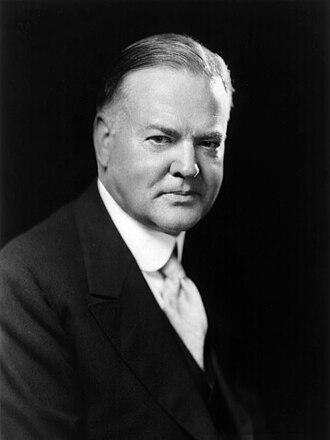 Herbert Hoover
College Level • 1m
EO 5953 Nov 23, 1932
⚖️✨ Zone 2 (Zone of Twilight) Constitutional Neutral
Executive Order 5953—Extension of Trust Period on Indian Reservation Allotments
📜 Art. II §1: Executive Discretion & Internal Operations
Under authority contained in section 5 of the act of February 8, 1887 (24 Stat. 388, 389), and the act of June 21, 1906 (34 Stat. 325, 326), that the period of trust covering allotments made in favor of Indians on the following-named reservations, or on other reservations not…
Herbert Hoover High School • 1m
EO 5951 Nov 22, 1932
⚖️✨ Zone 2 (Zone of Twilight) Constitutional Neutral
Executive Order 5951—Exemption of Person from Compulsory Retirement for Age
📜 Art. II §1: Executive Discretion & Internal Operations
By virtue of the authority vested in me by section 204 of Part II of the act entitled "AN ACT making appropriations for the Legislative Branch of the Government for the fiscal year ending June 30, 1933, and for other purposes," approved June 30, 1932, George R. Wales, who today…
Herbert Hoover College Level • 1m
EO 5954 Nov 26, 1932
⚖️✨ Zone 2 (Zone of Twilight) Constitutional Neutral
Executive Order 5954—Exemption of Persons from Compulsory Retirement for Age
📜 Art. II §1: Executive Discretion & Internal Operations
The following-named persons who, during the current month, reach the retirement age prescribed for automatic separation from the service are hereby exempted from the provisions of that section.
Herbert Hoover College Level • 1m
EO 5950 Nov 19, 1932
⚖️✨ Zone 2 (Zone of Twilight) Constitutional Neutral
Executive Order 5950—Tongass National Forest, Alaska
📜 Art. II §1: Executive Discretion & Internal Operations
The tract of land in Alaska lying within the following-described boundary, heretofore occupied as a home site, be, and it is hereby, excluded from the Tongass National Forest and restored to entry under the applicable public land laws: Chs.
Herbert Hoover Grade 4 • 3m
EO 5955 Nov 30, 1932
⚖️✨ Zone 2 (Zone of Twilight) Constitutional Neutral
Executive Order 5955—Extension of Trust Period on Wichita Allotment No. 582-A
📜 Art. II §1: Executive Discretion & Internal Operations
Under authority contained in section 5 of the act of February 8, 1887 (24 Stat. 388, 389), that the trust period on the allotment of Gertrude Lamb, deceased Wichita allottee No. 582-A, Oklahoma, which trust period expires during the calendar year 1932, be, and the same is…
Herbert Hoover High School • 1m
📜
Scholarly & Legal Citations
Exec. Order No. 5952 (Nov. 23, 1932), https://executiveordersarchive.org/orders/app-executive-order-5952-army-ration.
