Whereas the Congress of the United States has in the National Industrial Recovery Act, approved June 16, 1933 (Public, No. 67, 73d Cong.), declared it to be the "policy of Congress *** to provide for the general welfare by promoting the organization of industry for the purpose of cooperative action among trade groups, * * * to promote the fullest possible utilization of the present productive capacity of industries, to avoid undue restriction of production * * * , to increase the consumption of industrial and agricultural products by increasing purchasing power, to reduce and relieve unemployment, to improve standards of labor, and otherwise to rehabilitate industry * * *," and Whereas , in order to effectuate such policy the President is "authorized to establish such agencies * * * as he may find necessary * * * ," and Whereas , in order, effectively and efficiently, to carry out said policy of the National Industrial Recovery Act, it is expedient and essential that a corporation be organized having the powers and functions of a mortgage-loan company and such other powers and functions as may be necessary to accomplish the purposes of said act; Now, Therefore , under and by virtue of the authority vested in me by the National Industrial Recovery Act of June 16, 1933, it is hereby ordered that an agency, to wit, a corporation, under the laws of the State of Delaware, be created, said corporation to be named the ELECTRIC HOME AND FARM AUTHORITY, INC. The governing body of said corporation shall consist of a board of directors composed of three (3) members, and the following persons, who have been invited and have given their consent to serve, shall be elected by the incorporators as such directors: Arthur E. Morgan Director and Chairman, Tennessee Valley Authority. Harcourt A. Morgan Director, Tennessee Valley Authority. David E. Lilienthal Director and General Counsel, Tennessee Valley Authority. The office and principal place of business of said corporation outside of the State of Delaware shall be at such place in any of the Tennessee Valley States as the board of directors shall select and determine, and offices may be established in such places as said board of directors shall select and determine. The capital stock of said corporation shall consist of ten thousand (10,000) shares of the par value of one hundred ($100) dollars each. The persons above named are hereby authorized and directed to cause said corporation to be formed, with such articles or certificate of incorporation, and bylaws, as shall be deemed requisite and necessary, and to define the methods by which said corporation shall conduct its business. The persons above named are hereby authorized and directed to subscribe for all of said capital stock for the use and benefit of the United States. There is hereby set aside for the purpose of subscribing to the capital stock in said corporation the sum of one million ($1,000,000) dollars out of the appropriation of $3,300,000,000 authorized by Section 220 of the National Industrial Recovery Act and made by the Fourth Deficiency Act, fiscal year 1933, approved June 16, 1933 (Public, No. 77, 73d Cong.). It is hereby further ordered that any outstanding stock standing in the name of the United States shall be voted by the directors of the Tennessee Valley Authority, jointly, or by such person or persons as the said directors of the Tennessee Valley Authority shall appoint as their joint agent or agents for that purpose. The board of directors (other than the initial board of directors) shall be elected, and any vacancies thereon shall be filled by the directors of the Tennessee Valley Authority, jointly, subject to the approval of the President. The board of directors may, without regard to the provisions of the civil-service laws or the Classification Act of 1923, as amended, appoint and fix the compensation and prescribe the duties, authorities, responsibilities, and tenure of such officers and employees, and make such expenditures (including expenditures for personal services, and rent at the seat of the Government and elsewhere, for law books and books of reference, and for paper, binding, and printing) as may be necessary to carry into effect the provisions of this order. The board of directors may also, with the consent of any board, commission, independent establishment, or executive department of the Government, including any field service thereof, avail itself of the services of the officers, employees, and the facilities thereof and, with the consent of the State or municipality concerned, may utilize such State and local officers and employees as it may deem necessary. FRANKLIN D. ROOSEVELT The White House, December 19, 1933.
Executive Order 6514 ⚖️✨ Zone 2: Zone of Twilight Constitutional Neutral (+0.02)
📜 5th Amend: Regulatory Execution with Due Process
Executive Order 6514—Authorizing the Formation of a Corporation to be Known as Electric Home and Farm Authority, Inc.
Executive Brief • At a Glance
⏱️ 4 min read (774 words) •
● In Effect
🎯 Primary Mandate
An agency, to wit, a corporation, under the laws of the State of Delaware, be created, said corporation to be named the ELECTRIC HOME AND FARM AUTHORITY, INC.
⚖️ Constitutional Footing
⚖️✨ Zone 2: Zone of Twilight
Concurrent Authority / Congressional Silence
📜 5th Amend: Regulatory Execution with Due Process
🏛️ Scope & Affected Sectors
Merchants, Importers & Commercial Enterprises Sovereign State Governments & Localities Executive Departments & Federal Civil Servants Private Citizens & Property Owners
Plain-English Translation & Framers' Constitutional Analysis
Early Statesman synthesis distilling legal jargon into practical meaning, statutory anchors, and structural constitutional impacts.
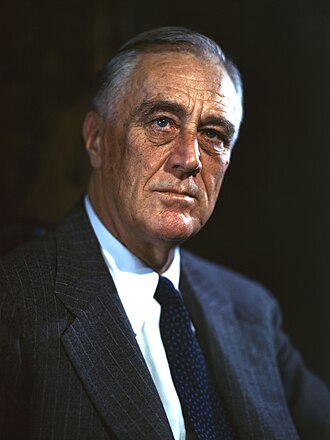
Signed by President Franklin D. Roosevelt on December 19, 1933, this order concerns Authorizing the Formation of a Corporation to be Known as Electric Home and Farm Authority, Inc. An agency, to wit, a corporation, under the laws of the State of Delaware, be created, said corporation to be named the ELECTRIC HOME AND FARM AUTHORITY, INC. The governing body of said corporation shall consist of a board of directors composed of three (3) members, and the following persons, who have been invited and have given their consent to serve, shall be elected by the incorporators as such directors: Arthur…
Constitutional Assessment: Evaluated against the Fifth Amendment, this action touches upon property or economic rights. An early statesman would insist upon strict adherence to due process of law and the constitutional guarantee that private holdings shall not be encumbered or taken for public purposes without just compensation and lawful process.
Key Directives & Operative Actions
▪
An agency, to wit, a corporation, under the laws of the State of Delaware, be created, said corporation to be named the ELECTRIC HOME AND FARM AUTHORITY, INC.
▪
The governing body of said corporation shall consist of a board of directors composed of three (3) members, and the following persons, who have been invited and have given their consent to serve, shall be elected by the incorporators as such directors: Arthur E. Morgan Director and Chairman, Tennessee Valley Authority.
▪
The office and principal place of business of said corporation outside of the State of Delaware shall be at such place in any of the Tennessee Valley States as the board of directors shall select and determine, and offices may be established in such places as said board of directors shall select and determine.
▪
The capital stock of said corporation shall consist of ten thousand (10,000) shares of the par value of one hundred ($100) dollars each.
Constitutional & Societal Entities Impacted
🏛️ Merchants, Importers & Commercial Enterprises
🏛️ Sovereign State Governments & Localities
🏛️ Executive Departments & Federal Civil Servants
🏛️ Private Citizens & Property Owners
🏛️ Public Health & Medical Institutions
Policy Areas & Topics
🏛️
The Framers' Constitutional Council
1787 PrismEvaluating this order against the constitutional debates of 1787 and the limits of Article II executive power.
⚖️✨ Zone 2 (Zone of Twilight)
§
"When the President acts in absence of either a congressional grant or denial of authority, he can only rely upon his own independent powers, but there is a zone of twilight in which he and Congress may have concurrent authority."
— Justice Robert H. Jackson, Youngstown Sheet & Tube Co. v. Sawyer (1952) Concurrent Authority / Congressional Silence
JM
James Madison
Separation of Powers & Legislative Primacy
"Power is of an encroaching nature, and it ought to be effectually restrained from passing the limits assigned to it." — Federalist No. 48 (1788)
Madison would view this order with watchful scrutiny. Operating in the 'Zone of Twilight' where Congress is silent, each such directive establishes an administrative precedent that steadily expands the executive perimeter at the expense of legislative primacy.
Madisonian Stance: Vigilant / Cautionary
AH
Alexander Hamilton
The Energetic Executive & Unified Command
"A feeble Executive implies a feeble execution of the government; and a government ill executed, whatever it may be in theory, must be, in practice, a bad government." — Federalist No. 70 (1788)
Hamilton would view this directive as the natural and indispensable functioning of administrative leadership. Without the power to coordinate agencies, manage personnel, and resolve operational ambiguities, the modern presidency would be reduced to an impotent figurehead.
Hamiltonian Stance: Defends Vigor & Dispatch
GM
George Mason
Bill of Rights, Due Process & 10th Amendment
"The purse and the sword ought never to be in the same hands... nor the liberties of the citizen placed at the pleasure of a single magistrate." — Virginia Ratifying Convention (1788)
George Mason and the Anti-Federalists would sound a fierce warning. They feared that Article II would inevitably evolve into an elective monarchy. When an executive order impacts private rights, property, or civil liberties without individualized judicial process, Mason would see their darkest predictions verified.
Anti-Federalist Stance: High Bill of Rights Scrutiny
📐
Five Measurable "Constitutional Friction" Dimensions
An objective audit measuring potential separation-of-powers tension against the United States Constitution and established Supreme Court doctrine.
⚖️ Discretionary Twilight Zone
42 / 100 friction index
Dimension 1 • Art. I, §1 & §8
Moderate Friction
Legislative Encroachment & Purse
Administers commerce or fiscal programs requiring ongoing statutory delegation and legislative oversight.
Benchmark: Power of the purse, taxes/tariffs, and rule of law reserved to Congress.
Dimension 2 • Art. II, §1 & §3
Low Friction
Executive Scope & Faithfulness
Exercises standard supervisory executive authority to faithfully execute existing statutes.
Benchmark: Faithfully execute laws enacted by Congress vs. unilateral decree.
Dimension 3 • 10th Amendment
Moderate Friction
Federalism & State Sovereignty
Engages state and local partners in cooperative federalism programs.
Benchmark: Police powers and un-delegated responsibilities reserved to the States.
Dimension 4 • 5th & 14th Amendments
Moderate Friction
Due Process & Individual Rights
Applies regulatory or compliance standards to private contractors or commercial entities.
Benchmark: Protection of private property, contracts, liberty, and procedural justice.
Dimension 5 • Separation of Powers
Moderate Friction
Youngstown Jacksonian Tier
The order relies on inherent Article II executive discretion, civil service management, or foreign diplomacy where Congress has neither expressly approved nor prohibited action.
Benchmark: Concurrent Authority / Congressional Silence
⚖️
Audit Synthesis
This order operates within Justice Jackson’s Zone of Twilight, resting upon concurrent presidential authority or congressional silence.
Weighted composite: Art. I (25%), Art. II (25%), Federalism (15%), Due Process (15%), Youngstown (20%).
ℹ️
How to read these dimensions: Executive power expands whenever an administration acts without explicit statutory authorization from Congress (Article I), touches upon police powers historically reserved to the states (Tenth Amendment), or limits private rights and property without judicial process. A low friction score indicates strict concordance with enacted law; a high friction score highlights orders testing the limits of presidential discretion.
Total Words
774
4,736 characters
Estimated Read Time
4 min
@ 200 words / min
Flesch-Kincaid
21
Post-Graduate Legal
Text size:
🔗
Referenced By Later Executive Orders (1)
Subsequent presidents who cited, amended, continued, or revoked this directive in later orders.
Franklin D. Roosevelt • 1935-08-12
Related Executive Orders
Other executive actions signed by Franklin D. Roosevelt around this period.
EO 6515 Dec 19, 1933
⚖️✨ Zone 2 (Zone of Twilight) Constitutional Neutral
Executive Order 6515—Extension of the President's Reemployment Agreement to April 30, 1934
📜 Art. II §1: Executive Discretion & Internal Operations
I, Franklin D. Roosevelt, President of the United States, pursuant to the authority vested in me by title I of the National Industrial Recovery Act, approved June 16, 1933, and otherwise, do hereby provide as follows and do hereby prescribe the rules and regulations hereinafter…
 Franklin D. Roosevelt
Post-Graduate Legal • 2m
EO 6515 Dec 19, 1933
⚖️✨ Zone 2 (Zone of Twilight) Constitutional Neutral
Executive Order 6515-A—Authorizing Charles E. Wyzanski, Jr., to Act as Secretary of Labor
📜 Art. II §1: Executive Discretion & Internal Operations
I hereby authorize and direct Charles E. Wyzanski, Jr., Solicitor of Labor, to perform the duties of Secretary of Labor during the absence of the Secretary of Labor and the Assistant Secretary of Labor.
Franklin D. Roosevelt High School • 1m
EO 6516 Dec 20, 1933
⚖️✨ Zone 2 (Zone of Twilight) Constitutional Neutral
Executive Order 6516—Excusing Federal Employees in the District of Columbia From Duty December 23 and 30, 1933
📜 Art. II §2: Commander-in-Chief Supervisory Authority
The several executive departments and independent Government establishments in the District of Columbia, including the Government Printing Office and the Navy Yard and stations, be closed on Saturday, December 23, 1933, and Saturday, December 30, 1933, and all clerks and other…
Franklin D. Roosevelt Post-Graduate Legal • 1m
EO 6513 Dec 18, 1933
⚖️✨ Zone 2 (Zone of Twilight) Constitutional Neutral
Executive Order 6513-K—Amending Code of Fair Competition for the Automobile Manufacturing Industry
📜 Art. II §1: Executive Discretion & Internal Operations
I, Franklin I. Roosevelt, President of the United States, pursuant to the authority vested in me by Title I of the National Industrial Recovery Act, approved June 16, 1933, and otherwise, do adopt and approve the report, recommendations and findings of the Administrator and do…
Franklin D. Roosevelt Post-Graduate Legal • 2m
EO 6513 Dec 18, 1933
⚖️✨ Zone 2 (Zone of Twilight) Constitutional Neutral
Executive Order 6513-J—Amendments to Code of Fair Competition for the Men's Clothing Industry and Amendments to Code of Fair Competition for the Cotton Garment Industry
📜 Art. II §1: Executive Discretion & Internal Operations
Code of Fair Competition for the Men's Clothing Industry was approved by me on August 26, 1933. A public hearing having been held by the Administrator on due notice, with respect to certain amendments to the said Code, the Administrator having recommended the modification of my…
Franklin D. Roosevelt Post-Graduate Legal • 6m
EO 6513 Dec 18, 1933
⚖️✨ Zone 2 (Zone of Twilight) Constitutional Neutral
Executive Order 6513-I—Code of Fair Competition for the Cast Iron Soil Pipe Industry (Amendment Number I)
📜 Art. II §1: Executive Discretion & Internal Operations
I, Franklin D. Roosevelt, President of the United States, pursuant to the authority vested in me by Title I of the National Industrial Recovery Act approved June 16, 1933, and otherwise, do adopt and approve the report, recommendations and findings of the Administrator, and do…
Franklin D. Roosevelt Post-Graduate Legal • 1m
📜
Scholarly & Legal Citations
Exec. Order No. 6514 (Dec. 19, 1933), https://executiveordersarchive.org/orders/app-executive-order-6514-authorizing-the-formation-corporation-be-known-electric-home-and-farm.
