By virtue of the authority vested in me by the National Industrial Recovery Act, approved June 16, 1933, and to effectuate the purposes of said act, I hereby amend the Executive order of June 30, 1934, no. 6770, creating the Industrial Emergency Committee, and the Executive order of August 31, 1934, no. 6836, amending said order, to conform to the following orders: 1. I hereby designate as the members of said Industrial Emergency Committee: The Secretary of the Interior The Secretary of Labor The Chairman of the National Industrial Recovery Board The Administrator of Agricultural Adjustment The Administrator of Federal Emergency Relief The Director of the Committee, heretofore appointed by the President 2. It shall be the duty of said Industrial Emergency Committee (1) to make recommendations to the President through its Director, with respect to problems of relief, public works, labor disputes and industrial recovery, together with allied problems of agricultural recovery; (2) to study and coordinate the handling of joint problems affecting these activities, and (3) to determine, with the approval of the President, the general policies of the Administration of the National Industrial Recovery Act. 3. I hereby extend the leave of absence of Donald R. Richberg, as General Counsel of the National Recovery Administration until further order, with pay, in order that he may fulfill the duties of Director of said Committee and of Executive Secretary of the Executive Council and Executive Director of the National Emergency Council and such further functions and duties as shall be prescribed by the President. FRANKLIN D. ROOSEVELT The White House, September 27, 1934.
Executive Order 6860 ⚖️⚠️ Zone 3: Lowest Ebb Constitutional Friction / Overreach (-0.19)
📜 Art. I §8: Legislative Prerogative Tension (Purse & Commerce)
Executive Order 6860—Amending Executive Order No. 6770, Which Created the Industrial Emergency Committee
Executive Brief • At a Glance
⏱️ 1 min read (264 words) •
● In Effect
🎯 Primary Mandate
I hereby amend the Executive order of June 30, 1934, no. 6770, creating the Industrial Emergency Committee, and the Executive order of August 31, 1934, no. 6836, amending said order, to conform to the following orders: 1.
⚖️ Constitutional Footing
⚖️⚠️ Zone 3: Lowest Ebb
Incompatible with Expressed Will of Congress or High Friction
📜 Art. I §8: Legislative Prerogative Tension (Purse & Commerce)
🏛️ Scope & Affected Sectors
Merchants, Importers & Commercial Enterprises Private Citizens & Property Owners Public Health & Medical Institutions
Plain-English Translation & Framers' Constitutional Analysis
Early Statesman synthesis distilling legal jargon into practical meaning, statutory anchors, and structural constitutional impacts.
Signed by President Franklin D. Roosevelt on September 27, 1934, this order concerns Amending Executive Order No. 6770, Which Created the Industrial Emergency Committee. I hereby amend the Executive order of June 30, 1934, no. 6770, creating the Industrial Emergency Committee, and the Executive order of August 31, 1934, no. 6836, amending said order, to conform to the following orders: 1.
Constitutional Assessment: An early statesman would subject this decree to rigorous scrutiny under Article I, Section 8. The Framers deliberately committed commerce, taxation, tariffs, and revenue to Congress alone. To the extent this order imposes duties or financial burdens without explicit statutory pre-authorization, it creates friction with the separation of powers.
Key Directives & Operative Actions
▪
I hereby amend the Executive order of June 30, 1934, no. 6770, creating the Industrial Emergency Committee, and the Executive order of August 31, 1934, no. 6836, amending said order, to conform to the following orders: 1.
▪
I hereby designate as the members of said Industrial Emergency Committee: The Secretary of the Interior The Secretary of Labor The Chairman of the National Industrial Recovery Board The Administrator of Agricultural Adjustment The Administrator of Federal Emergency Relief The Director of the Committee, heretofore appointed by the President 2.
▪
It shall be the duty of said Industrial Emergency Committee (1) to make recommendations to the President through its Director, with respect to problems of relief, public works, labor disputes and industrial recovery, together with allied problems of agricultural recovery; (2) to study and coordinate the handling of joint problems affecting these activities, and (3) to determine, with the approval of the President, the general policies of the Administration of the National Industrial Recovery Act. 3.
▪
I hereby extend the leave of absence of Donald R. Richberg, as General Counsel of the National Recovery Administration until further order, with pay, in order that he may fulfill the duties of Director of said Committee and of Executive Secretary of the Executive Council and Executive Director of the National Emergency Council and such further functions and duties as shall be prescribed by the President.
Constitutional & Societal Entities Impacted
🏛️ Merchants, Importers & Commercial Enterprises
🏛️ Private Citizens & Property Owners
🏛️ Public Health & Medical Institutions
Policy Areas & Topics
🏛️
The Framers' Constitutional Council
1787 PrismEvaluating this order against the constitutional debates of 1787 and the limits of Article II executive power.
⚖️⚠️ Zone 3 (Lowest Ebb)
§
"When the President takes measures incompatible with the expressed or implied will of Congress, his power is at its lowest ebb."
— Justice Robert H. Jackson, Youngstown Sheet & Tube Co. v. Sawyer (1952) Incompatible with Expressed Will of Congress or High Friction
JM
James Madison
Separation of Powers & Legislative Primacy
"The accumulation of all powers, legislative, executive, and judiciary, in the same hands... may justly be pronounced the very definition of tyranny." — Federalist No. 47 (1788)
Madison would express grave alarm over this order. By asserting independent authority in tension with legislative limits or the Bill of Rights, the Executive risks collapsing the separation of powers into unilateral rule. Under the Madisonian model, no emergency justifies the Executive substituting its decree for a deliberative Act of Congress.
Madisonian Stance: Strict Dissent (Overreach)
AH
Alexander Hamilton
The Energetic Executive & Unified Command
"The direction of war implies the direction of the common strength; and the power of directing and employing the common strength must be under the direction of the single hand of the Executive." — Federalist No. 74 (1788)
Hamilton would forcefully champion executive discretion here. For foreign entanglements, commerce defense, and national security, deliberative assemblies are too slow and faction-ridden. A unified, energetic Executive exercising swift command is precisely what the Philadelphia Convention intended for national preservation.
Hamiltonian Stance: Qualified Caution
GM
George Mason
Bill of Rights, Due Process & 10th Amendment
"The purse and the sword ought never to be in the same hands... nor the liberties of the citizen placed at the pleasure of a single magistrate." — Virginia Ratifying Convention (1788)
George Mason and the Anti-Federalists would sound a fierce warning. They feared that Article II would inevitably evolve into an elective monarchy. When an executive order impacts private rights, property, or civil liberties without individualized judicial process, Mason would see their darkest predictions verified.
Anti-Federalist Stance: Vehement Objection
📐
Five Measurable "Constitutional Friction" Dimensions
An objective audit measuring potential separation-of-powers tension against the United States Constitution and established Supreme Court doctrine.
⚠️ Elevated Constitutional Friction
64 / 100 friction index
Dimension 1 • Art. I, §1 & §8
High Friction
Legislative Encroachment & Purse
Touches upon core congressional prerogatives: raises appropriations reallocation, tariff imposition, or statutory preemption questions.
Benchmark: Power of the purse, taxes/tariffs, and rule of law reserved to Congress.
Dimension 2 • Art. II, §1 & §3
High Friction
Executive Scope & Faithfulness
Invokes broad unilateral or emergency executive authorities that test the constitutional boundary of the Take Care Clause.
Benchmark: Faithfully execute laws enacted by Congress vs. unilateral decree.
Dimension 3 • 10th Amendment
Low Friction
Federalism & State Sovereignty
Confined strictly to internal federal jurisdiction, federal property, or direct military command.
Benchmark: Police powers and un-delegated responsibilities reserved to the States.
Dimension 4 • 5th & 14th Amendments
Low Friction
Due Process & Individual Rights
Focuses on internal governmental operations with no direct impairment of private rights or property.
Benchmark: Protection of private property, contracts, liberty, and procedural justice.
Dimension 5 • Separation of Powers
High Friction
Youngstown Jacksonian Tier
The order asserts independent Article II prerogative against statutory constraints, reallocates funds without explicit appropriation, or stretches executive power into realms constitutionally reserved to the legislature or judiciary.
Benchmark: Incompatible with Expressed Will of Congress or High Friction
⚖️
Audit Synthesis
This directive engages significant constitutional friction across statutory authorization, legislative prerogatives, or individual liberties.
Weighted composite: Art. I (25%), Art. II (25%), Federalism (15%), Due Process (15%), Youngstown (20%).
ℹ️
How to read these dimensions: Executive power expands whenever an administration acts without explicit statutory authorization from Congress (Article I), touches upon police powers historically reserved to the states (Tenth Amendment), or limits private rights and property without judicial process. A low friction score indicates strict concordance with enacted law; a high friction score highlights orders testing the limits of presidential discretion.
Total Words
264
1,687 characters
Estimated Read Time
1 min
@ 200 words / min
Flesch-Kincaid
19.5
Post-Graduate Legal
Text size:
Related Executive Orders
Other executive actions signed by Franklin D. Roosevelt around this period.
EO 6860 Sep 27, 1934
🏛️✅ Zone 1 (Maximum Authority) Constitutional Neutral
Executive Order 6860-A—Approving Agreement Between Members of the Division of the Painting, Paperhanging and Decorating Division of the Construction Industry and Their Painter Employees in and about Philadelphia, Pa.
📜 10th Amend: Intergovernmental Federalism Cooperation
The said Agreement is hereby approved. FRANKLIN D. ROOSEVELT Approval Recommended: Hugh S Johnson Administrator for Industrial Recovery. The White House, September 27, 1934.
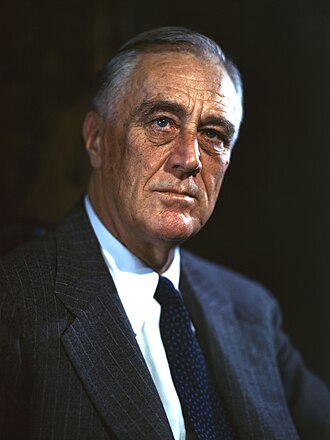 Franklin D. Roosevelt
Post-Graduate Legal • 1m
EO 6859 Sep 27, 1934
⚖️✨ Zone 2 (Zone of Twilight) Constitutional Neutral
Executive Order 6859—Creating the National Industrial Recovery Board
📜 5th Amend: Regulatory Execution with Due Process
By virtue of the authority vested in me by the National Industrial Recovery Act, approved June 16, 1933, and to effectuate the purposes of said act: 1.
Franklin D. Roosevelt College Level • 1m
EO 6861 Sep 28, 1934
⚖️✨ Zone 2 (Zone of Twilight) Constitutional Neutral
Executive Order 6861—Staying Certain Amendments to the Code of Fair Competition for the Cotton Garment Industry Approved by Executive Order No. 6828 of August 21, 1934
📜 1st Amend: Civil Liberties & Expressive Protections
That said amendments to Articles III and IV of the Code of Fair Competition for the Cotton Garment Industry be stayed up to and including October 15, 1934. 2.
Franklin D. Roosevelt Post-Graduate Legal • 2m
EO 6858 Sep 26, 1934
⚖️✨ Zone 2 (Zone of Twilight) Constitutional Neutral
Executive Order 6858—Creation of the Textile Labor Relations Board, Etc.
📜 Art. II §2: Commander-in-Chief Supervisory Authority
There is hereby created in connection with the Department of Labor a board to be known as the "Textile Labor Relations Board" (hereinafter referred to as "the Board") which shall be composed of the following three "special commissioners": Judge Walter P. Stacy of North…
Franklin D. Roosevelt Post-Graduate Legal • 7m
EO 6857 Sep 25, 1934
⚖️✨ Zone 2 (Zone of Twilight) Constitutional Neutral
Executive Order 6857—Exemption of Herman M. Underwood from Compulsory Retirement for Age
📜 Art. II §2: Commander-in-Chief Supervisory Authority
Exempt Herman M. Underwood from the provisions thereof and continue him in the service until February 1, 1935.
Franklin D. Roosevelt College Level • 1m
EO 6856 Sep 25, 1934
⚖️✨ Zone 2 (Zone of Twilight) Constitutional Neutral
Executive Order 6856—Revocation in Part of Executive Orders of March 1, 1912, and November 22, 1924, Creating Power-Site Reserves Nos. 242 and 759, Respectively
📜 Art. II §1: Executive Discretion & Internal Operations
The Executive order of March 1, 1912, creating power-site reserve no. 242, be, and it is hereby, revoked as to the following-described lands: Gila and Salt River Meridian T. 4 S., R. 29 E., sec. 13, SE¼SE¼.
Franklin D. Roosevelt Grade 7 • 1m
📜
Scholarly & Legal Citations
Exec. Order No. 6860 (Sept. 27, 1934), https://executiveordersarchive.org/orders/app-executive-order-6860-amending-executive-order-no-6770-which-created-the-industrial.
