By virtue of and pursuant to the authority vested in me by the act of May 22 1918, 40 Stat. 559, as extended by the act of March 2, 1921, 41 Stat. 1205-17, I hereby prescribe the following documentary requirements for aliens desiring admission into the Philippine Islands. The provisions of this Order shall be applicable to Chinese except as may be otherwise provided by special laws and regulations governing the entry of such aliens. I 1. All aliens coming to the Philippine Islands must present unexpired passports or official documents in the nature of passports issued by the governments of the countries to which they owe allegiance or other travel documents showing their origin and identity, prescribed in regulations issued by the Secretary of State, and valid passport visas or, in lieu of passport visas, if passing in transit through the Philippine Islands to a foreign destination, transit certificates granted by authorized officers of the United States, except in the following cases: (a) An alien who is a through passenger on a vessel touching at a port of the Philippine Islands, landing temporarily while the vessel is in port. (b) An alien seaman serving on a vessel of any nationality touching at a port of the Philippine Islands. (Masters of vessels are not required to present visaed crew lists for the Philippine Islands.) (c) An alien arriving in the Philippine Islands in transit to the United States or to another American possession. (Such an alien, however, may be required to exhibit those documents necessary for his entry into the United States or the other possession to which he is proceeding.) 2. The United States High Commissioner to the Philippine Islands is authorized in his discretion to waive the passport and visa requirements for aliens in the following categories: (a) An alien lawfully resident in the Philippine Islands who is returning from a temporary visit abroad. (b) An alien child born subsequent to the issuance of the visa or transit certificate of an accompanying parent, the visa or transit certificate not having expired. (c) An alien child born during the temporary visit abroad of a mother who is a citizen of the United States or of the Philippine Islands or of an alien mother lawfully resident in the Philippine Islands. (d) An alien who applies for temporary admission, in cases of emergency. 3. No passport visa or transit certificate shall be granted to an alien whose entry would be contrary to the public safety. II The Executive Secretary of the Panama Canal is hereby authorized to issue passport visas and transit certificates to aliens going to the Philippine Islands from the Canal Zone; the Governor of American Samoa is hereby authorized to issue passport visas and transit certificates to aliens going to the Philippine Islands from American Samoa; and the Governor of Guam is hereby authorized to issue passport visas and transit certificates to aliens going to the Philippine Islands from Guam. III This Order shall take effect on November 15, 1935, upon the inauguration of the government of the Commonwealth of the Philippines, and shall then supersede the provisions of Executive Order No. 6987 of March 9, 1935, entitled "Documents Required of Aliens Entering the Philippine Islands". FRANKLIN D. ROOSEVELT The White House, November 14, 1935.
Executive Order 7224 🏛️✅ Zone 1: Maximum Authority Constitutional Neutral (+0.02)
📜 10th Amend: Intergovernmental Federalism Cooperation
Executive Order 7224-A—Documents Required of Aliens Entering the Philippine Islands
Executive Brief • At a Glance
⏱️ 3 min read (547 words) •
● In Effect
🎯 Primary Mandate
I hereby prescribe the following documentary requirements for aliens desiring admission into the Philippine Islands.
⚖️ Constitutional Footing
🏛️✅ Zone 1: Maximum Authority
Express or Implied Congressional Authorization
📜 10th Amend: Intergovernmental Federalism Cooperation
🏛️ Scope & Affected Sectors
Sovereign State Governments & Localities Executive Departments & Federal Civil Servants Private Citizens & Property Owners Foreign Nations & International Entities
Plain-English Translation & Framers' Constitutional Analysis
Early Statesman synthesis distilling legal jargon into practical meaning, statutory anchors, and structural constitutional impacts.
Signed by President Franklin D. Roosevelt on November 14, 1935, this order concerns Documents Required of Aliens Entering the Philippine Islands. I hereby prescribe the following documentary requirements for aliens desiring admission into the Philippine Islands. The provisions of this Order shall be applicable to Chinese except as may be otherwise provided by special laws and regulations governing the entry of such aliens. I 1.
Constitutional Assessment: Reviewed under the Tenth Amendment and the principle of dual federalism, this order touches upon domains traditionally reserved to the sovereign States. The Framers would caution against any attempt to commandeer state officers or displace local police powers through federal executive fiat.
Key Directives & Operative Actions
▪
I hereby prescribe the following documentary requirements for aliens desiring admission into the Philippine Islands.
▪
The provisions of this Order shall be applicable to Chinese except as may be otherwise provided by special laws and regulations governing the entry of such aliens.
▪
All aliens coming to the Philippine Islands must present unexpired passports or official documents in the nature of passports issued by the governments of the countries to which they owe allegiance or other travel documents showing their origin and identity, prescribed in regulations issued by the Secretary of State, and valid passport visas or, in lieu of passport visas, if passing in transit through the Philippine Islands to a foreign destination, transit certificates granted by authorized officers of the United States, except in the following cases: (a) An alien who is a through passenger on a vessel touching at a port of the Philippine Islands, landing temporarily while the vessel is in port.
▪
The United States High Commissioner to the Philippine Islands is authorized in his discretion to waive the passport and visa requirements for aliens in the following categories: (a) An alien lawfully resident in the Philippine Islands who is returning from a temporary visit abroad.
Constitutional & Societal Entities Impacted
🏛️ Sovereign State Governments & Localities
🏛️ Executive Departments & Federal Civil Servants
🏛️ Private Citizens & Property Owners
🏛️ Foreign Nations & International Entities
Policy Areas & Topics
🏛️
The Framers' Constitutional Council
1787 PrismEvaluating this order against the constitutional debates of 1787 and the limits of Article II executive power.
🏛️✅ Zone 1 (Maximum Authority)
§
"When the President acts pursuant to an express or implied authorization of Congress, his authority is at its maximum, for it includes all that he possesses in his own right plus all that Congress can delegate."
— Justice Robert H. Jackson, Youngstown Sheet & Tube Co. v. Sawyer (1952) Express or Implied Congressional Authorization
JM
James Madison
Separation of Powers & Legislative Primacy
"The constitutional magistracy was designed not to invent policy, but to be the faithful instrument of the laws passed by the people's representatives." — Speech in the First Congress (1789)
Madison would approve the structural posture of this order. The President acts strictly in subordination to statutory authority granted under Article II, Section 3 ("take Care that the Laws be faithfully executed"). The checks and balances hold firm because the policy origin remains with the legislature.
Madisonian Stance: Concurring (Statutory)
AH
Alexander Hamilton
The Energetic Executive & Unified Command
"A feeble Executive implies a feeble execution of the government; and a government ill executed, whatever it may be in theory, must be, in practice, a bad government." — Federalist No. 70 (1788)
Hamilton would view this directive as the natural and indispensable functioning of administrative leadership. Without the power to coordinate agencies, manage personnel, and resolve operational ambiguities, the modern presidency would be reduced to an impotent figurehead.
Hamiltonian Stance: Supportive of Execution
GM
George Mason
Bill of Rights, Due Process & 10th Amendment
"The powers not delegated to the United States by the Constitution, nor prohibited by it to the States, are reserved to the States respectively, or to the people." — 10th Amendment to the US Constitution (1791)
Mason would scrutinize whether this federal directive intrudes into police powers, land stewardship, or municipal domains historically reserved to local citizens. The Anti-Federalist demand is that federal administration must never supplant state self-governance.
Anti-Federalist Stance: Eternal Vigilance Required
📐
Five Measurable "Constitutional Friction" Dimensions
An objective audit measuring potential separation-of-powers tension against the United States Constitution and established Supreme Court doctrine.
⚖️ Discretionary Twilight Zone
35 / 100 friction index
Dimension 1 • Art. I, §1 & §8
Moderate Friction
Legislative Encroachment & Purse
Administers commerce or fiscal programs requiring ongoing statutory delegation and legislative oversight.
Benchmark: Power of the purse, taxes/tariffs, and rule of law reserved to Congress.
Dimension 2 • Art. II, §1 & §3
Low Friction
Executive Scope & Faithfulness
Exercises standard supervisory executive authority to faithfully execute existing statutes.
Benchmark: Faithfully execute laws enacted by Congress vs. unilateral decree.
Dimension 3 • 10th Amendment
Moderate Friction
Federalism & State Sovereignty
Engages state and local partners in cooperative federalism programs.
Benchmark: Police powers and un-delegated responsibilities reserved to the States.
Dimension 4 • 5th & 14th Amendments
Moderate Friction
Due Process & Individual Rights
Applies regulatory or compliance standards to private contractors or commercial entities.
Benchmark: Protection of private property, contracts, liberty, and procedural justice.
Dimension 5 • Separation of Powers
Low Friction
Youngstown Jacksonian Tier
The President operates strictly as the constitutional Chief Executive, carrying out policy established by Congress with strong statutory backing.
Benchmark: Express or Implied Congressional Authorization
⚖️
Audit Synthesis
This order operates within Justice Jackson’s Zone of Twilight, resting upon concurrent presidential authority or congressional silence.
Weighted composite: Art. I (25%), Art. II (25%), Federalism (15%), Due Process (15%), Youngstown (20%).
ℹ️
How to read these dimensions: Executive power expands whenever an administration acts without explicit statutory authorization from Congress (Article I), touches upon police powers historically reserved to the states (Tenth Amendment), or limits private rights and property without judicial process. A low friction score indicates strict concordance with enacted law; a high friction score highlights orders testing the limits of presidential discretion.
Total Words
547
3,325 characters
Estimated Read Time
3 min
@ 200 words / min
Flesch-Kincaid
17.2
Post-Graduate Legal
Text size:
🔗
Referenced By Later Executive Orders (2)
Subsequent presidents who cited, amended, continued, or revoked this directive in later orders.
Franklin D. Roosevelt • 1944-12-20
Franklin D. Roosevelt • 1940-10-15
Related Executive Orders
1 order cited directly in this text, plus related actions from this administration.
EO 6987 Mar 9, 1935
🏛️✅ Zone 1 (Maximum Authority) Constitutional Neutral
Executive Order 6987—Documents Required of Aliens Entering the Philippine Islands
📜 10th Amend: Intergovernmental Federalism Cooperation
I hereby prescribe the following documentary requirements for aliens desiring admission into the Philippine Islands. The provisions of this Order shall be applicable to Chinese except as may be otherwise provided by special laws and regulations governing the entry of such aliens.
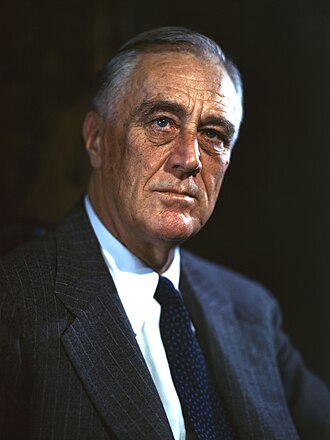 Franklin D. Roosevelt
Post-Graduate Legal • 3m
EO 7226 Nov 15, 1935
🏛️✅ Zone 1 (Maximum Authority) Constitutional Neutral
Executive Order 7226—Amending Executive Order No. 7046 of May 20, 1935, Prescribing Rules and Regulations Relating to Wages, Hours of Work, and Conditions of Employment Under the Emergency Relief Appropriation Act of 1935
📜 10th Amend: Intergovernmental Federalism Cooperation
AMENDMENT TO SUBDIVISION (e) OF PART I OF REGULATION NO. 1 By virtue of and pursuant to the authority vested in me by the Emergency Relief Appropriation Act of 1935, approved April 8, 1935 (Public Resolution No. 11, 74th Congress), subdivision (e) of Part I of Regulation No. 1…
Franklin D. Roosevelt College Level • 1m
EO 7225 Nov 15, 1935
🏛️✅ Zone 1 (Maximum Authority) Constitutional Neutral
Executive Order 7225—Authorizing Procurement Officers and Employees of the Treasury Department to Certify Certain Vouchers
📜 Art. I §8: Delegated Tariff & Commerce Execution
I hereby authorize the Director of Procurement of the Treasury Department and such officers and employees under his direction as he may designate in writing, to certify and approve vouchers and schedules of disbursements chargeable to any appropriation-allocation under the…
Franklin D. Roosevelt Post-Graduate Legal • 1m
EO 7224 Nov 13, 1935
⚖️✨ Zone 2 (Zone of Twilight) Constitutional Neutral
Executive Order 7224—Amendment of Executive Order No. 4728, as Amended, Relating to Commutation of Rations and Quarters to Enlisted Men
📜 Art. II §1: Executive Discretion & Internal Operations
Executive Order No. 4728, of September 29, 1927, as amended by Executive Order No. 5022, of January 5, 1929, and restored to full force and effect by Executive Order No. 5288, of February 26, 1930, and amended by Executive Order No. 6605, of February 17, 1934, is hereby further…
Franklin D. Roosevelt High School • 1m
EO 7228 Nov 18, 1935
⚖️✨ Zone 2 (Zone of Twilight) Constitutional Neutral
Executive Order 7228—Application of the Civil-Service Rules and Regulations to the National Training School for Boys
📜 Art. II §3: Administrative Management & Civil Service
All positions at the National Training School for Boys, except those of Superintendent, physician-psychiatrist, cottage officers, cottage matrons, and unskilled laborers, are hereby included in the classified civil service, and appointments thereto shall hereafter be made in…
Franklin D. Roosevelt High School • 1m
EO 7227 Nov 18, 1935
⚖️✨ Zone 2 (Zone of Twilight) Constitutional Neutral
Executive Order 7227—Revocation of Executive Order No. 5640, of June 8, 1931, Withdrawing Public Lands , California
📜 Art. II §1: Executive Discretion & Internal Operations
Executive Order No. 5640, of June 8, 1931, withdrawing public lands in T. 15 N., R. 15 E. of the Mount Diablo meridian, California, pending a resurvey, is hereby revoked.
Franklin D. Roosevelt Grade 6 • 1m
📜
Scholarly & Legal Citations
Exec. Order No. 7224 (Nov. 14, 1935), https://executiveordersarchive.org/orders/app-executive-order-7224-documents-required-aliens-entering-the-philippine-islands.
