By virtue of the authority vested in me as President of the United States and in furtherance of the purpose and policy of the Clean Air Act, as amended (42 U.S.C. 1857), it is ordered as follows: SECTION 1. Policy. The heads of the departments, agencies, and establishments of the Executive Branch of the Government shall provide leadership in the nationwide effort to improve the quality of our air through the prevention, control, and abatement of air pollution from Federal Government activities in the United States. In order to achieve these objectives— (1) Emissions to the atmosphere from Federal facilities and buildings shall not be permitted if such emissions endanger health or welfare, and emissions which are likely to be injurious or hazardous to people, animals, vegetation, or property shall be minimized. The procedures established in section 3 of this Order shall be followed in minimizing pollution from existing facilities and buildings. (2) New Federal facilities and buildings shall be constructed so as to meet the objectives prescribed by this Order and the standards established pursuant to section 5 of this Order. (3) The Secretary of Health, Education, and Welfare shall, in administering the Clean Air Act, as amended, provide technical advice and assistance to the heads of other departments, agencies, and establishments in connection with their duties and responsibilities under this Order. The head of each department, agency, and establishment shall establish appropriate procedures for securing advice from, and consulting with, the Secretary of Health, Education, and Welfare. (4) The head of each department, agency, and establishment shall ensure compliance with section 107 (a) of the Clean Air Act, as amended (42 U.S.C. 1857f (a)), which declares it to be the intent of Congress that Federal departments and agencies shall, to the extent practicable and consistent with the interests of the United States and within available appropriations, cooperate with the Department of Health, Education, and Welfare and with any air pollution control agency in preventing and controlling pollution of the air. SEC. 2. Procedures for new Federal facilities and buildings. A request for funds to defray the cost of designing and constructing new facilities and buildings in the United States shall be included in the annual budget estimates of a department, agency, or establishment only if such request includes funds to defray the costs of such measures as may be necessary to assure that the new facility or building will meet the objectives prescribed by this Order and the standards established pursuant to section 5 of this Order. Air pollution control needs shall be considered in the initial stages of planning for each new installation. SEC. 3. Procedures for existing Federal facilities and buildings. (a) In order to facilitate budgeting for corrective and preventive measures, the head of each department, agency, and establishment shall provide for an examination of all existing facilities and buildings under his jurisdiction in the United States and shall develop and present to the Director of the Bureau of the Budget, by July 1, 1967, a phased and orderly plan for installing such improvements as may be needed to prevent air pollution, or abate such air pollution as may exist, with respect to such buildings and facilities. Subsequent revisions needed to keep any such plan up to date shall be submitted to the Director of the Bureau of the Budget with the annual report required by paragraph (b) of this section. Future construction work at each such facility and the expected future use of the facility shall be considered in developing such a plan. Each such plan, and any revision therein, shall be developed in consultation with the Secretary of Health, Education, and Welfare in order to ensure that adoption of the measures proposed thereby will result in the prevention or abatement of air pollution in conformity with the objectives prescribed by this Order and the standards prescribed pursuant to section 5 of this Order. (b) The head of each department, agency, and establishment who has existing facilities and buildings under his jurisdiction in the United States shall present to the Director of the Bureau of the Budget, by July 1, 1968, and by the first of each fiscal year thereafter, an annual report describing progress of his department, agency, or establishment in accomplishing the objectives of its air pollution abatement plan. SEC. 4. Objectives for Federal facilities and buildings. (a) Except for discharges of radioactive emissions which are regulated by the Atomic Energy Commission, Federal facilities and buildings shall conform to the air pollution standards prescribed by the State or community in which they are located. If State or local standards are not prescribed for a particular location, or if the State or local standards are less stringent than the standards established pursuant to this Order, the standards prescribed pursuant to section 5 of this Order shall be followed. (b) The emission of flyash and other particulate matter shall be kept to a minimum. (c) Emission of sulfur oxides shall be minimized to the extent practicable. (d) Wherever appropriate, tall chimneys shall be installed in order to reduce the adverse effects of pollution. The determination of chimney height shall be based on air quality criteria, land use, and meteorological, topographical, aesthetic, and operating factors. (e) Solid fuels and ash shall be stored and handled so as not to release to the atmosphere dust in significant quantities. Gasoline or any volatile petroleum distillate or organic liquid shall be stored and handled so as not to release to the atmosphere vapor emissions in significant quantities. (f) In urban areas refuse shall not be burned in open fires and in rural areas it shall be disposed of in such a manner as to reasonably minimize pollution. Refuse shall not be left in dumps without being covered with inert matter within a reasonably short time. Whenever incinerators are used they shall be of such design as will minimize emission of pollutant dusts, fumes, or gases. (g) Pollutant dusts, fumes, or gases (other than those for which provision is made above) shall not be discharged to the atmosphere in quantities which will endanger health or welfare. (h) The head of each department, agency, and establishment shall, with respect to each installation in the United States under his jurisdiction, take, or cause to be taken, such action as may be necessary to ensure that discharges of radioactive emissions to the atmosphere are in accord with the rules, regulations, or requirements of the Atomic Energy Commission and the policies and guidance of the Federal Radiation Council as published in the Federal Register. (i) In extraordinary cases where it may be required in the public interest, the Secretary of Health, Education, and Welfare may exempt any Federal facility or building from the objectives of paragraphs (a) through (g) of this section. SEC. 5. Standards. (a) The Secretary of Health, Education, and Welfare shall prescribe standards to implement the objectives prescribed by paragraphs (a) through (g) of section 4 of this Order. Such standards may modify these objectives whenever the Secretary of Health, Education, and Welfare shall determine that such modifications are necessary in the public interest and will not significantly conflict with the intent of this Order. Prior to issuing any changes in such standards, the Secretary of Health, Education, and Welfare shall consult with appropriate Federal agencies and shall publish the proposed changes in the Federal Register thirty days prior to their issuance. All such standards prescribed by the Secretary shall be published in the Federal Register. (b) The permits authorized by section 107(b) of the Clean Air Act, as amended (42 U.S.C. 1857f (b)), may be used to carry out the purposes of this Order as the Secretary of Health, Education, and Welfare may deem appropriate. SEC. 6. Prior Executive Order superseded. Executive Order No. 10779 of August 20, 1958, is hereby superseded. LYNDON B. JOHNSON The White House May 26, 1966
Executive Order 11282 ⚖️✨ Zone 2: Zone of Twilight Constitutional Neutral (+0.02)
📜 5th Amend: Regulatory Execution with Due Process
Executive Order 11282—Prevention, Control, and Abatement of Air Pollution by Federal Activities
Executive Brief • At a Glance
⏱️ 7 min read (1,312 words) •
● In Effect
🎯 Primary Mandate
The heads of the departments, agencies, and establishments of the Executive Branch of the Government shall provide leadership in the nationwide effort to improve the quality of our air through the prevention, control, and abatement of air pollution from Federal Government activities in the United States.
⚖️ Constitutional Footing
⚖️✨ Zone 2: Zone of Twilight
Concurrent Authority / Congressional Silence
📜 5th Amend: Regulatory Execution with Due Process
🏛️ Scope & Affected Sectors
Merchants, Importers & Commercial Enterprises Sovereign State Governments & Localities Executive Departments & Federal Civil Servants Private Citizens & Property Owners
Plain-English Translation & Framers' Constitutional Analysis
Early Statesman synthesis distilling legal jargon into practical meaning, statutory anchors, and structural constitutional impacts.
Signed by President Lyndon B. Johnson on May 26, 1966, this order concerns Prevention, Control, and Abatement of Air Pollution by Federal Activities. Policy. The heads of the departments, agencies, and establishments of the Executive Branch of the Government shall provide leadership in the nationwide effort to improve the quality of our air through the prevention, control, and abatement of air pollution from Federal Government activities in the United States.
Constitutional Assessment: Evaluated against the Fifth Amendment, this action touches upon property or economic rights. An early statesman would insist upon strict adherence to due process of law and the constitutional guarantee that private holdings shall not be encumbered or taken for public purposes without just compensation and lawful process.
Key Directives & Operative Actions
▪
The heads of the departments, agencies, and establishments of the Executive Branch of the Government shall provide leadership in the nationwide effort to improve the quality of our air through the prevention, control, and abatement of air pollution from Federal Government activities in the United States.
▪
In order to achieve these objectives— (1) Emissions to the atmosphere from Federal facilities and buildings shall not be permitted if such emissions endanger health or welfare, and emissions which are likely to be injurious or hazardous to people, animals, vegetation, or property shall be minimized.
▪
The procedures established in section 3 of this Order shall be followed in minimizing pollution from existing facilities and buildings.
▪
New Federal facilities and buildings shall be constructed so as to meet the objectives prescribed by this Order and the standards established pursuant to section 5 of this Order.
Constitutional & Societal Entities Impacted
🏛️ Merchants, Importers & Commercial Enterprises
🏛️ Sovereign State Governments & Localities
🏛️ Executive Departments & Federal Civil Servants
🏛️ Private Citizens & Property Owners
🏛️ Public Health & Medical Institutions
Policy Areas & Topics
🏛️
The Framers' Constitutional Council
1787 PrismEvaluating this order against the constitutional debates of 1787 and the limits of Article II executive power.
⚖️✨ Zone 2 (Zone of Twilight)
§
"When the President acts in absence of either a congressional grant or denial of authority, he can only rely upon his own independent powers, but there is a zone of twilight in which he and Congress may have concurrent authority."
— Justice Robert H. Jackson, Youngstown Sheet & Tube Co. v. Sawyer (1952) Concurrent Authority / Congressional Silence
JM
James Madison
Separation of Powers & Legislative Primacy
"Power is of an encroaching nature, and it ought to be effectually restrained from passing the limits assigned to it." — Federalist No. 48 (1788)
Madison would view this order with watchful scrutiny. Operating in the 'Zone of Twilight' where Congress is silent, each such directive establishes an administrative precedent that steadily expands the executive perimeter at the expense of legislative primacy.
Madisonian Stance: Vigilant / Cautionary
AH
Alexander Hamilton
The Energetic Executive & Unified Command
"A feeble Executive implies a feeble execution of the government; and a government ill executed, whatever it may be in theory, must be, in practice, a bad government." — Federalist No. 70 (1788)
Hamilton would view this directive as the natural and indispensable functioning of administrative leadership. Without the power to coordinate agencies, manage personnel, and resolve operational ambiguities, the modern presidency would be reduced to an impotent figurehead.
Hamiltonian Stance: Defends Vigor & Dispatch
GM
George Mason
Bill of Rights, Due Process & 10th Amendment
"The purse and the sword ought never to be in the same hands... nor the liberties of the citizen placed at the pleasure of a single magistrate." — Virginia Ratifying Convention (1788)
George Mason and the Anti-Federalists would sound a fierce warning. They feared that Article II would inevitably evolve into an elective monarchy. When an executive order impacts private rights, property, or civil liberties without individualized judicial process, Mason would see their darkest predictions verified.
Anti-Federalist Stance: High Bill of Rights Scrutiny
📐
Five Measurable "Constitutional Friction" Dimensions
An objective audit measuring potential separation-of-powers tension against the United States Constitution and established Supreme Court doctrine.
⚖️ Discretionary Twilight Zone
50 / 100 friction index
Dimension 1 • Art. I, §1 & §8
High Friction
Legislative Encroachment & Purse
Touches upon core congressional prerogatives: raises appropriations reallocation, tariff imposition, or statutory preemption questions.
Benchmark: Power of the purse, taxes/tariffs, and rule of law reserved to Congress.
Dimension 2 • Art. II, §1 & §3
Low Friction
Executive Scope & Faithfulness
Exercises standard supervisory executive authority to faithfully execute existing statutes.
Benchmark: Faithfully execute laws enacted by Congress vs. unilateral decree.
Dimension 3 • 10th Amendment
Moderate Friction
Federalism & State Sovereignty
Engages state and local partners in cooperative federalism programs.
Benchmark: Police powers and un-delegated responsibilities reserved to the States.
Dimension 4 • 5th & 14th Amendments
Moderate Friction
Due Process & Individual Rights
Applies regulatory or compliance standards to private contractors or commercial entities.
Benchmark: Protection of private property, contracts, liberty, and procedural justice.
Dimension 5 • Separation of Powers
Moderate Friction
Youngstown Jacksonian Tier
The order relies on inherent Article II executive discretion, civil service management, or foreign diplomacy where Congress has neither expressly approved nor prohibited action.
Benchmark: Concurrent Authority / Congressional Silence
⚖️
Audit Synthesis
This order operates within Justice Jackson’s Zone of Twilight, resting upon concurrent presidential authority or congressional silence.
Weighted composite: Art. I (25%), Art. II (25%), Federalism (15%), Due Process (15%), Youngstown (20%).
ℹ️
How to read these dimensions: Executive power expands whenever an administration acts without explicit statutory authorization from Congress (Article I), touches upon police powers historically reserved to the states (Tenth Amendment), or limits private rights and property without judicial process. A low friction score indicates strict concordance with enacted law; a high friction score highlights orders testing the limits of presidential discretion.
Total Words
1,312
8,220 characters
Estimated Read Time
7 min
@ 200 words / min
Flesch-Kincaid
16.5
Post-Graduate Legal
Text size:
🔗
Referenced By Later Executive Orders (1)
Subsequent presidents who cited, amended, continued, or revoked this directive in later orders.
Richard Nixon • 1970-02-04
Related Executive Orders
1 order cited directly in this text, plus related actions from this administration.
EO 10779 Aug 20, 1958
🏛️✅ Zone 1 (Maximum Authority) Fidelity (+0.29)
Executive Order 10779—Directing Federal Agencies To Cooperate With State and Local Authorities in Preventing Pollution of the Atmosphere
📜 10th Amend: Intergovernmental Federalism Cooperation
The heads of the departments, agencies, and independent establishments of the executive branch of the Government shall take such action as may be practicable and consistent with law, in cooperation with State and local authorities concerned with the control of air pollution, to…
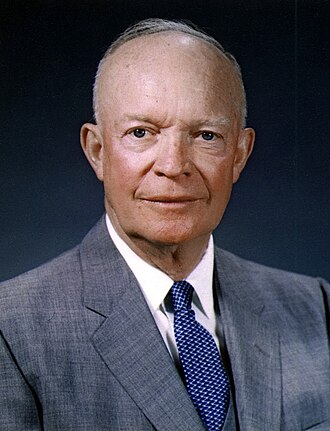 Dwight D. Eisenhower
Post-Graduate Legal • 1m
EO 11284 May 27, 1966
⚖️✨ Zone 2 (Zone of Twilight) Constitutional Neutral
Executive Order 11284—Suspension of the Provisions of Sections 5701(a)(1) and 6371 of Title 10, United States Code, Which Relate to the Continuation on the Active List of Rear Admirals in the Line of the Navy Not Restricted in the Performance of Duty
📜 Art. II §2: Commander-in-Chief Supervisory Authority
I hereby suspend the provisions of Sections 5701(a) (1) and 6371 of Title 10 of the United States Code.
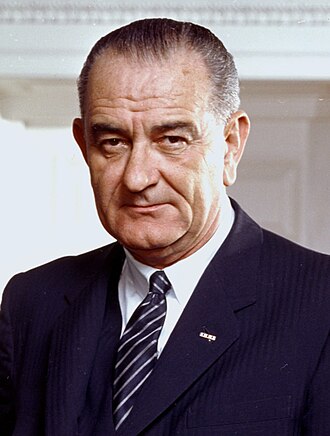 Lyndon B. Johnson
High School • 1m
EO 11283 May 27, 1966
⚖️⚠️ Zone 3 (Lowest Ebb) Friction (-0.41)
Executive Order 11283—Designating the International Cotton Institute as a Public International Organization Entitled to Enjoy Certain Privileges, Exemptions, and Immunities
📜 Art. I §8: Legislative Prerogative Tension (Purse & Commerce)
I hereby designate the International Cotton Institute as a public international organization entitled to enjoy those privileges, exemptions, and immunities provided for by the International Organizations Immunities Act which are described in Article VI of the Articles of…
Lyndon B. Johnson Post-Graduate Legal • 5m
EO 11281 May 13, 1966
⚖️⚠️ Zone 3 (Lowest Ebb) Friction (-0.19)
Executive Order 11281—Transferring Jurisdiction Over Certain Blocked Assets From the Attorney General to the Secretary of the Treasury
📜 Art. I §8: Legislative Prerogative Tension (Purse & Commerce)
The authority granted to the Attorney General by Executive Order No. 9989 with respect to property and interests blocked or otherwise subject to restriction under Executive Order No. 8389 is hereby terminated and Executive Order No. 9989 is hereby superseded. SEC. 2.
Lyndon B. Johnson College Level • 5m
EO 11286 Jun 10, 1966
⚖️✨ Zone 2 (Zone of Twilight) Constitutional Neutral
Executive Order 11286—Designating the Department of Commerce as the Department Through Which the United States Shall Participate in the Inter-American Cultural and Trade Center in Dade County, Florida
📜 Art. II §1: Executive Discretion & Internal Operations
I hereby designate the Department of Commerce as the Department through which the United States shall, under that Act, participate in the Inter-American Cultural and Trade Center (Interama) in Dade County, Florida.
Lyndon B. Johnson College Level • 1m
EO 11285 Jun 10, 1966
🏛️✅ Zone 1 (Maximum Authority) Constitutional Neutral
Executive Order 11285—Designation of Certain Foreign Countries as Economically Less Developed Countries For Purposes of the Interest Equalization Tax
📜 Art. I §8: Delegated Tariff & Commerce Execution
Economically less developed countries. For purposes of the tax imposed by section 4911 of the Internal Revenue Code, the following areas are designated as economically less developed countries: (a) All foreign countries (including Trust Territories) in existence on or after the…
Lyndon B. Johnson Post-Graduate Legal • 4m
📜
Scholarly & Legal Citations
Exec. Order No. 11,282 (May 26, 1966), https://executiveordersarchive.org/orders/app-executive-order-11282-prevention-control-and-abatement-air-pollution-federal-activities.
