WHEREAS notice was given on December 7, 1965, that I intended to notify the Senate and House of Representatives of my intention to terminate the designation of Abu Dhabi, Bahrain, Iran, Iraq, Kuwait-Saudi Arabia Neutral Zone, Libya, Qatar, and Saudi Arabia as economically less developed countries for purposes of the tax imposed by section 4911 of the Internal Revenue Code; and WHEREAS the Senate and House of Representatives have been duly notified of my intention to terminate the designation of these countries as economically less developed countries for such purposes; Now, THEREFORE, by virtue of the authority vested in me by section 4916 (b) of the Internal Revenue Code of 1954, as added by section 2 of the Interest Equalization Tax Act, approved September 2, 1964 (Public Law 88– 563), by section 301 of title 3 of the United States Code, and as President of the United States, it is hereby ordered as follows: SECTION 1. Economically less developed countries. For purposes of the tax imposed by section 4911 of the Internal Revenue Code, the following areas are designated as economically less developed countries: (a) All foreign countries (including Trust Territories) in existence on or after the effective date of this order, other than Australia, Austria, Belgium, Canada, Denmark, Federal Republic of Germany, France, Iran, Iraq, Ireland, Italy, Japan, Kuwait, Kuwait-Saudi Arabia Neutral Zone, Libya, Liechtenstein, Luxembourg, Monaco, Netherlands, New Zealand, Norway, Portugal, San Marino, Saudi Arabia, Spain, Sweden, Switzerland, Union of South Africa, United Kingdom, and any foreign country within the Sino-Soviet bloc, as defined in section 2; (b) Each territory, department, province, and possession (other than Abu Dhabi, the Bahamas, Bahrain, Bermuda, Hong Kong, and Qatar), of any foreign country in existence on or after the effective date of this order, other than a foreign country within the Sino-Soviet bloc, as defined in section 2, if the territory, department, province, or possession is overseas from the foreign country of which it is a territory, department, province, or possession; and (c) The Commonwealth of Puerto Rico and all possessions of the United States. SEC. 2. Definition of the term "foreign country within the Sino-Soviet bloc. " For purposes of this order, the term "foreign country within the Sino-Soviet bloc" shall mean Albania, Bulgaria, any part of China which is dominated or controlled by International Communism, Cuba, Czechoslovakia, Estonia, Hungary, any part of Korea which is dominated or controlled by International Communism, Latvia, Lithuania, Outer Mongolia, Poland (including any area under its provisional administration), Rumania, Soviet Zone of Germany and the Soviet Sector of Berlin, Tibet, Union of Soviet Socialist Republics and the Kurile Islands, Southern Sakhalin, and areas in East Prussia which are under the provisional administration of the Union of Soviet Socialist Republics, and any part of Viet Nam which is dominated or controlled by International Communism. SEC. 3. Prior commitments to acquire. Notwithstanding the provisions of sections 1 and 2 of this order, any area which had the status of an economically less developed country under Executive Order No. 11224 prior to the effective date of this order shall be deemed to be an economically less developed country for purposes of section 4916 with respect to an acquisition of stock or a debt obligation (a) If such acquisition is made pursuant to an obligation to acquire which, prior to December 7, 1965, was unconditional or was subject only to conditions contained in a formal contract under which partial performance had occurred; or (b) If, with respect to such acquisition, the acquiring United States person (or, in a case where two or more United States persons are making acquisitions as part of a single transaction, a majority in interest of such persons) had taken every action prior to December 7, 1965, to signify approval of the acquisition under the procedures ordinarily employed by such person (or persons) in similar transactions and had sent or deposited for delivery to the foreign person from whom the acquisition was made written evidence of such approval in the form of a commitment letter, memorandum of terms, draft purchase contract, or other document setting forth, or referring to a document sent by the foreign person from whom the acquisition was made which set forth, the principal terms of such acquisition, subject only to the execution of formal documents evidencing the acquisition and to customary closing conditions. SEC. 4. Rules and regulations. The Secretary of the Treasury or his delegate is authorized to prescribe from time to time regulations, rulings, directions, and instructions to carry out the purposes of this order. SEC. 5. Effective date. This order shall become effective upon its filing for publication in the Federal Register. SEC. 6. Supersedure of Executive Order No. 11224. The Executive Order No. 11224, dated May 13, 1965, is hereby superseded. LYNDON B. JOHNSON The White House June 10, 1966
Executive Order 11285 🏛️✅ Zone 1: Maximum Authority Constitutional Neutral (+0.02)
📜 Art. I §8: Delegated Tariff & Commerce Execution
Executive Order 11285—Designation of Certain Foreign Countries as Economically Less Developed Countries For Purposes of the Interest Equalization Tax
Executive Brief • At a Glance
⏱️ 4 min read (804 words) •
● In Effect
🎯 Primary Mandate
For purposes of the tax imposed by section 4911 of the Internal Revenue Code, the following areas are designated as economically less developed countries: (a) All foreign countries (including Trust Territories) in existence on or after the effective date of this order, other than Australia, Austria, Belgium, Canada, Denmark, Federal Republic of Germany, France, Iran, Iraq, Ireland, Italy, Japan, Kuwait, Kuwait-Saudi Arabia Neutral Zone, Libya, Liechtenstein, Luxembourg, Monaco, Netherlands, New Zealand, Norway, Portugal, San Marino, Saudi Arabia, Spain, Sweden, Switzerland, Union of South Africa, United Kingdom, and any foreign country within the Sino-Soviet bloc, as defined in section 2; (b) Each territory, department, province, and…
⚖️ Constitutional Footing
🏛️✅ Zone 1: Maximum Authority
Express or Implied Congressional Authorization
📜 Art. I §8: Delegated Tariff & Commerce Execution
🏛️ Scope & Affected Sectors
Executive Departments & Federal Civil Servants Private Citizens & Property Owners Foreign Nations & International Entities Financial Institutions & Monetary Authorities
Plain-English Translation & Framers' Constitutional Analysis
Early Statesman synthesis distilling legal jargon into practical meaning, statutory anchors, and structural constitutional impacts.
Signed by President Lyndon B. Johnson on June 10, 1966, this order concerns Designation of Certain Foreign Countries as Economically Less Developed Countries For Purposes of the Interest Equalization Tax. Economically less developed countries. For purposes of the tax imposed by section 4911 of the Internal Revenue Code, the following areas are designated as economically less developed countries: (a) All foreign countries (including Trust Territories) in existence on or after the effective date of this order, other than Australia, Austria, Belgium, Canada, Denmark, Federal Republic of Germany, France, Iran, Iraq…
Constitutional Assessment: This action represents an orderly exercise of Article II administrative discretion, managing the internal machinery and personnel of the executive branch without abridging the ancient liberties of the people.
Key Directives & Operative Actions
▪
For purposes of the tax imposed by section 4911 of the Internal Revenue Code, the following areas are designated as economically less developed countries: (a) All foreign countries (including Trust Territories) in existence on or after the effective date of this order, other than Australia, Austria, Belgium, Canada, Denmark, Federal Republic of Germany, France, Iran, Iraq, Ireland, Italy, Japan, Kuwait, Kuwait-Saudi Arabia Neutral Zone, Libya, Liechtenstein, Luxembourg, Monaco, Netherlands, New Zealand, Norway, Portugal, San Marino, Saudi Arabia, Spain, Sweden, Switzerland, Union of South Africa, United Kingdom, and any foreign country within the Sino-Soviet bloc, as defined in section 2; (b) Each territory, department, province, and…
▪
" For purposes of this order, the term "foreign country within the Sino-Soviet bloc" shall mean Albania, Bulgaria, any part of China which is dominated or controlled by International Communism, Cuba, Czechoslovakia, Estonia, Hungary, any part of Korea which is dominated or controlled by International Communism, Latvia, Lithuania, Outer Mongolia, Poland (including any area under its provisional administration), Rumania, Soviet Zone of Germany and the Soviet Sector of Berlin, Tibet, Union of Soviet Socialist Republics and the Kurile Islands, Southern Sakhalin, and areas in East Prussia which are under the provisional administration of the Union of Soviet Socialist Republics, and any part of Viet Nam which is dominated or controlled by…
▪
Notwithstanding the provisions of sections 1 and 2 of this order, any area which had the status of an economically less developed country under Executive Order No. 11224 prior to the effective date of this order shall be deemed to be an economically less developed country for purposes of section 4916 with respect to an acquisition of stock or a debt obligation (a) If such acquisition is made pursuant to an obligation to acquire which, prior to December 7, 1965, was unconditional or was subject only to conditions contained in a formal contract under which partial performance had occurred; or (b) If, with respect to such acquisition, the acquiring United States person (or, in a case where two or more United States persons are making…
▪
The Secretary of the Treasury or his delegate is authorized to prescribe from time to time regulations, rulings, directions, and instructions to carry out the purposes of this order.
Constitutional & Societal Entities Impacted
🏛️ Executive Departments & Federal Civil Servants
🏛️ Private Citizens & Property Owners
🏛️ Foreign Nations & International Entities
🏛️ Financial Institutions & Monetary Authorities
Policy Areas & Topics
🏛️
The Framers' Constitutional Council
1787 PrismEvaluating this order against the constitutional debates of 1787 and the limits of Article II executive power.
🏛️✅ Zone 1 (Maximum Authority)
§
"When the President acts pursuant to an express or implied authorization of Congress, his authority is at its maximum, for it includes all that he possesses in his own right plus all that Congress can delegate."
— Justice Robert H. Jackson, Youngstown Sheet & Tube Co. v. Sawyer (1952) Express or Implied Congressional Authorization
JM
James Madison
Separation of Powers & Legislative Primacy
"The constitutional magistracy was designed not to invent policy, but to be the faithful instrument of the laws passed by the people's representatives." — Speech in the First Congress (1789)
Madison would approve the structural posture of this order. The President acts strictly in subordination to statutory authority granted under Article II, Section 3 ("take Care that the Laws be faithfully executed"). The checks and balances hold firm because the policy origin remains with the legislature.
Madisonian Stance: Concurring (Statutory)
AH
Alexander Hamilton
The Energetic Executive & Unified Command
"The direction of war implies the direction of the common strength; and the power of directing and employing the common strength must be under the direction of the single hand of the Executive." — Federalist No. 74 (1788)
Hamilton would forcefully champion executive discretion here. For foreign entanglements, commerce defense, and national security, deliberative assemblies are too slow and faction-ridden. A unified, energetic Executive exercising swift command is precisely what the Philadelphia Convention intended for national preservation.
Hamiltonian Stance: Supportive of Execution
GM
George Mason
Bill of Rights, Due Process & 10th Amendment
"The president will be surrounded by flatterers and sycophants... and the great powers of the executive will gradually absorb the liberties of the people." — Cato IV (Anti-Federalist, 1787)
The Anti-Federalist prism advises continuous democratic vigilance. Even routine administrative directives aggregate centralized federal power away from town halls and state assemblies toward a distant executive apparatus.
Anti-Federalist Stance: Eternal Vigilance Required
📐
Five Measurable "Constitutional Friction" Dimensions
An objective audit measuring potential separation-of-powers tension against the United States Constitution and established Supreme Court doctrine.
⚖️ Discretionary Twilight Zone
31 / 100 friction index
Dimension 1 • Art. I, §1 & §8
Moderate Friction
Legislative Encroachment & Purse
Administers commerce or fiscal programs requiring ongoing statutory delegation and legislative oversight.
Benchmark: Power of the purse, taxes/tariffs, and rule of law reserved to Congress.
Dimension 2 • Art. II, §1 & §3
Low Friction
Executive Scope & Faithfulness
Exercises standard supervisory executive authority to faithfully execute existing statutes.
Benchmark: Faithfully execute laws enacted by Congress vs. unilateral decree.
Dimension 3 • 10th Amendment
Moderate Friction
Federalism & State Sovereignty
Engages state and local partners in cooperative federalism programs.
Benchmark: Police powers and un-delegated responsibilities reserved to the States.
Dimension 4 • 5th & 14th Amendments
Low Friction
Due Process & Individual Rights
Focuses on internal governmental operations with no direct impairment of private rights or property.
Benchmark: Protection of private property, contracts, liberty, and procedural justice.
Dimension 5 • Separation of Powers
Low Friction
Youngstown Jacksonian Tier
The President operates strictly as the constitutional Chief Executive, carrying out policy established by Congress with strong statutory backing.
Benchmark: Express or Implied Congressional Authorization
⚖️
Audit Synthesis
This order operates within Justice Jackson’s Zone of Twilight, resting upon concurrent presidential authority or congressional silence.
Weighted composite: Art. I (25%), Art. II (25%), Federalism (15%), Due Process (15%), Youngstown (20%).
ℹ️
How to read these dimensions: Executive power expands whenever an administration acts without explicit statutory authorization from Congress (Article I), touches upon police powers historically reserved to the states (Tenth Amendment), or limits private rights and property without judicial process. A low friction score indicates strict concordance with enacted law; a high friction score highlights orders testing the limits of presidential discretion.
Total Words
804
5,106 characters
Estimated Read Time
4 min
@ 200 words / min
Flesch-Kincaid
27
Post-Graduate Legal
Text size:
Related Executive Orders
1 order cited directly in this text, plus related actions from this administration.
EO 11224 May 13, 1965
🏛️✅ Zone 1 (Maximum Authority) Constitutional Neutral
Executive Order 11224—Designation of Certain Foreign Countries as Economically Less Developed Countries for Purposes of the Interest Equalization Tax
📜 Art. I §8: Delegated Tariff & Commerce Execution
For purposes of the tax imposed by section 4911 of the Internal Revenue Code, the following areas are designated as economically less developed countries: (a) All foreign countries (including Trust Territories) in existence on or after the effective date of this order, other…
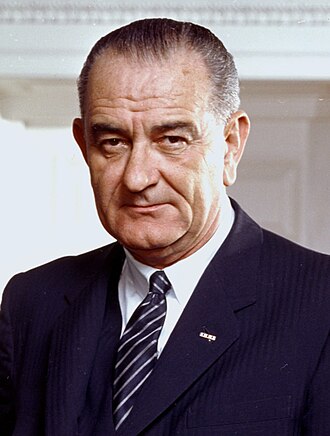 Lyndon B. Johnson
Post-Graduate Legal • 4m
EO 11286 Jun 10, 1966
⚖️✨ Zone 2 (Zone of Twilight) Constitutional Neutral
Executive Order 11286—Designating the Department of Commerce as the Department Through Which the United States Shall Participate in the Inter-American Cultural and Trade Center in Dade County, Florida
📜 Art. II §1: Executive Discretion & Internal Operations
I hereby designate the Department of Commerce as the Department through which the United States shall, under that Act, participate in the Inter-American Cultural and Trade Center (Interama) in Dade County, Florida.
Lyndon B. Johnson College Level • 1m
EO 11284 May 27, 1966
⚖️✨ Zone 2 (Zone of Twilight) Constitutional Neutral
Executive Order 11284—Suspension of the Provisions of Sections 5701(a)(1) and 6371 of Title 10, United States Code, Which Relate to the Continuation on the Active List of Rear Admirals in the Line of the Navy Not Restricted in the Performance of Duty
📜 Art. II §2: Commander-in-Chief Supervisory Authority
I hereby suspend the provisions of Sections 5701(a) (1) and 6371 of Title 10 of the United States Code.
Lyndon B. Johnson High School • 1m
EO 11283 May 27, 1966
⚖️⚠️ Zone 3 (Lowest Ebb) Friction (-0.41)
Executive Order 11283—Designating the International Cotton Institute as a Public International Organization Entitled to Enjoy Certain Privileges, Exemptions, and Immunities
📜 Art. I §8: Legislative Prerogative Tension (Purse & Commerce)
I hereby designate the International Cotton Institute as a public international organization entitled to enjoy those privileges, exemptions, and immunities provided for by the International Organizations Immunities Act which are described in Article VI of the Articles of…
Lyndon B. Johnson Post-Graduate Legal • 5m
EO 11282 May 26, 1966
⚖️✨ Zone 2 (Zone of Twilight) Constitutional Neutral
Executive Order 11282—Prevention, Control, and Abatement of Air Pollution by Federal Activities
📜 5th Amend: Regulatory Execution with Due Process
Policy. The heads of the departments, agencies, and establishments of the Executive Branch of the Government shall provide leadership in the nationwide effort to improve the quality of our air through the prevention, control, and abatement of air pollution from Federal…
Lyndon B. Johnson Post-Graduate Legal • 7m
EO 11287 Amended Jun 28, 1966
⚖️✨ Zone 2 (Zone of Twilight) Constitutional Neutral
Executive Order 11287—Award and Presentation of the National Medal of Science
📜 5th Amend: Regulatory Execution with Due Process
Award of Medal. (a) The President shall award the National Medal of Science (hereinafter referred to as the Medal) established by the Act, the specifications of which are prescribed by Executive Order No. 10910 of January 17, 1961, as amended, on the basis of recommendations…
Lyndon B. Johnson College Level • 6m
📜
Scholarly & Legal Citations
Exec. Order No. 11,285 (June 10, 1966), https://executiveordersarchive.org/orders/app-executive-order-11285-designation-certain-foreign-countries-economically-less-developed.
