The President's Labor-Management Committee established by Executive Order No. 11809 was authorized to "encourage the establishment of labor-management committees (bipartite or tripartite) in particular sectors or industries as may be appropriate." That Committee expressed the view that a committee should appropriately be established in the construction industry. An interim labor-management committee on collective bargaining problems in construction, representative of labor and management organizations involved in collective bargaining in the industry, has met regularly since November 1974 to explore the feasibility and details of a continuing committee. The recommendations of the interim labor-management committee have been ratified by the standard national labor and management organizations engaged in collective bargaining in the industry, and their representatives have been authorized to participate and serve on such a committee. This Order is required to establish an arrangement and machinery for an operating structure with a minimum of government interference in the furtherance of more effective collective bargaining in the industry. Now, THEREFORE, by virtue of the authority vested in me as President of the United States of America, it is ordered as follows: SECTION 1. There is hereby established the Collective Bargaining Committee in Construction (hereinafter referred to as the Committee). The Committee shall consist of ten labor members and ten management members appointed by the President. The Secretary of Labor or his designee shall serve as Chairman. The Director of the Federal Mediation and Conciliation Service shall participate as a member of the Committee. Additional alternate members may be appointed by the Secretary of Labor. SEC. 2. (a) The Committee shall facilitate the collective bargaining process at local and area levels, assist in providing a data bank of wage and benefit information, encourage peaceful negotiation of responsible local and area agreements, facilitate local coordinated bargaining and larger area bargaining wherever appropriate, and seek to resolve particular disputes that cannot otherwise be reasonably resolved. (b) In the furtherance of these objectives the Committee is authorized to hold conferences; and if it deems appropriate, in particular collective bargaining disputes or in groups of related disputes, the Committee may make recommendations to the appropriate standard organizations which are party to collective bargaining in the construction industry concerning the provisions of agreements or the structure of collective bargaining. (c) The Committee shall promote more effective machinery for the resolution of disputes over the terms of collective bargaining agreements which recognizes the interests of each branch of the industry and preserves existing procedures that have been effective. SEC. 3. In addition to the foregoing tasks, the Committee shall also: (a) Review and analyze construction manpower under collective bargaining agreements, including regional requirements and availabilities of respective skills for projected needs, and the effectiveness of training programs, and, if appropriate, maintain a continuing central data file of manpower requirements and availabilities by major areas of the country; (b) Consider measures to reduce the instability of demand for construction labor and to provide more weeks of work per year; (c) Take measures to increase productivity in the industry under collective bargaining agreements; (d) Improve further the current wage and benefit data base for construction to facilitate collective bargaining at local and regional levels and the role of the national organizations in dispute settlements; (e) Consider the problems for collective bargaining arising from the activities of separate Federal government agencies as they affect the construction industry; (f) Consider from time to time such problems in the construction industry under collective bargaining as it may deem appropriate; and (g) Encourage the establishment of comparable joint regional or local committees on an area basis to the extent it deems appropriate. SEC. 4. In carrying out its functions, the Committee shall give consideration to long term developments in the construction industry under collective bargaining agreements and shall seek to develop appropriate policies in the national interest. SEC. 5. All executive departments and agencies of the Federal government are authorized and directed to cooperate with the Committee and to furnish such information, personnel and assistance, not inconsistent with law, as it may require in the performance of its duties. SEC. 6. The Committee shall make periodic reports to the President. Standard national labor and management organizations are encouraged to review the operation of the Committee and report to the President annually on the extent to which the purposes of this Order are being achieved. GERALD R. FORD The White House, April 1, 1975.
Executive Order 11849 🏛️✅ Zone 1: Maximum Authority Constitutional Fidelity (+0.23)
📜 Art. II §3: Administrative Management & Civil Service
Executive Order 11849—Establishing the Collective Bargaining Committee in Construction
Executive Brief • At a Glance
⏱️ 4 min read (728 words) •
● In Effect
🎯 Primary Mandate
The President's Labor-Management Committee established by Executive Order No. 11809 was authorized to "encourage the establishment of labor-management committees (bipartite or tripartite) in particular sectors or industries as may be appropriate." That Committee expressed the view that a committee should appropriately be established in the construction industry.
⚖️ Constitutional Footing
🏛️✅ Zone 1: Maximum Authority
Express or Implied Congressional Authorization
📜 Art. II §3: Administrative Management & Civil Service
🏛️ Scope & Affected Sectors
Merchants, Importers & Commercial Enterprises Executive Departments & Federal Civil Servants
Plain-English Translation & Framers' Constitutional Analysis
Early Statesman synthesis distilling legal jargon into practical meaning, statutory anchors, and structural constitutional impacts.
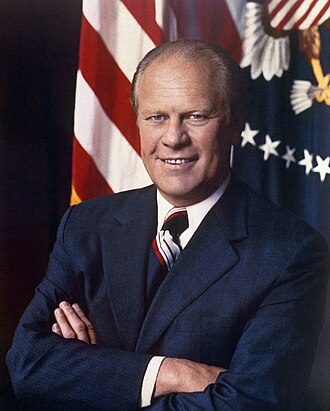
Signed by President Gerald R. Ford on April 1, 1975, this order concerns Establishing the Collective Bargaining Committee in Construction. The President's Labor-Management Committee established by Executive Order No. 11809 was authorized to "encourage the establishment of labor-management committees (bipartite or tripartite) in particular sectors or industries as may be appropriate." That Committee expressed the view that a committee should appropriately be established in the construction industry.
Constitutional Assessment: This action represents an orderly exercise of Article II administrative discretion, managing the internal machinery and personnel of the executive branch without abridging the ancient liberties of the people.
Key Directives & Operative Actions
▪
The President's Labor-Management Committee established by Executive Order No. 11809 was authorized to "encourage the establishment of labor-management committees (bipartite or tripartite) in particular sectors or industries as may be appropriate." That Committee expressed the view that a committee should appropriately be established in the construction industry.
▪
The recommendations of the interim labor-management committee have been ratified by the standard national labor and management organizations engaged in collective bargaining in the industry, and their representatives have been authorized to participate and serve on such a committee.
▪
This Order is required to establish an arrangement and machinery for an operating structure with a minimum of government interference in the furtherance of more effective collective bargaining in the industry.
▪
Now, THEREFORE, by virtue of the authority vested in me as President of the United States of America, it is ordered as follows: SECTION 1.
Constitutional & Societal Entities Impacted
🏛️ Merchants, Importers & Commercial Enterprises
🏛️ Executive Departments & Federal Civil Servants
Policy Areas & Topics
🏛️
The Framers' Constitutional Council
1787 PrismEvaluating this order against the constitutional debates of 1787 and the limits of Article II executive power.
🏛️✅ Zone 1 (Maximum Authority)
§
"When the President acts pursuant to an express or implied authorization of Congress, his authority is at its maximum, for it includes all that he possesses in his own right plus all that Congress can delegate."
— Justice Robert H. Jackson, Youngstown Sheet & Tube Co. v. Sawyer (1952) Express or Implied Congressional Authorization
JM
James Madison
Separation of Powers & Legislative Primacy
"The constitutional magistracy was designed not to invent policy, but to be the faithful instrument of the laws passed by the people's representatives." — Speech in the First Congress (1789)
Madison would approve the structural posture of this order. The President acts strictly in subordination to statutory authority granted under Article II, Section 3 ("take Care that the Laws be faithfully executed"). The checks and balances hold firm because the policy origin remains with the legislature.
Madisonian Stance: Concurring (Statutory)
AH
Alexander Hamilton
The Energetic Executive & Unified Command
"A feeble Executive implies a feeble execution of the government; and a government ill executed, whatever it may be in theory, must be, in practice, a bad government." — Federalist No. 70 (1788)
Hamilton would view this directive as the natural and indispensable functioning of administrative leadership. Without the power to coordinate agencies, manage personnel, and resolve operational ambiguities, the modern presidency would be reduced to an impotent figurehead.
Hamiltonian Stance: Supportive of Execution
GM
George Mason
Bill of Rights, Due Process & 10th Amendment
"The president will be surrounded by flatterers and sycophants... and the great powers of the executive will gradually absorb the liberties of the people." — Cato IV (Anti-Federalist, 1787)
The Anti-Federalist prism advises continuous democratic vigilance. Even routine administrative directives aggregate centralized federal power away from town halls and state assemblies toward a distant executive apparatus.
Anti-Federalist Stance: Eternal Vigilance Required
📐
Five Measurable "Constitutional Friction" Dimensions
An objective audit measuring potential separation-of-powers tension against the United States Constitution and established Supreme Court doctrine.
⚖️ Discretionary Twilight Zone
31 / 100 friction index
Dimension 1 • Art. I, §1 & §8
Moderate Friction
Legislative Encroachment & Purse
Administers commerce or fiscal programs requiring ongoing statutory delegation and legislative oversight.
Benchmark: Power of the purse, taxes/tariffs, and rule of law reserved to Congress.
Dimension 2 • Art. II, §1 & §3
Low Friction
Executive Scope & Faithfulness
Exercises standard supervisory executive authority to faithfully execute existing statutes.
Benchmark: Faithfully execute laws enacted by Congress vs. unilateral decree.
Dimension 3 • 10th Amendment
Moderate Friction
Federalism & State Sovereignty
Engages state and local partners in cooperative federalism programs.
Benchmark: Police powers and un-delegated responsibilities reserved to the States.
Dimension 4 • 5th & 14th Amendments
Low Friction
Due Process & Individual Rights
Focuses on internal governmental operations with no direct impairment of private rights or property.
Benchmark: Protection of private property, contracts, liberty, and procedural justice.
Dimension 5 • Separation of Powers
Low Friction
Youngstown Jacksonian Tier
The President operates strictly as the constitutional Chief Executive, carrying out policy established by Congress with strong statutory backing.
Benchmark: Express or Implied Congressional Authorization
⚖️
Audit Synthesis
This order operates within Justice Jackson’s Zone of Twilight, resting upon concurrent presidential authority or congressional silence.
Weighted composite: Art. I (25%), Art. II (25%), Federalism (15%), Due Process (15%), Youngstown (20%).
ℹ️
How to read these dimensions: Executive power expands whenever an administration acts without explicit statutory authorization from Congress (Article I), touches upon police powers historically reserved to the states (Tenth Amendment), or limits private rights and property without judicial process. A low friction score indicates strict concordance with enacted law; a high friction score highlights orders testing the limits of presidential discretion.
Total Words
728
5,018 characters
Estimated Read Time
4 min
@ 200 words / min
Flesch-Kincaid
21.1
Post-Graduate Legal
Text size:
🔗
Referenced By Later Executive Orders (1)
Subsequent presidents who cited, amended, continued, or revoked this directive in later orders.
Jimmy Carter • 1978-12-28
Related Executive Orders
1 order cited directly in this text, plus related actions from this administration.
EO 11809 Sep 30, 1974
🏛️✅ Zone 1 (Maximum Authority) Constitutional Neutral
Executive Order 11809—Establishing the President's Labor-Management Committee
📜 Art. I §8: Delegated Tariff & Commerce Execution
There is hereby established the President's Labor-Management Committee (hereinafter referred to as the Committee). The Committee shall consist of eight labor members and eight management members and a neutral coordinator, all to be designated by the President. SEC. 2.
 Gerald R. Ford
Post-Graduate Legal • 1m
EO 11848 Mar 29, 1975
⚖️✨ Zone 2 (Zone of Twilight) Constitutional Neutral
Executive Order 11848—Extending the Reporting Date for the Commission on CIA Activities Within the United States
📜 Art. II §1: Executive Discretion & Internal Operations
Section 6 of Executive Order No. 11828 entitled Establishing a Commission on CIA Activities Within the United States, dated January 4, 1975 is amended by deleting the words "three months from the date of this order," and substituting therefor "June 6, 1975."
Gerald R. Ford High School • 1m
EO 11847 Mar 28, 1975
⚖️✨ Zone 2 (Zone of Twilight) Constitutional Neutral
Executive Order 11847—Exemption of Walter C. Sauer From Mandatory Retirement
📜 Art. II §1: Executive Discretion & Internal Operations
Walter C. Sauer, First Vice President and Vice Chairman, Export-Import Bank of the United States, will become subject to mandatory retirement for age as of March 31, 1975, under the provisions of Section 8335 of Title 5 of the United States Code unless exempted by Executive…
Gerald R. Ford High School • 1m
EO 11846 Amended Mar 27, 1975
⚖️✨ Zone 2 (Zone of Twilight) Constitutional Neutral
Executive Order 11846—Administration of the Trade Agreements Program
📜 Art. II §2: Commander-in-Chief Supervisory Authority
The Trade Agreements Program. The "trade agreements program" includes all activities consisting of, or related to, the negotiation or administration of international agreements which primarily concern trade and which are concluded pursuant to the authority vested in the…
Gerald R. Ford Post-Graduate Legal • 11m
EO 11850 Apr 8, 1975
⚖️✨ Zone 2 (Zone of Twilight) Constitutional Neutral
Executive Order 11850—Renunciation of Certain Uses in War of Chemical Herbicides and Riot Control Agents
📜 Art. II §2: Commander-in-Chief Supervisory Authority
The United States renounces, as a matter of national policy, first use of herbicides in war except use, under regulations applicable to their domestic use, for control of vegetation within U.S. bases and installations or around their immediate defensive perimeters, and first…
Gerald R. Ford Post-Graduate Legal • 2m
EO 11845 Mar 24, 1975
⚖️✨ Zone 2 (Zone of Twilight) Constitutional Neutral
Executive Order 11845—Delegating Certain Reporting Functions to the Director of the Office of Management and Budget
📜 Art. II §1: Executive Discretion & Internal Operations
The Director of the Office of Management and Budget is hereby designated and empowered to exercise, as of October 1, 1974, without ratification or other action of the President (1) the functions required by sections 1014(b) and 1014(d) of the act of transmitting to the…
Gerald R. Ford Post-Graduate Legal • 1m
📜
Scholarly & Legal Citations
Exec. Order No. 11,849 (Apr. 1, 1975), https://executiveordersarchive.org/orders/app-executive-order-11849-establishing-the-collective-bargaining-committee-construction.
