By virtue of the authority vested in me by the Constitution and the statutes of the United States of America, including the Energy Policy and Conservation Act (Public Law 94-163, 89 Stat. 871, 42 U.S.C. 6201 et seq.), the Motor Vehicle Information and Cost Savings Act, as amended (15 U.S.C. 1901 et seq.), the Defense Production Act of 1950, as amended (50 U.S.C. App. 2061 et seq.), and section 301 of Title 3 of the United States Code, and as President of the United States of America, it is hereby ordered as follows: SECTION 1. (a) The Administrator of General Services is designated and empowered to perform without approval, ratification, or other action by the President, the functions vested in the President by section 510 of the Motor Vehicle Information and Cost Savings Act, as amended (89 Stat. 915, 15 U.S.C. 2010). In performing these functions, the Administrator of General Services shall consult with the Secretary of Transportation and the Administrator of the Federal Energy Administration. (b) The Administrator of the Federal Energy Administration, in consultation with the Administrator of General Services and the Administrator of Energy Research and Development, shall coordinate the overall development of the 10-year plan for energy conservation with respect to Government buildings, as provided by section 381 (a) (2) of the Energy. Policy and Conservation Act (89 Stat. 939, 42 U.S.C. 6361 (a) (2)). The Administrator of the Federal Energy Administration shall also consult with the Secretary of Commerce for the development of appropriate standards and technical criteria included in this plan. The heads of those Federal agencies that have the authority to construct, operate, manage, or lease Federal buildings shall prepare plans for buildings under the custody and control of, or leased by, such agencies. The Administrator of the Federal Energy Administration shall submit such plan to the President for his consideration. SEC. 2. The Secretary of Commerce is designated and empowered to perform without approval, ratification, or other action by the President, the functions vested in the President by section 103 of the Energy Policy and Conservation Act (89 Stat. 877, 42 U.S.C. 6212). In performing each of these functions, the Secretary of Commerce shall consult with appropriate Executive agencies, as set forth in the provisions of section 5(a) of the Export Administration Act of 1969, as amended (50 U.S.C. App. 2404(a)). SEC. 3. The Administrator of the Office of Federal Procurement Policy, in the exercise of his statutory responsibility to provide overall direction of procurement policy (41 U.S.C. 405), shall, after consultation with the heads of appropriate agencies, including those responsible for developing energy conservation and efficiency standards, and to the extent he considers appropriate and with due regard to the program activities of the Executive agencies, provide policy guidance governing the application of energy conservation and efficiency standards in the Federal procurement process in accord with section 381(a) (1) of the Energy Policy and Conservation Act (89 Stat. 939, 42 U.S.C. 6361(a) (1)). SEC. 4. (a) The Administrator of the Federal Energy Administration, in consultation with the heads of appropriate agencies, is hereby authorized and directed to develop for the President's consideration, in accord with section 201 of the Energy Policy and Conservation Act (89 Stat. 890, 42 U.S.C. 6261), the energy conservation and rationing contingency plans prescribed under sections 202 and 203 of the Energy Policy and Conservation Act (89 Stat. 892, 42 U.S.C. 6262 and 6263). (b) The Administrator of the Federal Energy Administration shall prepare, with the assistance of the heads of appropriate agencies, for the President's consideration, the annual reports provided by section 381(c) of the Energy Policy and Conservation Act (89 Stat. 939, 42 U.S.C. 6361(c)). SEC. 5. The Secretary of State is hereby delegated the authority vested in the President by Section 252(c) (1) (A) (iii) of the Energy Policy and Conservation Act (89 Stat. 895, 42 U.S.C. 6272(c) (1) (A) (iii)). SEC. 6. The Administrator of the Federal Energy Administration is designated and empowered to perform without approval, ratification, or other action by the President, the functions vested in the President by: (a) Section 251 of the Energy Policy and Conservation Act (89 Stat. 894, 42 U.S.C. 6271), except the making of the findings provided by subparagraph (b) (1) (B) thereof; however, in performing these functions, the Administrator shall consult with the Secretary of Commerce with respect to the international allocation of petroleum products which are within the territorial jurisdiction of the United States; and provided that the Secretary of Commerce shall promulgate rules, pursuant to the procedures established by the Export Administration Act of 1969, as amended, to authorize the export of petroleum and petroleum products, as may be necessary for implementation of the obligations of the United States under the International Energy Program, and in accordance with the rules promulgated under Section 251 of the Energy Policy and Conservation Act by the Administrator pursuant to this subsection. (b) Section 253 (c) of the Energy Policy and Conservation Act (89 Stat. 898, 42 U.S.C. 6273) ; (c) Section 254(a) of the Energy Policy and Conservation Act (89 Stat. 899, 42 U.S.C. 6274(a)), including the receipt of petitions under section 254(a) (3) (B) ; provided that, the authority under section 254(a) may be exercised only after consultation with the Secretary of State; (d) Section 254 (b) of the Energy Policy and Conservation Act (89 Stat. 900, 42 U.S.C. 6274(b)) ; provided that, in determining whether the transmittal of data would prejudice competition or violate the antitrust laws, the Administrator shall consult with the Attorney General, and in determining whether the transmittal of data would be inconsistent with national security interests, he shall consult with the Secretaries of State and Defense, and the heads of such other agencies as he deems appropriate; (e) Section 523(a) (2) (A) of the Energy Policy and Conservation Act (89 Stat. 962, 42 U.S.C. 6393(a) (2) (A)), but only to the extent applicable to other functions delegated or assigned by this Order to the Administrator of the Federal Energy Administration. SEC. 7. (a) The Administrator of General Services is designated and empowered to perform without approval, ratification, or other action by the President, the functions vested in the President by section 101(c) of the Defense Production Act of 1950, as amended (89 Stat. 878, 50 U.S.C. App. 2071 (c)). (b) The Administrator of General Services shall redelegate the functions provided by section 101(c) (1) of the Defense Production Act of 1950, as amended, to the Secretary of Commerce. (c) The Administrator of General Services shall re delegate the functions provided by section 101(c) (3) of the Defense Production Act of 1950, as amended, to the Secretary of Commerce, who shall redelegate those functions, except the findings that the supplies are scarce and that it is necessary to exercise the authority provided by section 101(c) (1), to the Administrator of the Federal Energy Administration. (d) The Administrator of General Services shall provide for the overall coordination and direction of the functions provided by section 101(c) of the Defense Production Act of 1950, as amended, in a manner similar to the exercise of functions under sections 101 (a) and (b) of that Act; except that, the Administrator shall first obtain the approval of the President if the implementation of any authority under section 101 (c) of that Act would result in controlling the general distribution of materials in the civilian market, as that phrase is used in section 101 (b) of that Act. SEC. 8. Nothing in this Order shall be deemed or construed to limit the provisions of Executive Order No. 11790 of June 25, 1974, except that any action taken pursuant to the Defense Production Act of 1950 as amended, requiring the allocation of, or priority performance under contracts or orders relating to, supplies of materials and equipment in order to maximize domestic energy supplies shall be taken in accordance with the provisions of section 7 of this Order rather than Executive Order No. 11790. SEC. 9. All orders, regulations, circulars or other directives issued and all other action taken prior to the date of this order that would be valid under the authority delegated by this Order, are hereby confirmed and ratified and shall be deemed to have been issued under this order. GERALD R. FORD The White House, April 13, 1976.
Executive Order 11912 Partially revoked ⚖️✨ Zone 2: Zone of Twilight Constitutional Neutral (+0.02)
📜 Art. II §2: Commander-in-Chief Supervisory Authority
Executive Order 11912—Delegation of Authorities Relating to Energy Policy and Conservation
Executive Brief • At a Glance
⏱️ 7 min read (1,383 words) •
● Partially revoked
🎯 Primary Mandate
The Administrator of General Services is designated and empowered to perform without approval, ratification, or other action by the President, the functions vested in the President by section 510 of the Motor Vehicle Information and Cost Savings Act, as amended (89 Stat. 915, 15 U.S.C. 2010).
⚖️ Constitutional Footing
⚖️✨ Zone 2: Zone of Twilight
Concurrent Authority / Congressional Silence
📜 Art. II §2: Commander-in-Chief Supervisory Authority
🏛️ Scope & Affected Sectors
Armed Forces & Military Establishments Sovereign State Governments & Localities Private Citizens & Property Owners
Legal Status & Amendment History
Partially revokedActions on this order
- Revoked in part by EO 12919
Source: Office of the Federal Register executive order disposition notes. Orders before 1994 show only actions recorded by later orders.
Plain-English Translation & Framers' Constitutional Analysis
Early Statesman synthesis distilling legal jargon into practical meaning, statutory anchors, and structural constitutional impacts.
Signed by President Gerald R. Ford on April 13, 1976, this order concerns Delegation of Authorities Relating to Energy Policy and Conservation. The Administrator of General Services is designated and empowered to perform without approval, ratification, or other action by the President, the functions vested in the President by section 510 of the Motor Vehicle Information and Cost Savings Act, as amended (89 Stat. 915, 15 U.S.C. 2010).
Constitutional Assessment: Scrutinized through Article II, Section 2, this action exercises the President's constitutional role as Commander in Chief. Early Framers recognized broad executive discretion in commanding military forces during conflict, provided it remains bounded by congressional declarations and respects civilian domestic courts.
Key Directives & Operative Actions
▪
The Administrator of General Services is designated and empowered to perform without approval, ratification, or other action by the President, the functions vested in the President by section 510 of the Motor Vehicle Information and Cost Savings Act, as amended (89 Stat. 915, 15 U.S.C. 2010).
▪
In performing these functions, the Administrator of General Services shall consult with the Secretary of Transportation and the Administrator of the Federal Energy Administration.
▪
The Administrator of the Federal Energy Administration, in consultation with the Administrator of General Services and the Administrator of Energy Research and Development, shall coordinate the overall development of the 10-year plan for energy conservation with respect to Government buildings, as provided by section 381 (a) (2) of the Energy.
▪
The heads of those Federal agencies that have the authority to construct, operate, manage, or lease Federal buildings shall prepare plans for buildings under the custody and control of, or leased by, such agencies.
Constitutional & Societal Entities Impacted
🏛️ Armed Forces & Military Establishments
🏛️ Sovereign State Governments & Localities
🏛️ Private Citizens & Property Owners
Policy Areas & Topics
🏛️
The Framers' Constitutional Council
1787 PrismEvaluating this order against the constitutional debates of 1787 and the limits of Article II executive power.
⚖️✨ Zone 2 (Zone of Twilight)
§
"When the President acts in absence of either a congressional grant or denial of authority, he can only rely upon his own independent powers, but there is a zone of twilight in which he and Congress may have concurrent authority."
— Justice Robert H. Jackson, Youngstown Sheet & Tube Co. v. Sawyer (1952) Concurrent Authority / Congressional Silence
JM
James Madison
Separation of Powers & Legislative Primacy
"Power is of an encroaching nature, and it ought to be effectually restrained from passing the limits assigned to it." — Federalist No. 48 (1788)
Madison would view this order with watchful scrutiny. Operating in the 'Zone of Twilight' where Congress is silent, each such directive establishes an administrative precedent that steadily expands the executive perimeter at the expense of legislative primacy.
Madisonian Stance: Vigilant / Cautionary
AH
Alexander Hamilton
The Energetic Executive & Unified Command
"The direction of war implies the direction of the common strength; and the power of directing and employing the common strength must be under the direction of the single hand of the Executive." — Federalist No. 74 (1788)
Hamilton would forcefully champion executive discretion here. For foreign entanglements, commerce defense, and national security, deliberative assemblies are too slow and faction-ridden. A unified, energetic Executive exercising swift command is precisely what the Philadelphia Convention intended for national preservation.
Hamiltonian Stance: Strong Prerogative Support
GM
George Mason
Bill of Rights, Due Process & 10th Amendment
"The president will be surrounded by flatterers and sycophants... and the great powers of the executive will gradually absorb the liberties of the people." — Cato IV (Anti-Federalist, 1787)
The Anti-Federalist prism advises continuous democratic vigilance. Even routine administrative directives aggregate centralized federal power away from town halls and state assemblies toward a distant executive apparatus.
Anti-Federalist Stance: Eternal Vigilance Required
📐
Five Measurable "Constitutional Friction" Dimensions
An objective audit measuring potential separation-of-powers tension against the United States Constitution and established Supreme Court doctrine.
⚖️ Discretionary Twilight Zone
52 / 100 friction index
Dimension 1 • Art. I, §1 & §8
High Friction
Legislative Encroachment & Purse
Touches upon core congressional prerogatives: raises appropriations reallocation, tariff imposition, or statutory preemption questions.
Benchmark: Power of the purse, taxes/tariffs, and rule of law reserved to Congress.
Dimension 2 • Art. II, §1 & §3
Moderate Friction
Executive Scope & Faithfulness
Directs internal executive branch machinery, agency workflows, and federal personnel.
Benchmark: Faithfully execute laws enacted by Congress vs. unilateral decree.
Dimension 3 • 10th Amendment
Moderate Friction
Federalism & State Sovereignty
Engages state and local partners in cooperative federalism programs.
Benchmark: Police powers and un-delegated responsibilities reserved to the States.
Dimension 4 • 5th & 14th Amendments
Low Friction
Due Process & Individual Rights
Focuses on internal governmental operations with no direct impairment of private rights or property.
Benchmark: Protection of private property, contracts, liberty, and procedural justice.
Dimension 5 • Separation of Powers
Moderate Friction
Youngstown Jacksonian Tier
The order relies on inherent Article II executive discretion, civil service management, or foreign diplomacy where Congress has neither expressly approved nor prohibited action.
Benchmark: Concurrent Authority / Congressional Silence
⚖️
Audit Synthesis
This order operates within Justice Jackson’s Zone of Twilight, resting upon concurrent presidential authority or congressional silence.
Weighted composite: Art. I (25%), Art. II (25%), Federalism (15%), Due Process (15%), Youngstown (20%).
ℹ️
How to read these dimensions: Executive power expands whenever an administration acts without explicit statutory authorization from Congress (Article I), touches upon police powers historically reserved to the states (Tenth Amendment), or limits private rights and property without judicial process. A low friction score indicates strict concordance with enacted law; a high friction score highlights orders testing the limits of presidential discretion.
Total Words
1,383
8,741 characters
Estimated Read Time
7 min
@ 200 words / min
Flesch-Kincaid
15.5
College Level
Text size:
🔗
Referenced By Later Executive Orders (6)
Subsequent presidents who cited, amended, continued, or revoked this directive in later orders.
William J. Clinton • 1994-06-03
Ronald Reagan • 1982-08-04
Jimmy Carter • 1979-09-10
Jimmy Carter • 1979-07-20
Jimmy Carter • 1978-02-03
Jimmy Carter • 1977-07-20
Related Executive Orders
1 order cited directly in this text, plus related actions from this administration.
EO 11790 Amended Jun 25, 1974
⚖️✨ Zone 2 (Zone of Twilight) Constitutional Neutral
Executive Order 11790—Providing for the Effectuation of the Federal Energy Administration Act of 1974
📜 Art. II §2: Commander-in-Chief Supervisory Authority
Pursuant to the authority vested in me by section 30 of the Federal Energy Administration Act of 1974, notice is hereby given that that act shall be effective as of June 27, 1974.
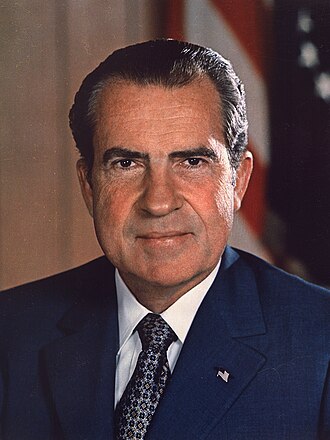 Richard Nixon
Post-Graduate Legal • 5m
EO 11911 Apr 13, 1976
🏛️✅ Zone 1 (Maximum Authority) Constitutional Neutral
Executive Order 11911—Preservation of Endangered Species
📜 Art. I §8: Delegated Tariff & Commerce Execution
The Secretary of the Interior, in accord with Article IX of the Convention and Section 8(e) of the Endangered Species Act of 1973, is hereby designated the Management Authority for purposes of the Convention, and is authorized to communicate with other Parties to the Convention…
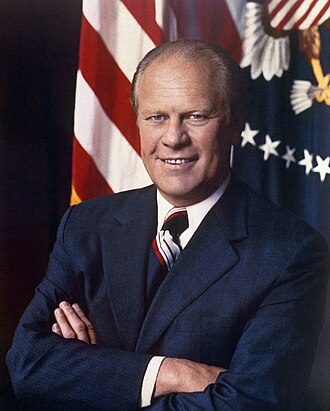 Gerald R. Ford
Post-Graduate Legal • 3m
EO 11910 Apr 13, 1976
🏛️✅ Zone 1 (Maximum Authority) Constitutional Neutral
Executive Order 11910—Delegating-Legal Services Functions Pursuant to the Disaster Relief Act of 1974
📜 Art. II §1: Executive Discretion & Internal Operations
Executive Order No. 11795 of July 11, 1974, is amended by deleting "by section 412 to provide legal services," in section 1(a) and by deleting section 1(c)
Gerald R. Ford High School • 1m
EO 11913 Apr 26, 1976
🏛️✅ Zone 1 (Maximum Authority) Constitutional Neutral
Executive Order 11913—Collection of Information for Import Relief and Adjustment Assistance
📜 Art. I §8: Delegated Tariff & Commerce Execution
Whenever the United States International Trade Commission, in connection with investigations pursuant to Section 201 of the Trade Act of 1974 (19 U.S.C. 2251), collects factual data from firms on their sales, production, employment, and financial experience, the Commission…
Gerald R. Ford High School • 1m
EO 11909 Mar 31, 1976
⚖️✨ Zone 2 (Zone of Twilight) Constitutional Neutral
Executive Order 11909—Exemption of Walter C. Sauer From Mandatory Retirement
📜 Art. II §1: Executive Discretion & Internal Operations
Walter C. Sauer, First Vice President and Vice Chairman, Export-Import Bank of the United States, became subject to mandatory retirement for age as of March 31, 1975, under the provisions of Section 8335 of Title 5 of the United States Code unless exempted by Executive order.
Gerald R. Ford High School • 1m
EO 11914 Apr 28, 1976
⚖️✨ Zone 2 (Zone of Twilight) Constitutional Neutral
Executive Order 11914—Nondiscrimination With Respect to the Handicapped in Federally Assisted Programs
📜 Art. II §1: Executive Discretion & Internal Operations
The Secretary of Health, Education, and Welfare shall coordinate the Implementation of section 504 of the Rehabilitation Act of 1973, as amended, hereinafter referred to as section 504, by all Federal departments and agencies empowered to extend Federal financial assistance to…
Gerald R. Ford Post-Graduate Legal • 3m
📜
Scholarly & Legal Citations
Exec. Order No. 11,912 (Apr. 13, 1976), https://executiveordersarchive.org/orders/app-executive-order-11912-delegation-authorities-relating-energy-policy-and-conservation.
