By virtue of the authority vested in me as President of the United States, and pursuant to Reorganization Plan No. 1 of 1958 (72 Stat. 1799), Reorganization Plan No. 1 of 1973 (87 Stat. 1089), the National Security Act of 1947, as amended (50 U.S.C. 401 et seq.), the Defense Production Act of 1950, as amended (50 App. U.S.C. 2061 et seq.), and the Federal Civil Defense Act of 1950, as amended (50 App. U.S.C. 2251 et seq.), Executive Order No. 11490 of October 28, 1969, as amended by Executive Order No. 11921 of June 11, 1976, is hereby further amended as follows: SECTION 1. The "Table of Contents" is amended as follows: (a) In Part 14, delete "Atomic Energy Commission" and substitute therefor "Energy Research and Development Administration". (b) After Part 14 insert "14A Nuclear Regulatory Commission". SEC. 2. Amend Part 14 to read as follows: "Part 14-Energy Research and Development Administration "Section 1401. Functions. (a) The Administrator of the Energy Research and Development Administration (ERDA) shall prepare emergency plans and develop preparedness programs for the continuing conduct of ERDA activities in any national emergency-type situation, including nuclear attack on the United States. These plans and programs shall include development of a state of readiness in those areas with respect to national emergencies which are governed by applicable provisions of the Atomic Energy Act of 1954, as amended, and the Energy Reorganization Act of 1974, and they shall be coordinated with the Federal Preparedness Agency (GSA), Department of Defense, and other departments and agencies as is appropriate. "(b) The Administrator of the Energy Research and Development Administration shall develop operational plans and procedures and develop a state of readiness so that if, and only if, authorized by lawful authority during a national emergency declared pursuant to statutory or constitutional authorization, the Energy Research and Development Administration will be prepared to: "(1) Health and Safety. (a) Shut down, place in safe standby condition, or curtail operations of and maintain under surveillance, as required, all ERDA-owned facilities and operations which could become or cause a significant hazard to public health and safety in the event they are damaged or destroyed; and (b) bring to bear such ERDA resources as can be made available to assist Federal, State and local officials to alleviate the suffering of the public and to minimize damage to property and to the environment. " (2) Nuclear Materials Security. Assure the security of special nuclear material, fissionable material, or nuclear weapons or devices in ERDA custody; participate in the conduct, direction or coordination of search and recovery operations for nuclear materials, weapons or devices; assist in the identification and deactivation of improvised nuclear devices; and render advice on radiation and damage probabilities in the event of the detonation of an improvised nuclear device. "(3) Production. In an emergency, continue or resume essential: "(a) Development, manufacture, assembly and control of nuclear weapons, components thereof, and equipment, except to the extent that the control over nuclear weapons and equipment shall have been transferred to the Department of Defense; " (b) Development of the technology related to the production of power from all forms of energy sources; "(c) Production and processing of nuclear reactor fuel, special nuclear materials, and other special products; "(d) Related feed materials procurement, processing, and development; and "(e) Repair, maintenance, and construction related to the above activities. "(4) Priorities and Allocations. Administer, within the agency, priorities and allocations authority that may be delegated to ERDA, including the authority to authorize procurement and production schedules and make allotments of source materials and strategic and critical materials allocated to ERDA under national emergency industrial mobilization and defense production plans. "(5) Scientific and Technical Information. Organize, reproduce, and disseminate scientific and technical reports and data relating to emergency preparedness for energy research, development, engineering, applications and effects to interested Government agencies, the scientific and technical communities, the public, and approved, friendly and cooperating foreign nations. In the dissemination of such information, utilize, to the extent appropriate, the capabilities of the National Technical Information Service of the Department of Commerce. "(6) State Relations. Maintain in coordination with the Nuclear Regulatory Commission (NRC) general liaison with States concerning ERDA health and safety operations to ensure that these operations are effectively maintained during periods of national emergency. "(7) International Liaison. Maintain, in consultation with the Department of State and in coordination with other departments and agencies as appropriate, with respect to emergency preparedness activities of mutual interest involving nuclear or nonnuclear energy research and development, essential liaison with foreign nations, foreign organizations, and international organizations.". SEC. 3. Add a new part after Part 14 as follows: "Part 14A-Nuclear Regulatory Commission "Sec. 1450. Functions. (a) The Nuclear Regulatory Commission shall prepare national emergency plans and develop emergency preparedness programs and procedures for the continuing conduct of the nuclear regulatory activities of the Federal Government as specified in the Atomic Energy Act of 1954, as amended, and the Energy Reorganization Act of 1974. These emergency preparedness plans and programs shall be designed to develop a state of readiness under conditions of national emergency including emergencies related to the national defense. "(b) The Nuclear Regulatory Commission shall develop operational plans and procedures and develop a state of readiness so that if, and only if, authorized by lawful authority during a national emergency declared pursuant to statutory or constitutional authorization, the Commission will be prepared to: "(1) Regulation. In an emergency, continue or resume (a) controlling the possession, use, transfer, import, and export of licensed nuclear materials and facilities; (b) authorizing the operation or continued' operation of key facilities important to the national defense, or ordering the suspension of operation of licensed facilities and activities as necessary; and (c) authorizing the recapture from licensees of special nuclear materials where necessary to assure the use, preservation, or safeguarding of such materials for the common defense and' security. "(2) Health and Safety. Order the suspension or limitation of operation, if required, of Commission-licensed nuclear facilities and activities which could otherwise constitute an unnecessary hazard to public health and safety; and assure the development and maintenance of emergency preparedness programs by licensed facilities and activities. "(3) Contingency Plans. Implement contingency plans, developed in consultation _and coordination with ERDA and other departments and agencies as appropriate, for dealing with threats, thefts, and sabotage relating to special nuclear materials, high-level radioactive wastes, and nuclear facilities resulting from all activities licensed under the Atomic Energy Act of 1954, as amended; and participate in the execution of the plans where necessary to protect the public health and safety and the common defense and security. "(4) Facility and Nuclear Materials Security and Safeguards. Assure the continued maintenance by licensees of security and safeguards programs at licensed facilities and for nuclear materials to provide physical protection to the facilities and their nuclear materials against thefts and sabotage. "(5) Scientific and Technical Information. Organize, reproduce, and disseminate essential scientific and technical reports and information to interested Government agencies, the scientific and technical communities, the public and approved, friendly and cooperating foreign nations regarding the regulation of the construction and operation of licensed nuclear facilities and the use of licensed nuclear facilities and licensed nuclear materials. In the dissemination of such information, utilize, to the extent appropriate, the capabilities of the National Technical Information Service of the Department of Commerce. "(6) State Relations. Maintain, in consultation with other cognizant Federal agencies, general liaison with the several States concerning the Agreement States materials licensing program and the radiological incident emergency planning program, to assure that these programs are effectively maintained to protect public health and safety. (See Radiological Incident Emergency Response Planning; Fixed Facilities and Transportation, 40 F.R. 59494). "(7) International Liaison. Maintain, in consultation with the Department of State and in coordination with other departments and agencies as appropriate, essential liaison with foreign nations with respect to the export licensing program and other activities of mutual interest involving nuclear energy. "(8) Priorities and Allocations. Administer any priorities and allocations authority delegated to the Nuclear Regulatory Commission.". SEC. 4. Part 9 is amended as follows: (a) In section .901(1) delete "Atomic Energy Commission" and substitute therefor "Energy Research and Development Administration". (b) In section 901(1) (f ) delete "Atomic Energy Commission" and substitute therefor "Energy Research and Development Administration". GERALD R. FORD The White House, January 7, 1977.
Executive Order 11953 ⚖️⚠️ Zone 3: Lowest Ebb Constitutional Friction / Overreach (-0.19)
📜 Art. II §2: Commander-in-Chief / War Prerogative Tension
Executive Order 11953—Assigning Emergency Preparedness Functions to the Energy Research and Development Administration and Nuclear Regulatory Commission
Executive Brief • At a Glance
⏱️ 7 min read (1,389 words) •
● In Effect
🎯 Primary Mandate
Executive Order No. 11490 of October 28, 1969, as amended by Executive Order No. 11921 of June 11, 1976, is hereby further amended as follows: SECTION 1.
⚖️ Constitutional Footing
⚖️⚠️ Zone 3: Lowest Ebb
Incompatible with Expressed Will of Congress or High Friction
📜 Art. II §2: Commander-in-Chief / War Prerogative Tension
🏛️ Scope & Affected Sectors
Armed Forces & Military Establishments Sovereign State Governments & Localities Executive Departments & Federal Civil Servants Private Citizens & Property Owners
Plain-English Translation & Framers' Constitutional Analysis
Early Statesman synthesis distilling legal jargon into practical meaning, statutory anchors, and structural constitutional impacts.
Signed by President Gerald R. Ford on January 7, 1977, this order concerns Assigning Emergency Preparedness Functions to the Energy Research and Development Administration and Nuclear Regulatory Commission. Executive Order No. 11490 of October 28, 1969, as amended by Executive Order No. 11921 of June 11, 1976, is hereby further amended as follows: SECTION 1. The "Table of Contents" is amended as follows: (a) In Part 14, delete "Atomic Energy Commission" and substitute therefor "Energy Research and Development Administration". (b) After Part 14 insert "14A Nuclear Regulatory Commission". SEC. 2.
Constitutional Assessment: Scrutinized through Article II, Section 2, this action exercises the President's constitutional role as Commander in Chief. Early Framers recognized broad executive discretion in commanding military forces during conflict, provided it remains bounded by congressional declarations and respects civilian domestic courts.
Key Directives & Operative Actions
▪
Executive Order No. 11490 of October 28, 1969, as amended by Executive Order No. 11921 of June 11, 1976, is hereby further amended as follows: SECTION 1.
▪
The "Table of Contents" is amended as follows: (a) In Part 14, delete "Atomic Energy Commission" and substitute therefor "Energy Research and Development Administration".
▪
Amend Part 14 to read as follows: "Part 14-Energy Research and Development Administration "Section 1401.
▪
The Administrator of the Energy Research and Development Administration (ERDA) shall prepare emergency plans and develop preparedness programs for the continuing conduct of ERDA activities in any national emergency-type situation, including nuclear attack on the United States.
Constitutional & Societal Entities Impacted
🏛️ Armed Forces & Military Establishments
🏛️ Sovereign State Governments & Localities
🏛️ Executive Departments & Federal Civil Servants
🏛️ Private Citizens & Property Owners
🏛️ Foreign Nations & International Entities
Policy Areas & Topics
🏛️
The Framers' Constitutional Council
1787 PrismEvaluating this order against the constitutional debates of 1787 and the limits of Article II executive power.
⚖️⚠️ Zone 3 (Lowest Ebb)
§
"When the President takes measures incompatible with the expressed or implied will of Congress, his power is at its lowest ebb."
— Justice Robert H. Jackson, Youngstown Sheet & Tube Co. v. Sawyer (1952) Incompatible with Expressed Will of Congress or High Friction
JM
James Madison
Separation of Powers & Legislative Primacy
"The accumulation of all powers, legislative, executive, and judiciary, in the same hands... may justly be pronounced the very definition of tyranny." — Federalist No. 47 (1788)
Madison would express grave alarm over this order. By asserting independent authority in tension with legislative limits or the Bill of Rights, the Executive risks collapsing the separation of powers into unilateral rule. Under the Madisonian model, no emergency justifies the Executive substituting its decree for a deliberative Act of Congress.
Madisonian Stance: Strict Dissent (Overreach)
AH
Alexander Hamilton
The Energetic Executive & Unified Command
"The direction of war implies the direction of the common strength; and the power of directing and employing the common strength must be under the direction of the single hand of the Executive." — Federalist No. 74 (1788)
Hamilton would forcefully champion executive discretion here. For foreign entanglements, commerce defense, and national security, deliberative assemblies are too slow and faction-ridden. A unified, energetic Executive exercising swift command is precisely what the Philadelphia Convention intended for national preservation.
Hamiltonian Stance: Strong Prerogative Support
GM
George Mason
Bill of Rights, Due Process & 10th Amendment
"The purse and the sword ought never to be in the same hands... nor the liberties of the citizen placed at the pleasure of a single magistrate." — Virginia Ratifying Convention (1788)
George Mason and the Anti-Federalists would sound a fierce warning. They feared that Article II would inevitably evolve into an elective monarchy. When an executive order impacts private rights, property, or civil liberties without individualized judicial process, Mason would see their darkest predictions verified.
Anti-Federalist Stance: Vehement Objection
📐
Five Measurable "Constitutional Friction" Dimensions
An objective audit measuring potential separation-of-powers tension against the United States Constitution and established Supreme Court doctrine.
⚠️ Elevated Constitutional Friction
63 / 100 friction index
Dimension 1 • Art. I, §1 & §8
Low Friction
Legislative Encroachment & Purse
Operates within delegated statutory execution without modifying legislative appropriations or taxing powers.
Benchmark: Power of the purse, taxes/tariffs, and rule of law reserved to Congress.
Dimension 2 • Art. II, §1 & §3
High Friction
Executive Scope & Faithfulness
Invokes broad unilateral or emergency executive authorities that test the constitutional boundary of the Take Care Clause.
Benchmark: Faithfully execute laws enacted by Congress vs. unilateral decree.
Dimension 3 • 10th Amendment
High Friction
Federalism & State Sovereignty
Creates friction with the Tenth Amendment by conditioning state grants, mandating local compliance, or preempting state police powers.
Benchmark: Police powers and un-delegated responsibilities reserved to the States.
Dimension 4 • 5th & 14th Amendments
Moderate Friction
Due Process & Individual Rights
Applies regulatory or compliance standards to private contractors or commercial entities.
Benchmark: Protection of private property, contracts, liberty, and procedural justice.
Dimension 5 • Separation of Powers
High Friction
Youngstown Jacksonian Tier
The order asserts independent Article II prerogative against statutory constraints, reallocates funds without explicit appropriation, or stretches executive power into realms constitutionally reserved to the legislature or judiciary.
Benchmark: Incompatible with Expressed Will of Congress or High Friction
⚖️
Audit Synthesis
This directive engages significant constitutional friction across statutory authorization, legislative prerogatives, or individual liberties.
Weighted composite: Art. I (25%), Art. II (25%), Federalism (15%), Due Process (15%), Youngstown (20%).
ℹ️
How to read these dimensions: Executive power expands whenever an administration acts without explicit statutory authorization from Congress (Article I), touches upon police powers historically reserved to the states (Tenth Amendment), or limits private rights and property without judicial process. A low friction score indicates strict concordance with enacted law; a high friction score highlights orders testing the limits of presidential discretion.
Total Words
1,389
9,772 characters
Estimated Read Time
7 min
@ 200 words / min
Flesch-Kincaid
18.6
Post-Graduate Legal
Text size:
Related Executive Orders
2 orders cited directly in this text, plus related actions from this administration.
EO 11490 Oct 28, 1969
⚖️⚠️ Zone 3 (Lowest Ebb) Friction (-0.55)
Executive Order 11490—Assigning Emergency Preparedness Functions to Federal Departments and Agencies
📜 Art. II §2: Commander-in-Chief / War Prerogative Tension
Parts 1 Purpose and Scope. 2 Department of State. 3 Department of the Treasury. 4 Department of Defense. 5 Department of Justice. 6 Post Office Department. 7 Department of the Interior. 8 Department of Agriculture. 9 Department of Commerce. 10 Department of Labor. 11 Department…
 Richard Nixon
Post-Graduate Legal • 86m
EO 11921 Jun 11, 1976
⚖️⚠️ Zone 3 (Lowest Ebb) Friction (-0.19)
Executive Order 11921—Adjusting Emergency Preparedness Assignments to Organizational and Functional Changes in Federal Departments and Agencies
📜 Art. II §2: Commander-in-Chief / War Prerogative Tension
Executive Order No. 11490 of October 28, 1969, is hereby amended as follows: SECTION 1. The 'Table of Contents' is amended as follows: (a) In Part 6, delete 'Post Office Department' and substitute therefor 'United States Postal Service'.
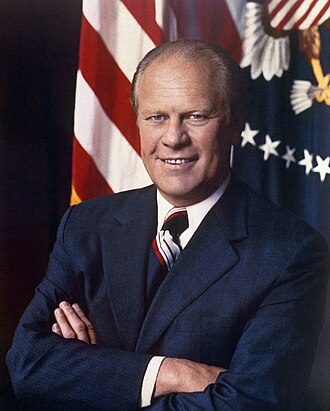 Gerald R. Ford
Post-Graduate Legal • 17m
EO 11954 Jan 7, 1977
⚖️✨ Zone 2 (Zone of Twilight) Constitutional Neutral
Executive Order 11954—Federal Property Review
📜 5th Amend: Regulatory Execution with Due Process
The Federal Property Council (hereinafter referred to as the Council) is hereby reconstituted in the Executive Office of the President. The Council shall consist of the Director of the Office of Management and Budget, who shall be its Chairman, the Chairman of the Council of…
Gerald R. Ford Post-Graduate Legal • 3m
EO 11952 Jan 7, 1977
🏛️✅ Zone 1 (Maximum Authority) Fidelity (+0.50)
Executive Order 11952—Conforming the Foreign Service and Civil Service Retirement and Disability Systems
📜 Art. II §2: Commander-in-Chief Supervisory Authority
The enactment (subsequent to January 1, 1974) of the following laws has affected a provision of general applicability in the Civil Service Retirement and Disability System (subchapter III, chapter 83 of Title 5 of the United States Code) or otherwise affected current or former…
Gerald R. Ford College Level • 7m
EO 11951 Jan 6, 1977
⚖️✨ Zone 2 (Zone of Twilight) Constitutional Neutral
Executive Order 11951—Relating to the Arrangement Regarding International Trade in Textiles
📜 Art. II §1: Executive Discretion & Internal Operations
(c) of Executive Order No. 11651 of March 3, 1972, is amended by deleting "Articles 3 and 6 of the Long Term Arrangement Regarding International Trade in Cotton Textiles done at Geneva on February 9, 1962, as extended," and substituting "Articles 3 and 8 of the Arrangement…
Gerald R. Ford Post-Graduate Legal • 1m
EO 11950 Jan 6, 1977
⚖️✨ Zone 2 (Zone of Twilight) Constitutional Neutral
Executive Order 11950—Conforming the Central Intelligence Agency and Civil Service Retirement and Disability Systems With Respect to Cost of Living Adjustments
📜 Art. II §2: Commander-in-Chief Supervisory Authority
The Director of Central Intelligence shall: (a) on January 1 of each year, or within a reasonable time thereafter, determine the percent change in the price index published for December of the preceding year over the price index published for June of the preceding year, and (b)…
Gerald R. Ford Post-Graduate Legal • 2m
📜
Scholarly & Legal Citations
Exec. Order No. 11,953 (Jan. 7, 1977), https://executiveordersarchive.org/orders/app-executive-order-11953-assigning-emergency-preparedness-functions-the-energy-research-and.
