By virtue of the authority vested in me by the Constitution and statutes of the United States of America, and as President of the United States of America, in furtherance of the purposes and policies of the Lacey Act (18 U.S.C. 42) and the National Environmental Policy Act of 1969, as amended (42 U.S.C. 4321 et seq.), it is hereby ordered as follows: SECTION 1. As used in this Order: (a) "United States" means all of the several States, the District of Columbia, the Commonwealth of Puerto Rico, American Samoa, the Virgin Islands, Guam, and the Trust Territory of the Pacific Islands. (b) "Introduction" means the release, escape, or establishment of an exotic species into a natural ecosystem. (c) "Exotic species" means all species of plants and animals not naturally occurring, either presently or historically, in any ecosystem of the United States. (d) "Native species" means all species of plants and animals naturally occurring, either presently or historically, in any ecosystem of the United States. SEC. 2. (a) Executive agencies shall, to the extent permitted by law, restrict the introduction of exotic species into the natural ecosystems on lands and waters which they own, lease, or hold for purposes of administration; and, shall encourage the States, local governments, and private citizens to prevent the introduction of exotic species into natural ecosystems of the United States. (b) Executive agencies, to the extent they have been authorized by statute to restrict the importation of exotic species, shall restrict the introduction of exotic species into any natural ecosystem of the United States. (c) Executive agencies shall, to the extent permitted by law, restrict the use of Federal funds, programs, or authorities used to export native species for the purpose of introducing such species into ecosystems outside the United States where they do not naturally occur. (d) This Order does not apply to the introduction of any exotic species, or the export of any native species, if the Secretary of Agriculture or the Secretary of the Interior finds that such introduction or exportation will not have an adverse effect on natural ecosystems. SEC. 3. The Secretary of the Interior, in consultation with the Secretary of Agriculture and the heads of other appropriate agencies, shall develop and implement, by rule or regulation, a system to standardize and simplify the requirements, procedures and other activities appropriate for implementing the provisions of this Order. The Secretary of the Interior shall ensure that such rules or regulations are in accord with the performance by other agencies of those functions vested by law, including this Order, in such agencies. JIMMY CARTER The White House, May 24, 1977. [Filed with the Office of the Federal Register, 1:41 p.m., May 24, 1977]
Executive Order 11987 Revoked 🏛️✅ Zone 1: Maximum Authority Constitutional Fidelity (+0.44)
📜 Art. II §3: Faithful Execution of Statutory Law
Executive Order 11987—Exotic Organisms
Executive Brief • At a Glance
⏱️ 2 min read (451 words) •
● Revoked
🎯 Primary Mandate
Executive agencies shall, to the extent permitted by law, restrict the introduction of exotic species into the natural ecosystems on lands and waters which they own, lease, or hold for purposes of administration; and, shall encourage the States, local governments, and private citizens to prevent the introduction of exotic species into natural ecosystems of the United States.
⚖️ Constitutional Footing
🏛️✅ Zone 1: Maximum Authority
Express or Implied Congressional Authorization
📜 Art. II §3: Faithful Execution of Statutory Law
🏛️ Scope & Affected Sectors
Private Citizens & Property Owners
Legal Status & Amendment History
RevokedThis order is no longer in effect according to the Federal Register's executive order disposition tables.
Actions on this order
- Revoked by EO 13112
Source: Office of the Federal Register executive order disposition notes. Orders before 1994 show only actions recorded by later orders.
Plain-English Translation & Framers' Constitutional Analysis
Early Statesman synthesis distilling legal jargon into practical meaning, statutory anchors, and structural constitutional impacts.
Signed by President Jimmy Carter on May 24, 1977, this order concerns Exotic Organisms. As used in this Order: (a) "United States" means all of the several States, the District of Columbia, the Commonwealth of Puerto Rico, American Samoa, the Virgin Islands, Guam, and the Trust Territory of the Pacific Islands. (b) "Introduction" means the release, escape, or establishment of an exotic species into a natural ecosystem.
Constitutional Assessment: An early statesman would view this measure favorably under Article II, Section 3 (the Take Care Clause). The President operates strictly within the ambit of executing established laws and supervising departmental subordinates, respecting the supremacy of the legislative branch without fabricating novel statutory obligations.
Key Directives & Operative Actions
▪
Executive agencies shall, to the extent permitted by law, restrict the introduction of exotic species into the natural ecosystems on lands and waters which they own, lease, or hold for purposes of administration; and, shall encourage the States, local governments, and private citizens to prevent the introduction of exotic species into natural ecosystems of the United States.
▪
Executive agencies, to the extent they have been authorized by statute to restrict the importation of exotic species, shall restrict the introduction of exotic species into any natural ecosystem of the United States.
▪
The Secretary of the Interior, in consultation with the Secretary of Agriculture and the heads of other appropriate agencies, shall develop and implement, by rule or regulation, a system to standardize and simplify the requirements, procedures and other activities appropriate for implementing the provisions of this Order.
▪
The Secretary of the Interior shall ensure that such rules or regulations are in accord with the performance by other agencies of those functions vested by law, including this Order, in such agencies.
Constitutional & Societal Entities Impacted
🏛️ Private Citizens & Property Owners
Policy Areas & Topics
🏛️
The Framers' Constitutional Council
1787 PrismEvaluating this order against the constitutional debates of 1787 and the limits of Article II executive power.
🏛️✅ Zone 1 (Maximum Authority)
§
"When the President acts pursuant to an express or implied authorization of Congress, his authority is at its maximum, for it includes all that he possesses in his own right plus all that Congress can delegate."
— Justice Robert H. Jackson, Youngstown Sheet & Tube Co. v. Sawyer (1952) Express or Implied Congressional Authorization
JM
James Madison
Separation of Powers & Legislative Primacy
"The constitutional magistracy was designed not to invent policy, but to be the faithful instrument of the laws passed by the people's representatives." — Speech in the First Congress (1789)
Madison would approve the structural posture of this order. The President acts strictly in subordination to statutory authority granted under Article II, Section 3 ("take Care that the Laws be faithfully executed"). The checks and balances hold firm because the policy origin remains with the legislature.
Madisonian Stance: Concurring (Statutory)
AH
Alexander Hamilton
The Energetic Executive & Unified Command
"A feeble Executive implies a feeble execution of the government; and a government ill executed, whatever it may be in theory, must be, in practice, a bad government." — Federalist No. 70 (1788)
Hamilton would view this directive as the natural and indispensable functioning of administrative leadership. Without the power to coordinate agencies, manage personnel, and resolve operational ambiguities, the modern presidency would be reduced to an impotent figurehead.
Hamiltonian Stance: Supportive of Execution
GM
George Mason
Bill of Rights, Due Process & 10th Amendment
"The president will be surrounded by flatterers and sycophants... and the great powers of the executive will gradually absorb the liberties of the people." — Cato IV (Anti-Federalist, 1787)
The Anti-Federalist prism advises continuous democratic vigilance. Even routine administrative directives aggregate centralized federal power away from town halls and state assemblies toward a distant executive apparatus.
Anti-Federalist Stance: Eternal Vigilance Required
📐
Five Measurable "Constitutional Friction" Dimensions
An objective audit measuring potential separation-of-powers tension against the United States Constitution and established Supreme Court doctrine.
⚖️ Discretionary Twilight Zone
40 / 100 friction index
Dimension 1 • Art. I, §1 & §8
Moderate Friction
Legislative Encroachment & Purse
Administers commerce or fiscal programs requiring ongoing statutory delegation and legislative oversight.
Benchmark: Power of the purse, taxes/tariffs, and rule of law reserved to Congress.
Dimension 2 • Art. II, §1 & §3
Moderate Friction
Executive Scope & Faithfulness
Directs internal executive branch machinery, agency workflows, and federal personnel.
Benchmark: Faithfully execute laws enacted by Congress vs. unilateral decree.
Dimension 3 • 10th Amendment
Moderate Friction
Federalism & State Sovereignty
Engages state and local partners in cooperative federalism programs.
Benchmark: Police powers and un-delegated responsibilities reserved to the States.
Dimension 4 • 5th & 14th Amendments
Moderate Friction
Due Process & Individual Rights
Applies regulatory or compliance standards to private contractors or commercial entities.
Benchmark: Protection of private property, contracts, liberty, and procedural justice.
Dimension 5 • Separation of Powers
Low Friction
Youngstown Jacksonian Tier
The President operates strictly as the constitutional Chief Executive, carrying out policy established by Congress with strong statutory backing.
Benchmark: Express or Implied Congressional Authorization
⚖️
Audit Synthesis
This order operates within Justice Jackson’s Zone of Twilight, resting upon concurrent presidential authority or congressional silence.
Weighted composite: Art. I (25%), Art. II (25%), Federalism (15%), Due Process (15%), Youngstown (20%).
ℹ️
How to read these dimensions: Executive power expands whenever an administration acts without explicit statutory authorization from Congress (Article I), touches upon police powers historically reserved to the states (Tenth Amendment), or limits private rights and property without judicial process. A low friction score indicates strict concordance with enacted law; a high friction score highlights orders testing the limits of presidential discretion.
Total Words
451
2,820 characters
Estimated Read Time
2 min
@ 200 words / min
Flesch-Kincaid
16.2
Post-Graduate Legal
Text size:
🔗
Referenced By Later Executive Orders (1)
Subsequent presidents who cited, amended, continued, or revoked this directive in later orders.
William J. Clinton • 1999-02-03
Related Executive Orders
Other executive actions signed by Jimmy Carter around this period.
EO 11993 May 24, 1977
⚖️✨ Zone 2 (Zone of Twilight) Constitutional Neutral
Executive Order 11993—United States Circuit Judge Nominating Commission
📜 Art. II §1: Executive Discretion & Internal Operations
By virtue of the authority vested in me by the Constitution and statutes of the United States of America, and as President of the United States of America, Section 3 of Executive Order No. 11972 of February 14, 1977, is amended by redesignating the present text as subsection…
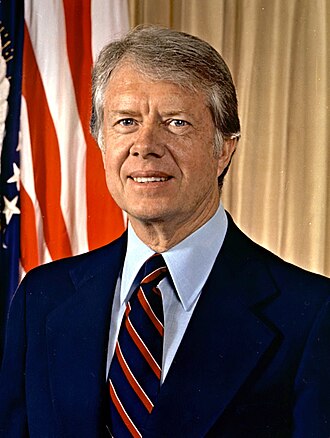 Jimmy Carter
Post-Graduate Legal • 1m
EO 11992 May 24, 1977
🏛️✅ Zone 1 (Maximum Authority) Fidelity (+0.44)
Executive Order 11992—Committee on Selection of Federal Judicial Officers
📜 5th Amend: Regulatory Execution with Due Process
Establishment of the Committee. There is hereby established the Committee on Selection of Federal Judicial Officers, hereinafter referred to as the Committee. The Committee shall consist of a Chairman and six other members to be appointed by the President. SEC. 2. Functions.
Jimmy Carter College Level • 3m
EO 11991 Revoked May 24, 1977
⚖️✨ Zone 2 (Zone of Twilight) Constitutional Neutral
Executive Order 11991—Environmental Impact Statements
📜 Art. II §1: Executive Discretion & Internal Operations
Subsection (h) of Section 3 (relating to responsibilities of the Council on Environmental Quality) of Executive Order No. 11514, as amended, is revised to read as follows: "(h) Issue regulations to Federal agencies for the implementation of the procedural provisions of the Act…
Jimmy Carter College Level • 2m
EO 11990 May 24, 1977
🏛️✅ Zone 1 (Maximum Authority) Fidelity (+0.29)
Executive Order 11990—Protection of Wetlands
📜 Art. II §2: Commander-in-Chief Supervisory Authority
Each agency shall provide leadership and shall take action to minimize the destruction, loss or degradation of wetlands, and to preserve and enhance the natural and beneficial values of wetlands in carrying out the agency's responsibilities for (1) acquiring, managing, and…
Jimmy Carter Post-Graduate Legal • 5m
EO 11989 Revoked May 24, 1977
⚖️✨ Zone 2 (Zone of Twilight) Constitutional Neutral
Executive Order 11989—Off-Road Vehicles on Public Lands
📜 Art. II §2: Commander-in-Chief Supervisory Authority
Executive Order No. 11644 of February 8, 1972, is hereby amended as follows: SECTION 1. Clause (B) of Section 2(3) of Executive Order No. 11644, setting forth an exclusion from the definition of off-road vehicles, is amended to read "(B) any fire, military, emergency or law…
Jimmy Carter College Level • 2m
EO 11988 May 24, 1977
⚖️✨ Zone 2 (Zone of Twilight) Constitutional Neutral
Executive Order 11988—Floodplain Management
📜 Art. II §2: Commander-in-Chief Supervisory Authority
Each agency shall provide leadership and shall take action to reduce the risk of flood loss, to minimize the impact of floods on human safety, health and welfare, and to restore and preserve the natural and beneficial values served by floodplains in carrying out its…
Jimmy Carter Post-Graduate Legal • 8m
📜
Scholarly & Legal Citations
Exec. Order No. 11,987 (May 24, 1977), https://executiveordersarchive.org/orders/app-executive-order-11987-exotic-organisms.
