By virtue of the authority vested in me as President by the Constitution and statutes of the United States of America, in order to clarify and amend the responsibilities of the various panels of the United States Circuit Judge Nominating Commission and to continue the Commission, it is hereby ordered as follows: SECTION 1. Establishment of the Commission. Them is hereby established the United States Circuit Judge Nominating Commission (hereinafter referred to as the "Commission"). The Commission shall be composed of thirteen panels, each of which shall, upon the request of the President, recommend for nomination as circuit judges persons whose character, experience, ability and commitment to equal justice under law, fully qualify them to serve in the Federal judiciary. Except as indicated below, each panel shall serve a geographic area set forth in 28 U.S.C. 41. The panels shall be as follows: (1) Panel for the District of Columbia Circuit; (2) Panel for the First Circuit; (3) Panel for the Second Circuit; (4) Panel for the Third Circuit; (5) Panel for the Fourth Circuit; (6) Panel for the Eastern Fifth Circuit, for the States of Alabama, Florida, Georgia and Mississippi; (7) Panel for the Western Fifth Circuit, for the States of Louisiana and Texas, and the Canal Zone; (8) Panel for the Sixth Circuit; (9) Panel for the Seventh Circuit; (10) Panel for the Eighth Circuit; (11) Panel for the Southern Ninth Circuit, for the States of Arizona, California, and Nevada; (12) Panel for the Northern Ninth Circuit, for the States of Alaska, Hawaii, Idaho, Montana, Oregon and Washington, and the Territory of Guam; and (13) Panel for the Tenth Circuit. A panel shall be designated as, e.g., the "United States Circuit Judge Nominating Panel for the First Circuit." SEC. 2. Membership. (a) The membership of the Commission shall consist of the combined memberships of the panels. The President may appoint a member of the Commission as its Chairman, with such duties as the President may assign. (b) A panel shall be composed of a Chairman and such other members as the President may appoint; (c) Each panel shall include members of both sexes and members of minority groups, and each panel shall include at least one lawyer from each State within a panel's area of responsibility. (d) All members of the panel for the District of Columbia Circuit shall be persons residing within the District of Columbia or within twenty miles of its boundaries. SEC. 3. Functions of Panels. (a) A panel shall begin functioning when the President or his designee notifies its Chairman that the President desires the panel's assistance in aid of his constitutional responsibility and discretion to select a nominee to fill a vacancy or vacancies on a United States Court of Appeals. Upon such notification, the panel shall: (1) Give public notice of the vacancy or vacancies within the relevant geographic area, inviting suggestions as to potential nominees; (2) Conduct inquiries to identify potential nominees; (3) Conduct inquiries to identify those persons among the potential nominees who are well qualified to serve as a United States Circuit Judge; and (4) Report to the President, within the time specified in the notification of the vacancy or vacancies, the results of its activities, including its recommendations as to the persons whom the panel considers best qualified to fill the vacancy or vacancies. (b) The Panel for the District of Columbia Circuit shall have the additional function of recommending nominees for the United States District Court for the District of Columbia, in accordance with the standards and procedures prescribed by this order for recommending nominees for circuit judges. SEC. 4. Standards for Selection of Proposed Nominees. (a) Before transmitting to the President the names of the persons it deems best qualified to fill an existing vacancy or vacancies, a panel shall have determined: (1) That those persons are members in good standing of at least one state bar, or the District of Columbia bar, and members in good standing of any other bars of which they may be members; (2) That they possess, and have reputations for, integrity and good character; (3) That they are of sound health; (4) That they possess, and have demonstrated, outstanding legal ability and commitment to equal justice under law; and (5) That their demeanor, character, and personality indicate that they would exhibit judicial temperament if appointed to the position of United States Circuit Judge. (b) In selecting persons whose names will be transmitted to the President, a panel shall consider whether the training, experience, or expertise of certain of the well qualified individuals would help to meet a perceived need of the court of appeals on which the vacancy or vacancies exist. (c) To implement the above standards, a panel may adopt such additional criteria or guidelines as it considers appropriate for the identification of potential nominees and the selection of those best qualified to serve as United States Circuit Judges. (d) Each panel is encouraged to make special efforts to seek out and identify well qualified women and members of minority groups as potential nominees. SEC. 5. Ineligibility of Commission Members. No person shall be considered by a panel as a potential nominee while serving as a Commission member or for a period of one year after termination of such service. SEC. 6. Travel Expenses and Financing. (a) Members of the Commission shall receive no compensation from the Government of the United States for their service as members of the Commission, but may be allowed travel expenses, including per diem in lieu of subsistence, as authorized by law (5 U.S.C. 5702 and 5703) for persons intermittently employed in the government service. (b) All necessary expenses incurred in connection with the work of the Commission shall be paid from the appropriation for "Unanticipated Needs" in the Executive Office Appropriations Act or from such other funds as may be available. (c) Expenditures authorized by this Section may be made only after the President has notified a panel's chairman that he desires the panel's assistance in accordance with Section 3 above, and before the termination of appointments to the panel in accordance with Section 7 below. SEC. 7. Term of Membership. Unless extended by the President, each appointment to a panel shall terminate thirty days after submission of the panel's report to the President. SEC. 8. Termination of Commission. The Commission shall terminate on December 31, 1978, unless sooner extended by the President. SEC. 9. Revocations. Executive Order No. 11972 and Executive Order No. 11993 are hereby revoked. JIMMY CARTER The White House, May 11, 1978. [Filed with the Office of the Federal Register, 12:02 p.m., May 15, 1978]
Executive Order 12059 ⚖️✨ Zone 2: Zone of Twilight Constitutional Neutral (+0.02)
📜 5th Amend: Regulatory Execution with Due Process
Executive Order 12059—United States Circuit Judge Nominating Commission
Executive Brief • At a Glance
⏱️ 6 min read (1,106 words) •
● In Effect
🎯 Primary Mandate
Them is hereby established the United States Circuit Judge Nominating Commission (hereinafter referred to as the "Commission").
⚖️ Constitutional Footing
⚖️✨ Zone 2: Zone of Twilight
Concurrent Authority / Congressional Silence
📜 5th Amend: Regulatory Execution with Due Process
🏛️ Scope & Affected Sectors
Merchants, Importers & Commercial Enterprises Sovereign State Governments & Localities Private Citizens & Property Owners
Plain-English Translation & Framers' Constitutional Analysis
Early Statesman synthesis distilling legal jargon into practical meaning, statutory anchors, and structural constitutional impacts.
Signed by President Jimmy Carter on May 11, 1978, this order concerns United States Circuit Judge Nominating Commission. Establishment of the Commission. Them is hereby established the United States Circuit Judge Nominating Commission (hereinafter referred to as the "Commission"). The Commission shall be composed of thirteen panels, each of which shall, upon the request of the President, recommend for nomination as circuit judges persons whose character, experience, ability and commitment to equal justice under law, fully qualify…
Constitutional Assessment: Evaluated against the Fifth Amendment, this action touches upon property or economic rights. An early statesman would insist upon strict adherence to due process of law and the constitutional guarantee that private holdings shall not be encumbered or taken for public purposes without just compensation and lawful process.
Key Directives & Operative Actions
▪
Them is hereby established the United States Circuit Judge Nominating Commission (hereinafter referred to as the "Commission").
▪
The Commission shall be composed of thirteen panels, each of which shall, upon the request of the President, recommend for nomination as circuit judges persons whose character, experience, ability and commitment to equal justice under law, fully qualify them to serve in the Federal judiciary.
▪
Except as indicated below, each panel shall serve a geographic area set forth in 28 U.S.C. 41.
▪
The panels shall be as follows: (1) Panel for the District of Columbia Circuit; (2) Panel for the First Circuit; (3) Panel for the Second Circuit; (4) Panel for the Third Circuit; (5) Panel for the Fourth Circuit; (6) Panel for the Eastern Fifth Circuit, for the States of Alabama, Florida, Georgia and Mississippi; (7) Panel for the Western Fifth Circuit, for the States of Louisiana and Texas, and the Canal Zone; (8) Panel for the Sixth Circuit; (9) Panel for the Seventh Circuit; (10) Panel for the Eighth Circuit; (11) Panel for the Southern Ninth Circuit, for the States of Arizona, California, and Nevada; (12) Panel for the Northern Ninth Circuit, for the States of Alaska, Hawaii, Idaho, Montana, Oregon and Washington, and the Territory…
Constitutional & Societal Entities Impacted
🏛️ Merchants, Importers & Commercial Enterprises
🏛️ Sovereign State Governments & Localities
🏛️ Private Citizens & Property Owners
Policy Areas & Topics
🏛️
The Framers' Constitutional Council
1787 PrismEvaluating this order against the constitutional debates of 1787 and the limits of Article II executive power.
⚖️✨ Zone 2 (Zone of Twilight)
§
"When the President acts in absence of either a congressional grant or denial of authority, he can only rely upon his own independent powers, but there is a zone of twilight in which he and Congress may have concurrent authority."
— Justice Robert H. Jackson, Youngstown Sheet & Tube Co. v. Sawyer (1952) Concurrent Authority / Congressional Silence
JM
James Madison
Separation of Powers & Legislative Primacy
"Power is of an encroaching nature, and it ought to be effectually restrained from passing the limits assigned to it." — Federalist No. 48 (1788)
Madison would view this order with watchful scrutiny. Operating in the 'Zone of Twilight' where Congress is silent, each such directive establishes an administrative precedent that steadily expands the executive perimeter at the expense of legislative primacy.
Madisonian Stance: Vigilant / Cautionary
AH
Alexander Hamilton
The Energetic Executive & Unified Command
"A feeble Executive implies a feeble execution of the government; and a government ill executed, whatever it may be in theory, must be, in practice, a bad government." — Federalist No. 70 (1788)
Hamilton would view this directive as the natural and indispensable functioning of administrative leadership. Without the power to coordinate agencies, manage personnel, and resolve operational ambiguities, the modern presidency would be reduced to an impotent figurehead.
Hamiltonian Stance: Defends Vigor & Dispatch
GM
George Mason
Bill of Rights, Due Process & 10th Amendment
"The purse and the sword ought never to be in the same hands... nor the liberties of the citizen placed at the pleasure of a single magistrate." — Virginia Ratifying Convention (1788)
George Mason and the Anti-Federalists would sound a fierce warning. They feared that Article II would inevitably evolve into an elective monarchy. When an executive order impacts private rights, property, or civil liberties without individualized judicial process, Mason would see their darkest predictions verified.
Anti-Federalist Stance: High Bill of Rights Scrutiny
📐
Five Measurable "Constitutional Friction" Dimensions
An objective audit measuring potential separation-of-powers tension against the United States Constitution and established Supreme Court doctrine.
⚖️ Discretionary Twilight Zone
47 / 100 friction index
Dimension 1 • Art. I, §1 & §8
Moderate Friction
Legislative Encroachment & Purse
Administers commerce or fiscal programs requiring ongoing statutory delegation and legislative oversight.
Benchmark: Power of the purse, taxes/tariffs, and rule of law reserved to Congress.
Dimension 2 • Art. II, §1 & §3
Moderate Friction
Executive Scope & Faithfulness
Directs internal executive branch machinery, agency workflows, and federal personnel.
Benchmark: Faithfully execute laws enacted by Congress vs. unilateral decree.
Dimension 3 • 10th Amendment
Moderate Friction
Federalism & State Sovereignty
Engages state and local partners in cooperative federalism programs.
Benchmark: Police powers and un-delegated responsibilities reserved to the States.
Dimension 4 • 5th & 14th Amendments
Moderate Friction
Due Process & Individual Rights
Applies regulatory or compliance standards to private contractors or commercial entities.
Benchmark: Protection of private property, contracts, liberty, and procedural justice.
Dimension 5 • Separation of Powers
Moderate Friction
Youngstown Jacksonian Tier
The order relies on inherent Article II executive discretion, civil service management, or foreign diplomacy where Congress has neither expressly approved nor prohibited action.
Benchmark: Concurrent Authority / Congressional Silence
⚖️
Audit Synthesis
This order operates within Justice Jackson’s Zone of Twilight, resting upon concurrent presidential authority or congressional silence.
Weighted composite: Art. I (25%), Art. II (25%), Federalism (15%), Due Process (15%), Youngstown (20%).
ℹ️
How to read these dimensions: Executive power expands whenever an administration acts without explicit statutory authorization from Congress (Article I), touches upon police powers historically reserved to the states (Tenth Amendment), or limits private rights and property without judicial process. A low friction score indicates strict concordance with enacted law; a high friction score highlights orders testing the limits of presidential discretion.
Total Words
1,106
6,832 characters
Estimated Read Time
6 min
@ 200 words / min
Flesch-Kincaid
16.1
Post-Graduate Legal
Text size:
🔗
Referenced By Later Executive Orders (4)
Subsequent presidents who cited, amended, continued, or revoked this directive in later orders.
Ronald Reagan • 1981-05-05
Jimmy Carter • 1980-12-31
Jimmy Carter • 1978-12-28
Jimmy Carter • 1978-11-08
Related Executive Orders
2 orders cited directly in this text, plus related actions from this administration.
EO 11972 Feb 14, 1977
⚖️✨ Zone 2 (Zone of Twilight) Constitutional Neutral
Executive Order 11972—United States Circuit Judge Nominating Commission
📜 5th Amend: Regulatory Execution with Due Process
Establishment of the Commission. There is hereby established the United States Circuit Judge Nominating Commission (hereinafter referred to as the "Commission").
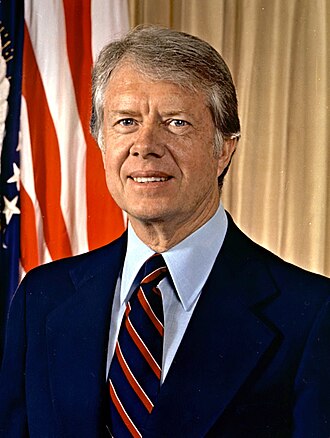 Jimmy Carter
College Level • 5m
EO 11993 May 24, 1977
⚖️✨ Zone 2 (Zone of Twilight) Constitutional Neutral
Executive Order 11993—United States Circuit Judge Nominating Commission
📜 Art. II §1: Executive Discretion & Internal Operations
By virtue of the authority vested in me by the Constitution and statutes of the United States of America, and as President of the United States of America, Section 3 of Executive Order No. 11972 of February 14, 1977, is amended by redesignating the present text as subsection…
Jimmy Carter Post-Graduate Legal • 1m
EO 12058 May 11, 1978
🏛️✅ Zone 1 (Maximum Authority) Constitutional Neutral
Executive Order 12058—Nuclear Non-Proliferation
📜 10th Amend: Intergovernmental Federalism Cooperation
Department of Energy. The following functions vested in the President by the Nuclear Non-Proliferation Act of 1978 (92 Stat. 120, 22 U.S.C. 3201 ), hereinafter referred to as the Act, and by the Atomic Energy Act of 1954, as amended (42 U.S.C. 2011 et seq.), hereinafter…
Jimmy Carter Grade 8 • 3m
EO 12057 May 8, 1978
⚖️✨ Zone 2 (Zone of Twilight) Constitutional Neutral
Executive Order 12057—National Advisory Committee for Women
📜 Art. II §1: Executive Discretion & Internal Operations
Section 2 of Executive Order No. 12050 of April 4, 1978 is hereby amended to read as follows: "Sec. 2. Membership. The President shall appoint not more than forty individuals to serve on the Committee and shall designate a chairperson or co-chairpersons from among the members.".
Jimmy Carter High School • 1m
EO 12060 May 15, 1978
⚖️✨ Zone 2 (Zone of Twilight) Constitutional Neutral
Executive Order 12060—Executive Schedule
📜 Art. II §3: Administrative Management & Civil Service
Of Executive Order No. 11861, as amended, placing certain positions in level IV of the Executive Schedule, is further amended by inserting in numerical sequence "(6) Assistant Attorney General, United States Attorneys and Trial Advocacy, Department of Justice." and by deleting…
Jimmy Carter High School • 1m
EO 12061 May 18, 1978
🏛️✅ Zone 1 (Maximum Authority) Fidelity (+0.44)
Executive Order 12061—Small Business Conference Commission
📜 5th Amend: Regulatory Execution with Due Process
1-1. Establishment of Commission. 1-101. There is established a Small Business Conference Commission. The Commission shall be composed of five members. 1-102. The members of the Commission shall be appointed by the President.
Jimmy Carter College Level • 3m
📜
Scholarly & Legal Citations
Exec. Order No. 12,059 (May 11, 1978), https://executiveordersarchive.org/orders/app-executive-order-12059-united-states-circuit-judge-nominating-commission.
