STANDARDS AND GUIDELINES FOR THE MERIT SELECTION OF UNITED STATES DISTRICT JUDGES By virtue of the authority vested in me as President by the Constitution and the statutes of the United States of America, including Section 7(a) of the Omnibus Judgeship Act of 1978, providing that the President shall promulgate and publish standards and guidelines for the selection of nominees for United States district court judgeships, it is hereby ordered as follows: 1-1. Nomination of District Judges. 1-101. Whenever a vacancy occurs in a district court of the United States, the President shall nominate as district judge to fill that vacancy a person whose character, experience, ability, and commitment to equal justice under law qualifies that person to serve in the federal judiciary. 1-102. The Attorney General shall assist the President by recommending to the President persons to be considered for appointment who are qualified to be district judges and by evaluating potential nominees. The Attorney General shall receive recommendations of such persons from any person, commission or organization. 1-103. The use of commissions to notify the public of vacancies and to make recommendations for district judge is encouraged. The Attorney General shall make public the suggested guidelines for such commissions. 1-104. Before making recommendations, the Attorney General shall consider whether: (a) Public notice of the vacancy has been given and an affirmative effort has been made, in the case of each vacancy, to identify qualified candidates, including women and members of minority groups; (b) The selection process was fair and reasonable; (c) The person or persons recommended meet the standards for evaluation set forth in Section 1-2 of this Order. 1-105. In evaluating proposed nominees, consideration will be given to reports of Department of Justice investigations and all other relevant information concerning potential nominees and their qualifications. 1-2. Standards for Evaluating Proposed Nominees. 1-201. The standards to be used in determining whether a person is qualified to serve as a district judge are whether that person: (a) Is a citizen of the United States, is a member of a bar of a state, territory, possession or the District of Columbia, and is in good standing in every bar in which that person is a member; (b) Possesses, and has a reputation for, integrity, good character, and common sense; (c) Is, and has a reputation for being, fair, experienced, even-tempered and free of biases against any class of citizens or any religious or racial group; (d) Is of sound physical and mental health; (e) Possesses and has demonstrated commitment to equal justice under law; (f) Possesses and has demonstrated outstanding legal ability and competence, as evidenced by substantial legal experience, ability to deal with complex legal problems, aptitude for legal scholarship and writing, and familiarity with courts and their processes; (g) Has the ability and the willingness to manage complicated pretrial and trial proceedings, including the ability to weigh conflicting testimony and make factual determinations, and to communicate skillfully with jurors and witnesses. 1-3. Amendments of Existing Orders. 1-301. Section 3(b) of Executive Order 12059 of May 11, 1978 is amended to read as follows: "(b) The Panel for the District of Columbia Circuit shall have the additional function of recommending nominees for the United States District Court for the District of Columbia. In exercising this function, the panel shall use the standards set forth in Executive Order 12097 and shall forward its recommendations to the Attorney General.". 1-302. Executive Order 12084, of September 27, 1978 is amended in the following respects: (1) Section 1-202(d) is amended to read as follows: "(d) report to the Attorney General, within the time specified in the notification, the results of its activities, including a list of persons whom the Commission considers to be best qualified to fill the vacancy.". (2) Section 1-203 is amended to read as follows: "1-203. In evaluating potential nominees, the Commission shall use the standards prescribed in Executive Order 12097.". JIMMY CARTER The White House, November 8, 1978. [Filed with the Office of the Federal Register, 2:50 p.m., November 8, 1978]
Executive Order 12097 🏛️✅ Zone 1: Maximum Authority Constitutional Neutral (+0.02)
📜 10th Amend: Intergovernmental Federalism Cooperation
Executive Order 12097—Merit Selection of United States District Judges
Executive Brief • At a Glance
⏱️ 3 min read (672 words) •
● In Effect
🎯 Primary Mandate
Whenever a vacancy occurs in a district court of the United States, the President shall nominate as district judge to fill that vacancy a person whose character, experience, ability, and commitment to equal justice under law qualifies that person to serve in the federal judiciary. 1-102.
⚖️ Constitutional Footing
🏛️✅ Zone 1: Maximum Authority
Express or Implied Congressional Authorization
📜 10th Amend: Intergovernmental Federalism Cooperation
🏛️ Scope & Affected Sectors
Sovereign State Governments & Localities Executive Departments & Federal Civil Servants Private Citizens & Property Owners
Plain-English Translation & Framers' Constitutional Analysis
Early Statesman synthesis distilling legal jargon into practical meaning, statutory anchors, and structural constitutional impacts.
Signed by President Jimmy Carter on November 8, 1978, this order concerns Merit Selection of United States District Judges. 1-1. Nomination of District Judges. 1-101. Whenever a vacancy occurs in a district court of the United States, the President shall nominate as district judge to fill that vacancy a person whose character, experience, ability, and commitment to equal justice under law qualifies that person to serve in the federal judiciary. 1-102.
Constitutional Assessment: Reviewed under the Tenth Amendment and the principle of dual federalism, this order touches upon domains traditionally reserved to the sovereign States. The Framers would caution against any attempt to commandeer state officers or displace local police powers through federal executive fiat.
Key Directives & Operative Actions
▪
Whenever a vacancy occurs in a district court of the United States, the President shall nominate as district judge to fill that vacancy a person whose character, experience, ability, and commitment to equal justice under law qualifies that person to serve in the federal judiciary. 1-102.
▪
The Attorney General shall assist the President by recommending to the President persons to be considered for appointment who are qualified to be district judges and by evaluating potential nominees.
▪
The Attorney General shall receive recommendations of such persons from any person, commission or organization. 1-103.
▪
The Attorney General shall make public the suggested guidelines for such commissions. 1-104.
Constitutional & Societal Entities Impacted
🏛️ Sovereign State Governments & Localities
🏛️ Executive Departments & Federal Civil Servants
🏛️ Private Citizens & Property Owners
Policy Areas & Topics
🏛️
The Framers' Constitutional Council
1787 PrismEvaluating this order against the constitutional debates of 1787 and the limits of Article II executive power.
🏛️✅ Zone 1 (Maximum Authority)
§
"When the President acts pursuant to an express or implied authorization of Congress, his authority is at its maximum, for it includes all that he possesses in his own right plus all that Congress can delegate."
— Justice Robert H. Jackson, Youngstown Sheet & Tube Co. v. Sawyer (1952) Express or Implied Congressional Authorization
JM
James Madison
Separation of Powers & Legislative Primacy
"The constitutional magistracy was designed not to invent policy, but to be the faithful instrument of the laws passed by the people's representatives." — Speech in the First Congress (1789)
Madison would approve the structural posture of this order. The President acts strictly in subordination to statutory authority granted under Article II, Section 3 ("take Care that the Laws be faithfully executed"). The checks and balances hold firm because the policy origin remains with the legislature.
Madisonian Stance: Concurring (Statutory)
AH
Alexander Hamilton
The Energetic Executive & Unified Command
"A feeble Executive implies a feeble execution of the government; and a government ill executed, whatever it may be in theory, must be, in practice, a bad government." — Federalist No. 70 (1788)
Hamilton would view this directive as the natural and indispensable functioning of administrative leadership. Without the power to coordinate agencies, manage personnel, and resolve operational ambiguities, the modern presidency would be reduced to an impotent figurehead.
Hamiltonian Stance: Supportive of Execution
GM
George Mason
Bill of Rights, Due Process & 10th Amendment
"The powers not delegated to the United States by the Constitution, nor prohibited by it to the States, are reserved to the States respectively, or to the people." — 10th Amendment to the US Constitution (1791)
Mason would scrutinize whether this federal directive intrudes into police powers, land stewardship, or municipal domains historically reserved to local citizens. The Anti-Federalist demand is that federal administration must never supplant state self-governance.
Anti-Federalist Stance: Eternal Vigilance Required
📐
Five Measurable "Constitutional Friction" Dimensions
An objective audit measuring potential separation-of-powers tension against the United States Constitution and established Supreme Court doctrine.
⚖️ Discretionary Twilight Zone
40 / 100 friction index
Dimension 1 • Art. I, §1 & §8
Moderate Friction
Legislative Encroachment & Purse
Administers commerce or fiscal programs requiring ongoing statutory delegation and legislative oversight.
Benchmark: Power of the purse, taxes/tariffs, and rule of law reserved to Congress.
Dimension 2 • Art. II, §1 & §3
Moderate Friction
Executive Scope & Faithfulness
Directs internal executive branch machinery, agency workflows, and federal personnel.
Benchmark: Faithfully execute laws enacted by Congress vs. unilateral decree.
Dimension 3 • 10th Amendment
Moderate Friction
Federalism & State Sovereignty
Engages state and local partners in cooperative federalism programs.
Benchmark: Police powers and un-delegated responsibilities reserved to the States.
Dimension 4 • 5th & 14th Amendments
Moderate Friction
Due Process & Individual Rights
Applies regulatory or compliance standards to private contractors or commercial entities.
Benchmark: Protection of private property, contracts, liberty, and procedural justice.
Dimension 5 • Separation of Powers
Low Friction
Youngstown Jacksonian Tier
The President operates strictly as the constitutional Chief Executive, carrying out policy established by Congress with strong statutory backing.
Benchmark: Express or Implied Congressional Authorization
⚖️
Audit Synthesis
This order operates within Justice Jackson’s Zone of Twilight, resting upon concurrent presidential authority or congressional silence.
Weighted composite: Art. I (25%), Art. II (25%), Federalism (15%), Due Process (15%), Youngstown (20%).
ℹ️
How to read these dimensions: Executive power expands whenever an administration acts without explicit statutory authorization from Congress (Article I), touches upon police powers historically reserved to the states (Tenth Amendment), or limits private rights and property without judicial process. A low friction score indicates strict concordance with enacted law; a high friction score highlights orders testing the limits of presidential discretion.
Total Words
672
4,323 characters
Estimated Read Time
3 min
@ 200 words / min
Flesch-Kincaid
18.8
Post-Graduate Legal
Text size:
🔗
Referenced By Later Executive Orders (1)
Subsequent presidents who cited, amended, continued, or revoked this directive in later orders.
Ronald Reagan • 1981-05-05
Related Executive Orders
2 orders cited directly in this text, plus related actions from this administration.
EO 12059 May 11, 1978
⚖️✨ Zone 2 (Zone of Twilight) Constitutional Neutral
Executive Order 12059—United States Circuit Judge Nominating Commission
📜 5th Amend: Regulatory Execution with Due Process
Establishment of the Commission. Them is hereby established the United States Circuit Judge Nominating Commission (hereinafter referred to as the "Commission").
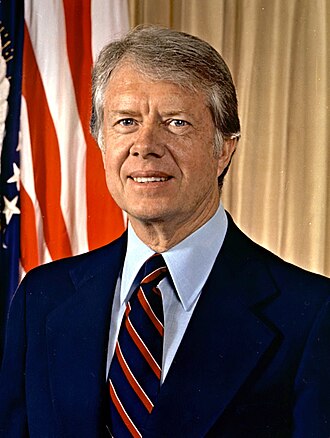 Jimmy Carter
Post-Graduate Legal • 6m
EO 12084 Sep 27, 1978
🏛️✅ Zone 1 (Maximum Authority) Fidelity (+0.29)
Executive Order 12084—Judicial Nominating Commission for the District of Puerto Rico
📜 5th Amend: Regulatory Execution with Due Process
1-1. Establishment of the Commission. 1-101. There is established the Judicial Nominating Commission for the District of Puerto Rico. 1-102. The Commission shall have seven members appointed by the President. The President shall designate a Chairman from among the members. 1-2.
Jimmy Carter College Level • 2m
EO 12098 Nov 14, 1978
⚖️✨ Zone 2 (Zone of Twilight) Constitutional Neutral
Executive Order 12098—President's Council on Physical Fitness and Sports
📜 Art. II §1: Executive Discretion & Internal Operations
By the authority vested in me as President by the Constitution of the United States of America, and in order to amend the composition of the President's Council on Physical Fitness and Sports, Executive Order No. 11562, as amended by Executive Order No. 11945, is hereby further…
Jimmy Carter High School • 1m
EO 12096 Nov 2, 1978
⚖️✨ Zone 2 (Zone of Twilight) Constitutional Neutral
Executive Order 12096—Industry and Trade Administration
📜 Art. II §2: Commander-in-Chief Supervisory Authority
1-101. The compensation for the position of Senior Deputy Assistant Secretary for Industry and Trade, Industry and Trade Administration, Department of Commerce, is fixed at the rate now or hereafter prescribed by law for level V of the Executive Schedule (5 U.S.C. 5316). 1-102.
Jimmy Carter College Level • 1m
EO 12095 Nov 2, 1978
⚖️✨ Zone 2 (Zone of Twilight) Constitutional Neutral
Executive Order 12095—Emergency Board To Investigate an Airline Labor Dispute
📜 Art. II §1: Executive Discretion & Internal Operations
1-101. Establishment of Board. There is established a board of three members to be appointed by the President to investigate this dispute. No member of the board shall be pecuniarily or otherwise interested in any organization of airline employees or any carrier. 1-102. Report.
Jimmy Carter High School • 1m
EO 12094 Nov 1, 1978
⚖️✨ Zone 2 (Zone of Twilight) Constitutional Neutral
Executive Order 12094—Special Pay for Sea Duty
📜 Art. II §2: Commander-in-Chief Supervisory Authority
1-101. Executive Order No. 11157, as amended, is further amended by revising Part II thereof to read as follows: "PART II SPECIAL PAY FOR SEA DUTY AND DUTY AT CERTAIN PLACES "Sec. 201.
Jimmy Carter Post-Graduate Legal • 5m
📜
Scholarly & Legal Citations
Exec. Order No. 12,097 (Nov. 8, 1978), https://executiveordersarchive.org/orders/app-executive-order-12097-merit-selection-united-states-district-judges.
