By the authority vested in me as President by the Constitution and laws of the United States of America, in furtherance of the Water Resources Planning Act (79 Stat. 244; 42 U.S.C. 1962 et seq.), and in order to ensure coordinated planning and independent review of Federal water resource programs and projects, it is hereby ordered as follows: 1-101. The Water Resources Council shall ensure that it has established a current set of principles, standards, and procedures for Federal participants in the preparation of comprehensive regional or river basin plans and for the formulation and evaluation of Federal water and related land resources projects (42 U.S.C. 1962a-2). 1-102. The Council shall ensure that an impartial technical review is performed on preauthorization reports or proposals and preconstruction plans for Federal and Federally assisted water, and related land resources, projects and programs, as they are defined in the Council's principles and standards. 1-103. The Council shall develop a planning manual for use by each agency (a) in calculating benefits and costs by using the best available techniques and (b) in applying the principles and standards in a consistent manner. 1-104. The impartial technical review shall evaluate each report, proposal, or plan for compliance with (a) the Council's principles and standards, (b) the planning manual or, pending issuance of the manual, established agency procedures, (c) other Federal laws, regulations and guidelines relevant to the planning process, and (d) the goal of wide public participation in the development of project plans, including adequate opportunity for public comment and adequate consideration of those views. 1-105. (a) Beginning April 1, 1979, all agencies shall submit, prior to their approval by the head of the agency, preauthorization reports or proposals and preconstruction plans for Federal and Federally assisted water, and related land resources, projects and programs to the Council at least 90 days prior to the scheduled time for their submission to the Office of Management and Budget in support of authorization or funding requests for those activities in fiscal year 1981 and subsequent years. (b) An agency shall not submit to the Council more than one-third of the total reports, proposals, and plans scheduled for review in any fiscal year during any quarter of that fiscal year. (c) Within 60 days of the submission by an agency of a report, proposal, or plan, the Chairman of the Council shall transmit the results of the impartial technical review to the appropriate agency head, including identification of any specific variations from Council approved procedures and manuals and the steps necessary to bring the plan into conformance therewith. 1-106. (a) All agency reports, proposals and plans submitted to the Council for review shall include sufficient information to allow an adequate technical review. In particular, this information shall include: (1) Sufficient documentation to allow a technical review of the analysis by the agency of the ratio of the benefit to the cost. (2) Evidence that an adequate evaluation has been made of reasonable alternatives, including nonstructural ones, for addressing the water-related problems of the affected regions and communities. (3) An explanation of the relationship of the plan to any approved regional water resource management plans. (4) A summary of the consideration given to water conservation measures and a listing of those measures incorporated into the plan. (5) Evidence that there has been compliance with relevant environmental and other laws and requirements. (6) Evidence that the public and State and local officials have been involved in the plan formulation process. (b) If the documents and information necessary for the review are not initially submitted, the Chairman may extend the review period by not more than 30 days. If the documents and information submitted do not demonstrate compliance, a finding detailing the areas of noncompliance will be transmitted to the agency head. 1-107. Before any agency submits to the Congress, or to any committee or member thereof, a report relating to, or affecting in whole or in part its advance programs, or the public works and improvement projects comprising such programs, or the results of any plan preparation for such programs or projects, such report or plan shall be submitted to the Office of Management and Budget for advice as to its relationship to the program of the President. When such report or plan is thereafter submitted to the Congress, or to any committee or member thereof, it shall include a statement of the advice received from the Office of Management and Budget. 1-108. Agency submissions to the Office of Management and Budget of the reports, proposals or plans reviewed pursuant to this Order shall be accompanied by a statement of the findings transmitted to the agency head. 1-109. Executive Order No. 9384 of October 4, 1943, as amended, is revoked. JIMMY CARTER The White House, January 4, 1979. [Filed with the Office of the Federal Register, 3:37 p.m., January 5, 1979]
Executive Order 12113 🏛️✅ Zone 1: Maximum Authority Constitutional Neutral (+0.02)
📜 10th Amend: Intergovernmental Federalism Cooperation
Executive Order 12113—Independent Water Project Review
Executive Brief • At a Glance
⏱️ 4 min read (810 words) •
● In Effect
🎯 Primary Mandate
The Water Resources Council shall ensure that it has established a current set of principles, standards, and procedures for Federal participants in the preparation of comprehensive regional or river basin plans and for the formulation and evaluation of Federal water and related land resources projects (42 U.S.C. 1962a-2). 1-102.
⚖️ Constitutional Footing
🏛️✅ Zone 1: Maximum Authority
Express or Implied Congressional Authorization
📜 10th Amend: Intergovernmental Federalism Cooperation
🏛️ Scope & Affected Sectors
Sovereign State Governments & Localities Private Citizens & Property Owners
Plain-English Translation & Framers' Constitutional Analysis
Early Statesman synthesis distilling legal jargon into practical meaning, statutory anchors, and structural constitutional impacts.
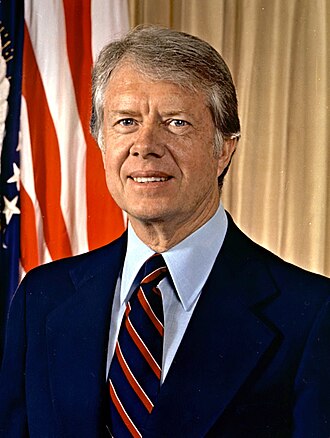
Signed by President Jimmy Carter on January 4, 1979, this order concerns Independent Water Project Review. 1-101. The Water Resources Council shall ensure that it has established a current set of principles, standards, and procedures for Federal participants in the preparation of comprehensive regional or river basin plans and for the formulation and evaluation of Federal water and related land resources projects (42 U.S.C. 1962a-2). 1-102.
Constitutional Assessment: Reviewed under the Tenth Amendment and the principle of dual federalism, this order touches upon domains traditionally reserved to the sovereign States. The Framers would caution against any attempt to commandeer state officers or displace local police powers through federal executive fiat.
Key Directives & Operative Actions
▪
The Water Resources Council shall ensure that it has established a current set of principles, standards, and procedures for Federal participants in the preparation of comprehensive regional or river basin plans and for the formulation and evaluation of Federal water and related land resources projects (42 U.S.C. 1962a-2). 1-102.
▪
The Council shall ensure that an impartial technical review is performed on preauthorization reports or proposals and preconstruction plans for Federal and Federally assisted water, and related land resources, projects and programs, as they are defined in the Council's principles and standards. 1-103.
▪
The Council shall develop a planning manual for use by each agency (a) in calculating benefits and costs by using the best available techniques and (b) in applying the principles and standards in a consistent manner. 1-104.
▪
The impartial technical review shall evaluate each report, proposal, or plan for compliance with (a) the Council's principles and standards, (b) the planning manual or, pending issuance of the manual, established agency procedures, (c) other Federal laws, regulations and guidelines relevant to the planning process, and (d) the goal of wide public participation in the development of project plans, including adequate opportunity for public comment and adequate consideration of those views. 1-105.
Constitutional & Societal Entities Impacted
🏛️ Sovereign State Governments & Localities
🏛️ Private Citizens & Property Owners
Policy Areas & Topics
🏛️
The Framers' Constitutional Council
1787 PrismEvaluating this order against the constitutional debates of 1787 and the limits of Article II executive power.
🏛️✅ Zone 1 (Maximum Authority)
§
"When the President acts pursuant to an express or implied authorization of Congress, his authority is at its maximum, for it includes all that he possesses in his own right plus all that Congress can delegate."
— Justice Robert H. Jackson, Youngstown Sheet & Tube Co. v. Sawyer (1952) Express or Implied Congressional Authorization
JM
James Madison
Separation of Powers & Legislative Primacy
"The constitutional magistracy was designed not to invent policy, but to be the faithful instrument of the laws passed by the people's representatives." — Speech in the First Congress (1789)
Madison would approve the structural posture of this order. The President acts strictly in subordination to statutory authority granted under Article II, Section 3 ("take Care that the Laws be faithfully executed"). The checks and balances hold firm because the policy origin remains with the legislature.
Madisonian Stance: Concurring (Statutory)
AH
Alexander Hamilton
The Energetic Executive & Unified Command
"A feeble Executive implies a feeble execution of the government; and a government ill executed, whatever it may be in theory, must be, in practice, a bad government." — Federalist No. 70 (1788)
Hamilton would view this directive as the natural and indispensable functioning of administrative leadership. Without the power to coordinate agencies, manage personnel, and resolve operational ambiguities, the modern presidency would be reduced to an impotent figurehead.
Hamiltonian Stance: Supportive of Execution
GM
George Mason
Bill of Rights, Due Process & 10th Amendment
"The powers not delegated to the United States by the Constitution, nor prohibited by it to the States, are reserved to the States respectively, or to the people." — 10th Amendment to the US Constitution (1791)
Mason would scrutinize whether this federal directive intrudes into police powers, land stewardship, or municipal domains historically reserved to local citizens. The Anti-Federalist demand is that federal administration must never supplant state self-governance.
Anti-Federalist Stance: Eternal Vigilance Required
📐
Five Measurable "Constitutional Friction" Dimensions
An objective audit measuring potential separation-of-powers tension against the United States Constitution and established Supreme Court doctrine.
⚖️ Discretionary Twilight Zone
43 / 100 friction index
Dimension 1 • Art. I, §1 & §8
Moderate Friction
Legislative Encroachment & Purse
Administers commerce or fiscal programs requiring ongoing statutory delegation and legislative oversight.
Benchmark: Power of the purse, taxes/tariffs, and rule of law reserved to Congress.
Dimension 2 • Art. II, §1 & §3
Moderate Friction
Executive Scope & Faithfulness
Directs internal executive branch machinery, agency workflows, and federal personnel.
Benchmark: Faithfully execute laws enacted by Congress vs. unilateral decree.
Dimension 3 • 10th Amendment
High Friction
Federalism & State Sovereignty
Creates friction with the Tenth Amendment by conditioning state grants, mandating local compliance, or preempting state police powers.
Benchmark: Police powers and un-delegated responsibilities reserved to the States.
Dimension 4 • 5th & 14th Amendments
Low Friction
Due Process & Individual Rights
Focuses on internal governmental operations with no direct impairment of private rights or property.
Benchmark: Protection of private property, contracts, liberty, and procedural justice.
Dimension 5 • Separation of Powers
Low Friction
Youngstown Jacksonian Tier
The President operates strictly as the constitutional Chief Executive, carrying out policy established by Congress with strong statutory backing.
Benchmark: Express or Implied Congressional Authorization
⚖️
Audit Synthesis
This order operates within Justice Jackson’s Zone of Twilight, resting upon concurrent presidential authority or congressional silence.
Weighted composite: Art. I (25%), Art. II (25%), Federalism (15%), Due Process (15%), Youngstown (20%).
ℹ️
How to read these dimensions: Executive power expands whenever an administration acts without explicit statutory authorization from Congress (Article I), touches upon police powers historically reserved to the states (Tenth Amendment), or limits private rights and property without judicial process. A low friction score indicates strict concordance with enacted law; a high friction score highlights orders testing the limits of presidential discretion.
Total Words
810
5,139 characters
Estimated Read Time
4 min
@ 200 words / min
Flesch-Kincaid
16.5
Post-Graduate Legal
Text size:
🔗
Referenced By Later Executive Orders (2)
Subsequent presidents who cited, amended, continued, or revoked this directive in later orders.
Ronald Reagan • 1981-09-17
Jimmy Carter • 1979-06-05
Related Executive Orders
1 order cited directly in this text, plus related actions from this administration.
EO 9384 Oct 4, 1943
🏛️✅ Zone 1 (Maximum Authority) Constitutional Neutral
Executive Order 9384—Submission of Reports to Facilitate Budgeting Activities of the Federal Government
📜 10th Amend: Intergovernmental Federalism Cooperation
In order to facilitate budgeting activities, all departments and establishments of the Executive Branch of the Federal Government, now or hereafter authorized by law to plan, propose, undertake, or aid public works and improvement projects financed in whole or in part by the…
 Franklin D. Roosevelt
Post-Graduate Legal • 4m
EO 12114 Jan 4, 1979
🏛️✅ Zone 1 (Maximum Authority) Fidelity (+0.23)
Executive Order 12114—Environmental Effects Abroad of Major Federal Actions
📜 10th Amend: Intergovernmental Federalism Cooperation
Purpose and Scope. The purpose of this Executive Order is to enable responsible officials of Federal agencies having ultimate responsibility for authorizing and approving actions encompassed by this Order to be informed of pertinent environmental considerations and to take such…
 Jimmy Carter
Post-Graduate Legal • 8m
EO 12112 Jan 2, 1979
⚖️✨ Zone 2 (Zone of Twilight) Constitutional Neutral
Executive Order 12112—Seal for the Office of Administration
📜 Art. II §3: Administrative Management & Civil Service
1-101. There is established for the Office of Administration in the Executive Office of the President an official seal described as follows: On a blue seal, the Arms of the United States proper above the inscription "OFFICE OF ADMINISTRATION," in gold raised letters, all within…
Jimmy Carter High School • 1m
EO 12111 Jan 2, 1979
⚖️✨ Zone 2 (Zone of Twilight) Constitutional Neutral
Executive Order 12111—Executive Schedule
📜 Art. II §1: Executive Discretion & Internal Operations
By the authority vested in me as President of the United States of America by Section 5317 of Title 5 of the United States Code, and in order to place the position of Counselor on Labor Management Relations, Department of Commerce, in level IV of the Executive Schedule…
Jimmy Carter High School • 1m
EO 12110 Dec 28, 1978
⚖️✨ Zone 2 (Zone of Twilight) Constitutional Neutral
Executive Order 12110—Federal Advisory Committees
📜 Art. II §2: Commander-in-Chief Supervisory Authority
1-101. Each advisory committee listed below is continued until December 31, 1980. (a) Committee for the Preservation of the White House—Executive Order No. 11145, as amended (Department of the Interior).
Jimmy Carter High School • 3m
EO 12109 Dec 28, 1978
⚖️✨ Zone 2 (Zone of Twilight) Constitutional Neutral
Executive Order 12109—Federal Physicians Comparability Allowance
📜 Art. II §3: Administrative Management & Civil Service
1-101. The Director of the Office of Personnel Management is hereby designated and empowered to exercise, in consultation with the Director of the Office of Management and Budget, the authority of the President under Section 5948 of Title 5 of the United States Code, to…
Jimmy Carter College Level • 1m
📜
Scholarly & Legal Citations
Exec. Order No. 12,113 (Jan. 4, 1979), https://executiveordersarchive.org/orders/app-executive-order-12113-independent-water-project-review.
