By virtue of the authority vested in the President by the Constitution and statutes of the United States, including section 5 (b) of the act of October 6, 1917, as amended (12 U.S.C. 95a), and in view of the continued existence of the national emergencies declared by Proclamation No. 2914 of December 16, 1950, and Proclamation No. 4074 of August 15, 1971, and the importance of continuing (a) to exercise the necessary vigilance over exports from the standpoint of their significance to the national security of the United States; (b) to further significantly the foreign policy of the United States and to aid in fulfilling its international responsibilities; and (c) to protect the domestic economy from the excessive drain of scarce materials and reduce the serious inflationary impact of abnormal foreign demand, it is hereby ordered: SECTION 1. Notwithstanding the expiration of the Export Administration Act of 1969, as amended, the provisions for administration of that act contained in Executive Order No. 11533 of June 4, 1970 as continued in effect by Executive Order No. 11683 of August 29, 1972, shall continue in full force and effect and shall authorize the exercise and administration of export controls, under the authority vested in me as President of the United States by section 5(b) of the act of October 6, 1917, as amended (12 U.S.C. 95a). SEC. 2. Except to the extent another basis is provided in the second sentence of section 3 of this Order, all rules and regulations issued by the Secretary of Commerce, published in title 15, chapter III, subchapter B, of the Code of Federal Regulations, parts 368 to 399 inclusive, and all orders, regulations, licenses and other forms of administrative action issued or taken pursuant thereto, shall until amended or revoked by the Secretary of Commerce, remain in full force and effect, the same as if issued or taken pursuant to this Order, except that the maximum fine which may be imposed under part 387.1(a) (1) shall not exceed $10,000 and that the civil penalty provided for under part 387.1(b) (3) will not be applicable to any violation of the regulations under this Order. SEC. 3. The delegations of authority in this Order shall not affect the authority of any agency or official pursuant to any other delegation of Presidential authority, presently in effect or hereafter made, under section 5 (b) of the act of October 6, 1917, as amended. Those regulations issued under the Export Control Act of 1949, as amended, to implement foreign policy set forth in Executive Orders Nos. 11322 of January 5, 1967 and 11419 of July 29, 1968, shall until amended or revoked by the Secretary of Commerce continue to apply as regulations issued under such orders. GERALD R. FORD The White House, September 30, 1974.
Executive Order 11810 ⚖️✨ Zone 2: Zone of Twilight Constitutional Neutral (+0.02)
📜 Art. II §1: Executive Discretion & Internal Operations
Executive Order 11810—Continuing the Regulation of Exports
Executive Brief • At a Glance
⏱️ 2 min read (464 words) •
● In Effect
🎯 Primary Mandate
Notwithstanding the expiration of the Export Administration Act of 1969, as amended, the provisions for administration of that act contained in Executive Order No. 11533 of June 4, 1970 as continued in effect by Executive Order No. 11683 of August 29, 1972, shall continue in full force and effect and shall authorize the exercise and administration of export controls, under the authority vested in me as President of the United States by section 5(b) of the act of October 6, 1917, as amended (12 U.S.C. 95a).
⚖️ Constitutional Footing
⚖️✨ Zone 2: Zone of Twilight
Concurrent Authority / Congressional Silence
📜 Art. II §1: Executive Discretion & Internal Operations
🏛️ Scope & Affected Sectors
Foreign Nations & International Entities
Plain-English Translation & Framers' Constitutional Analysis
Early Statesman synthesis distilling legal jargon into practical meaning, statutory anchors, and structural constitutional impacts.
Signed by President Gerald R. Ford on September 30, 1974, this order concerns Continuing the Regulation of Exports. Notwithstanding the expiration of the Export Administration Act of 1969, as amended, the provisions for administration of that act contained in Executive Order No. 11533 of June 4, 1970 as continued in effect by Executive Order No. 11683 of August 29, 1972, shall continue in full force and effect and shall authorize the exercise and administration of export controls, under the authority vested in me as President of…
Constitutional Assessment: This action represents an orderly exercise of Article II administrative discretion, managing the internal machinery and personnel of the executive branch without abridging the ancient liberties of the people.
Key Directives & Operative Actions
▪
Notwithstanding the expiration of the Export Administration Act of 1969, as amended, the provisions for administration of that act contained in Executive Order No. 11533 of June 4, 1970 as continued in effect by Executive Order No. 11683 of August 29, 1972, shall continue in full force and effect and shall authorize the exercise and administration of export controls, under the authority vested in me as President of the United States by section 5(b) of the act of October 6, 1917, as amended (12 U.S.C. 95a).
▪
Except to the extent another basis is provided in the second sentence of section 3 of this Order, all rules and regulations issued by the Secretary of Commerce, published in title 15, chapter III, subchapter B, of the Code of Federal Regulations, parts 368 to 399 inclusive, and all orders, regulations, licenses and other forms of administrative action issued or taken pursuant thereto, shall until amended or revoked by the Secretary of Commerce, remain in full force and effect, the same as if issued or taken pursuant to this Order, except that the maximum fine which may be imposed under part 387.1(a) (1) shall not exceed $10,000 and that the civil penalty provided for under part 387.1(b) (3) will not be applicable to any violation of the…
▪
The delegations of authority in this Order shall not affect the authority of any agency or official pursuant to any other delegation of Presidential authority, presently in effect or hereafter made, under section 5 (b) of the act of October 6, 1917, as amended.
▪
Those regulations issued under the Export Control Act of 1949, as amended, to implement foreign policy set forth in Executive Orders Nos. 11322 of January 5, 1967 and 11419 of July 29, 1968, shall until amended or revoked by the Secretary of Commerce continue to apply as regulations issued under such orders.
Constitutional & Societal Entities Impacted
🏛️ Foreign Nations & International Entities
Policy Areas & Topics
🏛️
The Framers' Constitutional Council
1787 PrismEvaluating this order against the constitutional debates of 1787 and the limits of Article II executive power.
⚖️✨ Zone 2 (Zone of Twilight)
§
"When the President acts in absence of either a congressional grant or denial of authority, he can only rely upon his own independent powers, but there is a zone of twilight in which he and Congress may have concurrent authority."
— Justice Robert H. Jackson, Youngstown Sheet & Tube Co. v. Sawyer (1952) Concurrent Authority / Congressional Silence
JM
James Madison
Separation of Powers & Legislative Primacy
"Power is of an encroaching nature, and it ought to be effectually restrained from passing the limits assigned to it." — Federalist No. 48 (1788)
Madison would view this order with watchful scrutiny. Operating in the 'Zone of Twilight' where Congress is silent, each such directive establishes an administrative precedent that steadily expands the executive perimeter at the expense of legislative primacy.
Madisonian Stance: Vigilant / Cautionary
AH
Alexander Hamilton
The Energetic Executive & Unified Command
"A feeble Executive implies a feeble execution of the government; and a government ill executed, whatever it may be in theory, must be, in practice, a bad government." — Federalist No. 70 (1788)
Hamilton would view this directive as the natural and indispensable functioning of administrative leadership. Without the power to coordinate agencies, manage personnel, and resolve operational ambiguities, the modern presidency would be reduced to an impotent figurehead.
Hamiltonian Stance: Defends Vigor & Dispatch
GM
George Mason
Bill of Rights, Due Process & 10th Amendment
"The president will be surrounded by flatterers and sycophants... and the great powers of the executive will gradually absorb the liberties of the people." — Cato IV (Anti-Federalist, 1787)
The Anti-Federalist prism advises continuous democratic vigilance. Even routine administrative directives aggregate centralized federal power away from town halls and state assemblies toward a distant executive apparatus.
Anti-Federalist Stance: Eternal Vigilance Required
📐
Five Measurable "Constitutional Friction" Dimensions
An objective audit measuring potential separation-of-powers tension against the United States Constitution and established Supreme Court doctrine.
⚖️ Discretionary Twilight Zone
48 / 100 friction index
Dimension 1 • Art. I, §1 & §8
Moderate Friction
Legislative Encroachment & Purse
Administers commerce or fiscal programs requiring ongoing statutory delegation and legislative oversight.
Benchmark: Power of the purse, taxes/tariffs, and rule of law reserved to Congress.
Dimension 2 • Art. II, §1 & §3
Low Friction
Executive Scope & Faithfulness
Exercises standard supervisory executive authority to faithfully execute existing statutes.
Benchmark: Faithfully execute laws enacted by Congress vs. unilateral decree.
Dimension 3 • 10th Amendment
High Friction
Federalism & State Sovereignty
Creates friction with the Tenth Amendment by conditioning state grants, mandating local compliance, or preempting state police powers.
Benchmark: Police powers and un-delegated responsibilities reserved to the States.
Dimension 4 • 5th & 14th Amendments
Moderate Friction
Due Process & Individual Rights
Applies regulatory or compliance standards to private contractors or commercial entities.
Benchmark: Protection of private property, contracts, liberty, and procedural justice.
Dimension 5 • Separation of Powers
Moderate Friction
Youngstown Jacksonian Tier
The order relies on inherent Article II executive discretion, civil service management, or foreign diplomacy where Congress has neither expressly approved nor prohibited action.
Benchmark: Concurrent Authority / Congressional Silence
⚖️
Audit Synthesis
This order operates within Justice Jackson’s Zone of Twilight, resting upon concurrent presidential authority or congressional silence.
Weighted composite: Art. I (25%), Art. II (25%), Federalism (15%), Due Process (15%), Youngstown (20%).
ℹ️
How to read these dimensions: Executive power expands whenever an administration acts without explicit statutory authorization from Congress (Article I), touches upon police powers historically reserved to the states (Tenth Amendment), or limits private rights and property without judicial process. A low friction score indicates strict concordance with enacted law; a high friction score highlights orders testing the limits of presidential discretion.
Total Words
464
2,780 characters
Estimated Read Time
2 min
@ 200 words / min
Flesch-Kincaid
17.8
Post-Graduate Legal
Text size:
🔗
Referenced By Later Executive Orders (1)
Subsequent presidents who cited, amended, continued, or revoked this directive in later orders.
Related Executive Orders
2 orders cited directly in this text, plus related actions from this administration.
EO 11533 Jun 4, 1970
⚖️✨ Zone 2 (Zone of Twilight) Constitutional Neutral
Executive Order 11533—Administration of the Export Administration Act of 1969
📜 Art. II §2: Commander-in-Chief Supervisory Authority
The power, authority, and discretion conferred upon the President by the provisions of the Export Administration Act of 1969 (83 Stat. 841; Public Law 91-184), are hereby delegated to the Secretary of Commerce, with power of successive redelegation. SEC. 2.
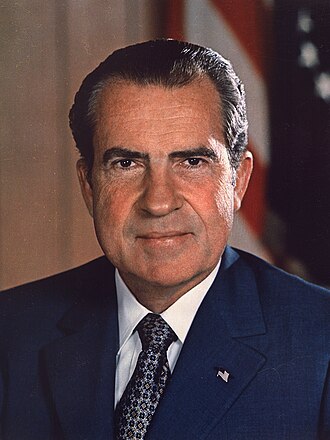 Richard Nixon
College Level • 2m
EO 11683 Aug 29, 1972
⚖️✨ Zone 2 (Zone of Twilight) Constitutional Neutral
Executive Order 11683—Revoking Executive Order No. 11677 of August 1, 1972, and Continuing in Effect Executive Order No. 11533 of June 4, 1970, Relating to the Administration of Export Controls
📜 Art. II §1: Executive Discretion & Internal Operations
Executive Order No. 11677 of August 1, 1972, issued under the authority of the act of October 6, 1917, as amended (12 U.S.C. 95a), is hereby revoked, except that this revocation shall not affect any violation of any rules, regulations, orders, licenses, and other forms of…
Richard Nixon College Level • 1m
EO 11809 Sep 30, 1974
🏛️✅ Zone 1 (Maximum Authority) Constitutional Neutral
Executive Order 11809—Establishing the President's Labor-Management Committee
📜 Art. I §8: Delegated Tariff & Commerce Execution
There is hereby established the President's Labor-Management Committee (hereinafter referred to as the Committee). The Committee shall consist of eight labor members and eight management members and a neutral coordinator, all to be designated by the President. SEC. 2.
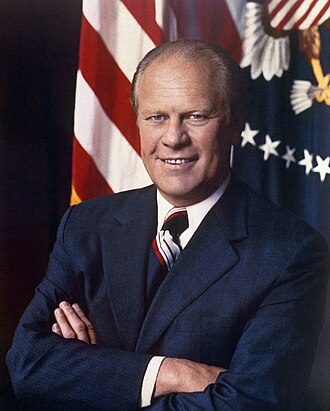 Gerald R. Ford
Post-Graduate Legal • 1m
EO 11808 Sep 30, 1974
🏛️✅ Zone 1 (Maximum Authority) Fidelity (+0.29)
Executive Order 11808—Establishing the President's Economic Policy Board, and for Other Purposes
📜 Art. I §8: Delegated Tariff & Commerce Execution
There is hereby established the President's Economic Policy Board (hereinafter referred to as the Board). SEC. 2. The Board shall consist of the Secretary of the Treasury, who shall be its Chairman, the Assistant to the President for Economic Affairs, the Secretary of State…
Gerald R. Ford Post-Graduate Legal • 3m
EO 11807 Sep 28, 1974
🏛️✅ Zone 1 (Maximum Authority) Fidelity (+0.29)
Executive Order 11807—Occupational Safety and Health Programs for Federal Employees
📜 Art. II §3: Administrative Management & Civil Service
As the Nation's largest employer, the Federal Government has a special obligation to set an example for all employers by providing a safe and healthful working environment for its employees.
Gerald R. Ford Post-Graduate Legal • 8m
EO 11806 Sep 25, 1974
⚖️✨ Zone 2 (Zone of Twilight) Constitutional Neutral
Executive Order 11806—Amending Executive Order No. 11763 of January 17, 1974, to Extend the Life of the National Commission for the Observance of World Population Year
📜 Art. II §1: Executive Discretion & Internal Operations
Section 2(e) of Executive Order No. 11763 of January 17, 1974 (39 F.R. 2349), is revised to read in its entirety as follows: "(e) The Commission shall conclude its work and make a report to the President not later than June 30, 1975, at which time the Commission shall be deemed…
Gerald R. Ford High School • 1m
📜
Scholarly & Legal Citations
Exec. Order No. 11,810 (Sept. 30, 1974), https://executiveordersarchive.org/orders/app-executive-order-11810-continuing-the-regulation-exports.
