ON FEDERAL POLICY REGARDING THE EXPORT OF BANNED OR SIGNIFICANTLY RESTRICTED SUBSTANCES By the authority vested in me as President by the Constitution of the United States of America, and in order to further the foreign policy interests of the United States and to provide for effective and responsible implementation of the Export Administration Act of 1979 (50 U.S.C. App. 2401 et. seq.) and other statutes insofar as they relate to the export of banned or significantly restricted substances, it is hereby ordered as follows: 1-1. Scope of the Order 1-101. For the purposes of this Order, the term "banned or significantly restricted substance" means: (a) a food or class of food which (1) is adulterated, as defined by rules or orders issued under Sec. 402 (a) or (c) (21 U.S.C. 342(a) or (c)), or (2) is in violation of emergency permit controls issued under Sec. 404 (21 U.S.C. 344) of the Federal Food, Drug, and Cosmetic Act; (b) a drug which is (1) adulterated, as defined by rules or orders issued under Sec. 501 (a), (b), (c), or (d) (21 U.S.C. 351(a), (b), (c), or (d)), (2) misbranded, as defined by rules or orders issued under Sec. 502(j) (21 U.S.C. 352(j) ) or (3) a new drug or new animal drug for which an approval is not in effect under Sec. 505 (21 U.S.C. 355) or Sec. 512 (21 U.S.C. 360), respectively, of the Federal Food, Drug, and Cosmetic Act; (c) an antibiotic drug which has not been certified under Sec. 507 (21 U.S.C. 357) of the Federal Food, Drug, and Cosmetic Act; (d) a drug containing insulin which has not been certified under Sec. 506 (21 U.S.C. 356) of the Federal Food, Drug, and Cosmetic Act; (e) a device which (1) is adulterated, as defined by rules or orders issued under Sec. 501(a) (21 u.s.c. 351 (a)), (2) is misbranded, as defined by rules or orders issued under Sec. 502(j) (21 U.S.C. 352(j) ), (3) does not conform with a performance standard issued under Sec. 514 (21 U.S.C. 360d), (4) has not received premarket approval under Sec. 515 (21 U.S.C. 360e), or (5) is banned under Sec. 516 (21 U.S.C. 360f) of the Federal Food, Drug, and Cosmetic Act; (f) a cosmetic which is adulterated, as defined by rules or orders issued under Sec. 601 (21 U.S.C. 361) of the Federal Food, Drug, and Cosmetic Act; (g) a food additive or color additive which is deemed unsafe within the meaning of Sec. 409 (21 U.S.C. 348) or Sec. 706 (21 U.S.C. 376), respectively, of the Federal Food, Drug, and Cosmetic Act; (h) a biological product which has been propagated or manufactured and prepared at an establishment which does not hold a license as required by Sec. 351 (42 U.S.C. 262) of the Public Health Service Act; (i) an electronic product which does not comply with a performance standard issued under Sec. 358 (42 U.S.C. 263f) of the Public Health Service Act; (j) a consumer product which (1) does not comply with a consumer product safety standard adopted under Secs. 7 and 9 (15 U.S.C. 2056 and 2058) other than one relating solely to labeling, (2) has been declared to be a banned hazardous product under Secs. 13 and 9 (15 U.S.C. 2057 and 2058), (3) presents a substantial product hazard under Sec. 15 (15 U.S.C. 2064), or (4) is an imminently hazardous consumer product under Sec. 12 (15 U.S.C. 2061) of the Consumer Product Safety Act; (k) a fabric, related material, or product which does not comply with a flammability standard (other than one relating to labeling) adopted under Sec. 4:(15 U.S.C. 1193) of the Flammable Fabrics Act; (1) a product which is a banned hazardous substance (including a children's article) under Secs. 2 and 3 (15 U.S.C. 1261 and 1262) of the Federal Hazardous Substances Act; (m) (1) a pesticide which, on the basis of potential risks to human health or safety or to the environment, (A) has been denied registration for all or most significant uses under Sec. $ (c) (6) (7 U.S.C. 136a(c) (6)), (B) has been classified for restricted use under Sec. 3(d)(1)(c) (7 U.S.C. 136a(d) (1) (c)), (c) has had its registration cancelled or suspended for all or most significant uses under Sec. 6 (7 U.S.C. 136d), (D) has been proceeded against and seized under Sec. 13(b)(3) (7 U.S.C. 136k), or (E) has not had its registration cancelled, but requires an acknowledgement statement under Sec. 17(a) (2) (7 U.S.C. 1360(a) (2)) of the Federal Insecticide, Fungicide, and Rodenticide Act, or (2) a pesticide chemical for which a tolerance has been denied or repealed under Sec. 408 (21 U.S.C. 346(a) ) of the Federal Food, Drug, and Cosmetic Act; and (n) a chemical substance or mixture (1) which is subject to an order or injunction issued under Sec. 5(f)(3) (15 U.S.C. 2604(f) (3)), (2) which is subject to a requirement issued under Sec. 6 (a) ( 1 ), 6 (a) (2), 6 (a) (5), or 6(a) (7) (15 U.S.C. 2605(a) (1), 2605(a)(2), 2605(a)(5), or 2605 (a) (7)) or (3) for which a civil action has been brought and relief granted under Sec. 7 (15 U.S.C. 2606) of the Toxic Substances Control Act. 1-102. Each agency that is responsible for the administration of a statute or statutory provision referenced in Subsection 1-101 shall compile and, within 90 days after the issuance of this Order, shall publish in the FEDERAL REGISTER a list of those substances within its jurisdiction that are banned or significantly restricted substances as defined by Subsection 1-101. Each agency shall revise the list of banned or significantly restricted substances within its jurisdiction as necessary to reflect new regulatory actions by the agency. 1-2. Regularization of Notification Procedures 1-201. Each agency that is required by statute to notify, or to be apprised of notifications to, foreign countries regarding exports of banned or significantly restricted substances to those countries shall adhere, to the extent not inconsistent with applicable law, to the following procedures: (a) Each agency shall promptly provide to the Department of State such information regarding an export of banned or significantly restricted substances to a foreign government as is required by statute or agency regulation to be forwarded to the foreign government, either by the agency or by another party required to apprise the agency of its notification, and by the notification forms and procedures to be established by the Department of State pursuant to Subsection 1-201(b). As soon as feasible after the receipt of the required information from an agency, the Department of State shall transmit the information to the government of the foreign country to which the banned or significantly restricted substance is to be exported. (b) the Department of State shall consult with affected agencies regarding the format and content appropriate for required notifications to foreign governments and shall establish, within 90 days after the issuance of this Order, notification forms and procedures. At a minimum, the following information shall be transmitted to foreign governments regarding banned or significantly restricted substances to be exported to them from the United States: (1) the name of the substance to be exported; (2) a concise summary of the agency's regulatory actions regarding that substance, including the statutory authority for such actions and the timetable for any further actions that are planned; and, (3) a concise summary of the potential risks to human health or safety or to the environment that are the grounds for the agency's actions. In addition, to the extent deemed appropriate by the agency with jurisdiction over the banned or significantly restricted substance to be exported, copies of additional documents may be forwarded to a foreign government, either at the same time as or subsequent to the required notification, to assist the foreign government in its assessment of the nature and extent of the risks associated with the substance. (c) With respect to each required notification regarding an export of a banned or significantly restricted substance, each agency shall identify for the Department of State the persons or offices within that agency to be contacted in the event that the foreign government receiving the notification wishes to obtain through the Department of State additional information regarding the risks of, or regulatory actions taken with respect to, the banned or significantly restricted substance that is the subject of the notification. (d) When it is required by statute or agency regulation that a foreign government acknowledge that it has received notification of an export of banned or significantly restricted substances, express approval of the export, or make any other type of response to notification, the notification shall advise the foreign government that its response should be directed to the Department of State for transmittal to the agency. 1-202. The procedures established by Subsection 1-201 shall not preclude an agency from contacting a foreign government directly regarding the export of banned or significantly restricted substances to that country, providing that such contacts are supplementary to, rather than substitutes for, adherence to the procedures established by Subsection 1-201. 1-203. Each United States embassy shall maintain on file, for a period of one year after transmission, copies of the notifications transmitted through the Department of State to the government of the foreign country in which the embassy is located, as well as lists of United States agency contact points sent to the Department of State in connection with those notifications. 1-3. Export Control Procedures 1-301. It is the intent of this Order to rely primarily on the notification procedures, annual report, and participation in international efforts provided for in Sections 1-2, 1-4, and 1-5, respectively, in implementing the Order, and to resort to the imposition of export controls only in a very few instances. Specifically, export controls should be limited to extremely hazardous substances, as determined by the agency primarily responsible for regulating a substance on the basis of the record compiled in connection with regulatory action taken by that agency concerning that substance— (a) which represent a substantial threat to human health or safety or to the environment, (b) the export of which would cause clear and significant harm to the foreign policy interests of the United States, and (c) for which export licenses would be granted only in exceptional cases. Export controls shall not be applied to substances specified in Sections 1-101 (b) (3), 1-101 (e)(4), and 1-101 (m)(1) (E) of this Order. Nor shall export controls be applied to "medicine or medical supplies," which are excluded from such controls by Section 6(f) of the Export Administration Act of 1979 (50 U.S.C. App. 2405(f)). For the purposes of this Order the phrase "medicine or medical supplies" shall be construed so as to permit consideration for inclusion on the Commodity Control List of drugs and devices within the categories specified in Subsection 1-101 (b-e) and representing a substantial threat to human health or safety or to the environment. Wherever practicable, export controls should be no more restrictive than the controls applicable to domestic commerce and use. 1-302. Within 90 days after the issuance of this Order, the Department of Commerce shall develop for interagency review proposed regulations to govern its consideration of applications for licenses to export banned or significantly restricted substances included on the Commodity Control List. Within 120 days after the issuance of this Order, the Department of Commerce shall publish the proposed regulations in the FEDERAL REGISTER for public comment. 1-303. In accord with its statutory role under the Export Administration Act, and consistent with the policy and standards enunciated in Subsection 1-301, the Department of State shall identify, subject to the concurrence of the Department of Commerce, candidates for inclusion on the Commodity Control List. If the Department of State and Department of Commerce are unable to agree on the inclusion on the Commodity Control List of a particular substance, the matter shall be referred to the President. 1-304. In order to assist the Department of State in the development of its advice to the Department of Commerce under subsection 1-303, there is hereby established an interagency task force, to be chaired by the Department of State. The task force shall consist of representatives of the following agencies: (a) Department of State. (b) Department of Commerce. (c) Environmental Protection Agency. (d) Food and Drug Administration, Department of Health and Human Services. (e) Consumer Product Safety Commission. (f) Office of the U.S. Special Trade Representative. The Department of State, as chair of the task force, may invite representatives of non-member agencies to participate from time to time in the functions of the task force. The task force shall provide technical advice to the Department of State as to which substances should be considered candidates for inclusion on the Commodity Control List. The task force shall endeavor to reach consensus on its advice, consistent with the policy and standards enunciated in Subsection 1-301. 1-305. To the extent possible, within the limits of available information and consistent with the policy and standards enunciated in Subsection 1-301, the task force shall consider, with respect to each banned or significantly restricted substance that is proposed for inclusion on the Commodity Control List by a member of the task force: (a) the type, extent, and severity of the potential detrimental effects of the substance; (b) the likelihood of the effects; (c) the duration of the effects; (d) the ability of foreign countries to avoid or mitigate the effects; (e) the availability of the substance from sources other than the United States; (f) the availability of other substances or methods that would serve the same purposes as the substance; and, (g) the importance of the beneficial uses of the substances. 1-306. Before deciding whether to grant a validated license for the export of any banned or significantly restricted substance that is included on the Commodity Control List, the Department of Commerce shall consult with the Department of State, the agency with domestic regulatory authority, and any other agency deemed relevant by the Department of Commerce. Such consultation by the Department of Commerce is necessary within the meaning of Section 10(a)(3) of the Export Administration Act of 1979 (50 U.S.C. App. 2409(a) (3)). The Department of State shall not recommend issuing a license unless (1) it has determined that the export would not cause clear and significant harm to the foreign policy interests of the United States and (2) after appropriate consultations, it has received no objections to the export from the government of the foreign country to which the banned or significantly restricted substance is to be exported. The findings and recommendations of the Department of State shall be conveyed in writing to the Department of Commerce. 1-307. Except to the extent supplemented or further detailed by this Order, the procedures established by the Export Administration Act of 1979 (50 U.S.C. App. 2401 et. seq.), including required consultations with industry, shall be followed in all their particulars in the utilization of export control authority on foreign policy grounds with respect to banned or significantly restricted substances. 1-4. Annual Report on Regulatory Actions 1-401. The Regulatory Council shall compile each year a report that (a) summarizes all final regulatory actions of the types described in Subsection 1-101 that were taken by Federal agencies by the end of the previous calendar year, including those antedating that calendar year but continuing in force, and that are of significant international interest; (b) summarizes all proposed regulatory actions of the types described in Subsection 1-101 that were pending before agencies at the end of the previous calendar year and that are of significant international interest; (c) indicates generally what additional information is available with respect to each of the final or proposed regulatory actions listed and how such information may be obtained; and (d) contains such information as the Council, in consultation with affected agencies, determines is appropriate to include regarding substances the use of which in the United States is not generally banned but, on the basis of potential risks to human health or safety or to the environment, is subject to maximum exposure levels or other restrictions or conditions. 1-402. Each agency shall provide to the Regulatory Council the information necessary for the preparation of the annual report on regulatory actions. The Regulatory Council shall establish, after consultation with affected agencies and within 90 days after the issuance of this Order, a standard format and timetable for the submission of information by the agencies. 1-403. The Regulatory Council shall publish the report required by subsection 1-401 in the FEDERAL REGISTER by March 1 of each year, and the Department of State shall distribute copies of the report to foreign countries and to appropriate public and private international organizations as soon as feasible after its publication. 1-5. Participation in International Efforts 1-501. The Department of State, and other agencies and officials of the United States government in consultation with the Department of State, shall encourage and participate actively in international efforts to develop improved worldwide hazard alert systems, export notification programs, uniform hazard labeling, and other common standards and practices with respect to the export of banned or significantly restricted substances. 1-6. Evaluation 1-601. The Council on Environmental Quality, the Department of State, and the Department of Commerce, in consultation with agencies affected by this Order, shall submit to the President 18 months after the effective date of the Order and annually thereafter, a report summarizing U.S. agency activities pursuant to the Order, evaluating the effectiveness of the Order, and making any recommendations that are deemed appropriate. 1-7. Trade Secret Protection 1-701. Trade secrets or other confidential commercial or financial information that pertain to a banned or significantly restricted substance to be exported shall not be forwarded to a foreign government in the notifications or other documents prepared pursuant to this Order unless authorized or required by existing law. JIMMY CARTER White House, January 15, 1981. [Filed with the Office of the Federal Register, 3:24 p.m., January 15, 1981]
Executive Order 12264 🏛️✅ Zone 1: Maximum Authority Constitutional Neutral (+0.02)
📜 10th Amend: Intergovernmental Federalism Cooperation
Executive Order 12264—Export of Banned or Significantly Restricted Substances
Executive Brief • At a Glance
⏱️ 15 min read (2,989 words) •
● In Effect
🎯 Primary Mandate
For the purposes of this Order, the term "banned or significantly restricted substance" means: (a) a food or class of food which (1) is adulterated, as defined by rules or orders issued under Sec. 402 (a) or (c) (21 U.S.C. 342(a) or (c)), or (2) is in violation of emergency permit controls issued under Sec. 404 (21 U.S.C. 344) of the Federal Food, Drug, and Cosmetic Act; (b) a drug which is (1) adulterated, as defined by rules or orders issued under Sec. 501 (a), (b), (c), or (d) (21 U.S.C. 351(a), (b), (c), or (d)), (2) misbranded, as defined by rules or orders issued under Sec. 502(j) (21 U.S.C. 352(j) ) or (3) a new drug or new animal drug for which an approval is not in effect under Sec. 505 (21 U.S.C. 355) or Sec. 512 (21 U.S.C.…
⚖️ Constitutional Footing
🏛️✅ Zone 1: Maximum Authority
Express or Implied Congressional Authorization
📜 10th Amend: Intergovernmental Federalism Cooperation
🏛️ Scope & Affected Sectors
Merchants, Importers & Commercial Enterprises Sovereign State Governments & Localities Executive Departments & Federal Civil Servants Private Citizens & Property Owners
Plain-English Translation & Framers' Constitutional Analysis
Early Statesman synthesis distilling legal jargon into practical meaning, statutory anchors, and structural constitutional impacts.
Signed by President Jimmy Carter on January 15, 1981, this order concerns Export of Banned or Significantly Restricted Substances. 1-1. Scope of the Order 1-101. For the purposes of this Order, the term "banned or significantly restricted substance" means: (a) a food or class of food which (1) is adulterated, as defined by rules or orders issued under Sec. 402 (a) or (c) (21 U.S.C. 342(a) or (c)), or (2) is in violation of emergency permit controls issued under Sec. 404 (21 U.S.C. 344) of the Federal Food, Drug, and Cosmetic Act; (b) a drug…
Constitutional Assessment: Reviewed under the Tenth Amendment and the principle of dual federalism, this order touches upon domains traditionally reserved to the sovereign States. The Framers would caution against any attempt to commandeer state officers or displace local police powers through federal executive fiat.
Key Directives & Operative Actions
▪
For the purposes of this Order, the term "banned or significantly restricted substance" means: (a) a food or class of food which (1) is adulterated, as defined by rules or orders issued under Sec. 402 (a) or (c) (21 U.S.C. 342(a) or (c)), or (2) is in violation of emergency permit controls issued under Sec. 404 (21 U.S.C. 344) of the Federal Food, Drug, and Cosmetic Act; (b) a drug which is (1) adulterated, as defined by rules or orders issued under Sec. 501 (a), (b), (c), or (d) (21 U.S.C. 351(a), (b), (c), or (d)), (2) misbranded, as defined by rules or orders issued under Sec. 502(j) (21 U.S.C. 352(j) ) or (3) a new drug or new animal drug for which an approval is not in effect under Sec. 505 (21 U.S.C. 355) or Sec. 512 (21 U.S.C.…
▪
Each agency that is responsible for the administration of a statute or statutory provision referenced in Subsection 1-101 shall compile and, within 90 days after the issuance of this Order, shall publish in the FEDERAL REGISTER a list of those substances within its jurisdiction that are banned or significantly restricted substances as defined by Subsection 1-101.
▪
Each agency shall revise the list of banned or significantly restricted substances within its jurisdiction as necessary to reflect new regulatory actions by the agency. 1-2.
▪
Each agency that is required by statute to notify, or to be apprised of notifications to, foreign countries regarding exports of banned or significantly restricted substances to those countries shall adhere, to the extent not inconsistent with applicable law, to the following procedures: (a) Each agency shall promptly provide to the Department of State such information regarding an export of banned or significantly restricted substances to a foreign government as is required by statute or agency regulation to be forwarded to the foreign government, either by the agency or by another party required to apprise the agency of its notification, and by the notification forms and procedures to be established by the Department of State pursuant…
Constitutional & Societal Entities Impacted
🏛️ Merchants, Importers & Commercial Enterprises
🏛️ Sovereign State Governments & Localities
🏛️ Executive Departments & Federal Civil Servants
🏛️ Private Citizens & Property Owners
🏛️ Foreign Nations & International Entities
Policy Areas & Topics
🏛️
The Framers' Constitutional Council
1787 PrismEvaluating this order against the constitutional debates of 1787 and the limits of Article II executive power.
🏛️✅ Zone 1 (Maximum Authority)
§
"When the President acts pursuant to an express or implied authorization of Congress, his authority is at its maximum, for it includes all that he possesses in his own right plus all that Congress can delegate."
— Justice Robert H. Jackson, Youngstown Sheet & Tube Co. v. Sawyer (1952) Express or Implied Congressional Authorization
JM
James Madison
Separation of Powers & Legislative Primacy
"The constitutional magistracy was designed not to invent policy, but to be the faithful instrument of the laws passed by the people's representatives." — Speech in the First Congress (1789)
Madison would approve the structural posture of this order. The President acts strictly in subordination to statutory authority granted under Article II, Section 3 ("take Care that the Laws be faithfully executed"). The checks and balances hold firm because the policy origin remains with the legislature.
Madisonian Stance: Concurring (Statutory)
AH
Alexander Hamilton
The Energetic Executive & Unified Command
"A feeble Executive implies a feeble execution of the government; and a government ill executed, whatever it may be in theory, must be, in practice, a bad government." — Federalist No. 70 (1788)
Hamilton would view this directive as the natural and indispensable functioning of administrative leadership. Without the power to coordinate agencies, manage personnel, and resolve operational ambiguities, the modern presidency would be reduced to an impotent figurehead.
Hamiltonian Stance: Supportive of Execution
GM
George Mason
Bill of Rights, Due Process & 10th Amendment
"The powers not delegated to the United States by the Constitution, nor prohibited by it to the States, are reserved to the States respectively, or to the people." — 10th Amendment to the US Constitution (1791)
Mason would scrutinize whether this federal directive intrudes into police powers, land stewardship, or municipal domains historically reserved to local citizens. The Anti-Federalist demand is that federal administration must never supplant state self-governance.
Anti-Federalist Stance: Eternal Vigilance Required
📐
Five Measurable "Constitutional Friction" Dimensions
An objective audit measuring potential separation-of-powers tension against the United States Constitution and established Supreme Court doctrine.
⚖️ Discretionary Twilight Zone
53 / 100 friction index
Dimension 1 • Art. I, §1 & §8
Moderate Friction
Legislative Encroachment & Purse
Administers commerce or fiscal programs requiring ongoing statutory delegation and legislative oversight.
Benchmark: Power of the purse, taxes/tariffs, and rule of law reserved to Congress.
Dimension 2 • Art. II, §1 & §3
Moderate Friction
Executive Scope & Faithfulness
Directs internal executive branch machinery, agency workflows, and federal personnel.
Benchmark: Faithfully execute laws enacted by Congress vs. unilateral decree.
Dimension 3 • 10th Amendment
High Friction
Federalism & State Sovereignty
Creates friction with the Tenth Amendment by conditioning state grants, mandating local compliance, or preempting state police powers.
Benchmark: Police powers and un-delegated responsibilities reserved to the States.
Dimension 4 • 5th & 14th Amendments
High Friction
Due Process & Individual Rights
Scrutinized under the Bill of Rights for potential impact on private contracts, property rights, or procedural due process.
Benchmark: Protection of private property, contracts, liberty, and procedural justice.
Dimension 5 • Separation of Powers
Low Friction
Youngstown Jacksonian Tier
The President operates strictly as the constitutional Chief Executive, carrying out policy established by Congress with strong statutory backing.
Benchmark: Express or Implied Congressional Authorization
⚖️
Audit Synthesis
This order operates within Justice Jackson’s Zone of Twilight, resting upon concurrent presidential authority or congressional silence.
Weighted composite: Art. I (25%), Art. II (25%), Federalism (15%), Due Process (15%), Youngstown (20%).
ℹ️
How to read these dimensions: Executive power expands whenever an administration acts without explicit statutory authorization from Congress (Article I), touches upon police powers historically reserved to the states (Tenth Amendment), or limits private rights and property without judicial process. A low friction score indicates strict concordance with enacted law; a high friction score highlights orders testing the limits of presidential discretion.
Total Words
2,989
18,752 characters
Estimated Read Time
15 min
@ 200 words / min
Flesch-Kincaid
11.6
High School
Text size:
🔗
Referenced By Later Executive Orders (1)
Subsequent presidents who cited, amended, continued, or revoked this directive in later orders.
Ronald Reagan • 1981-02-17
Related Executive Orders
Other executive actions signed by Jimmy Carter around this period.
EO 12271 Jan 15, 1981
⚖️✨ Zone 2 (Zone of Twilight) Constitutional Neutral
Executive Order 12271—Continuance of Certain Federal Advisory Committees
📜 Art. II §1: Executive Discretion & Internal Operations
1-101. So much of Section 1-101(h) of Executive Order No. 12258 (relating to the President's Advisory Committee for Women) that reads "Executive Order No. 12050" is corrected to read "Executive Order No. 12135". 1-102.
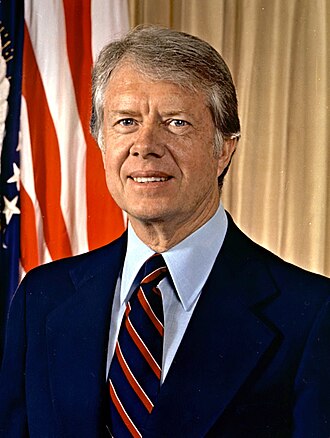 Jimmy Carter
High School • 1m
EO 12270 Jan 15, 1981
⚖️✨ Zone 2 (Zone of Twilight) Constitutional Neutral
Executive Order 12270—President's Council on Spinal Cord Injury
📜 Art. II §1: Executive Discretion & Internal Operations
1-101. There is established a President's Council on Spinal Cord Injury which shall be composed of twelve members appointed by the President. 1-102.
Jimmy Carter College Level • 1m
EO 12269 Jan 15, 1981
⚖️✨ Zone 2 (Zone of Twilight) Constitutional Neutral
Executive Order 12269—President's Committee on Small Business Policy
📜 Art. II §1: Executive Discretion & Internal Operations
1-101. There is established a President's Committee on Small Business Policy which shall be composed of seven members appointed by the President. 1-102.
Jimmy Carter College Level • 1m
EO 12268 Jan 15, 1981
🏛️✅ Zone 1 (Maximum Authority) Constitutional Neutral
Executive Order 12268—Hostage Relief Act of 1980
📜 10th Amend: Intergovernmental Federalism Cooperation
1-101. The functions vested in the President by Sections 103, 104, 105 and 301 of the Hostage Relief Act of 1980 (5 U.S.C. 5561 note) are delegated to the Secretary of State. 1-102.
Jimmy Carter Grade 9 • 1m
EO 12267 Jan 15, 1981
🏛️✅ Zone 1 (Maximum Authority) Constitutional Neutral
Executive Order 12267—Generalized System of Preferences
📜 Art. I §8: Delegated Tariff & Commerce Execution
1-101. The Tariff Schedules of the United States are modified by amending the article description for item 652.97 by adding "and parts thereof" to the present article description therefor. 1-102.
Jimmy Carter College Level • 3m
EO 12266 Jan 15, 1981
⚖️✨ Zone 2 (Zone of Twilight) Constitutional Neutral
Executive Order 12266—Food Security Wheat Reserve
📜 Art. II §1: Executive Discretion & Internal Operations
1-101. There is hereby established a Food Security Wheat Reserve composed of a reserve stock of wheat, which shall not exceed four million metric tons. 1-102.
Jimmy Carter High School • 1m
📜
Scholarly & Legal Citations
Exec. Order No. 12,264 (Jan. 15, 1981), https://executiveordersarchive.org/orders/app-executive-order-12264-export-banned-or-significantly-restricted-substances.
